


Frequently asked questions
About this category
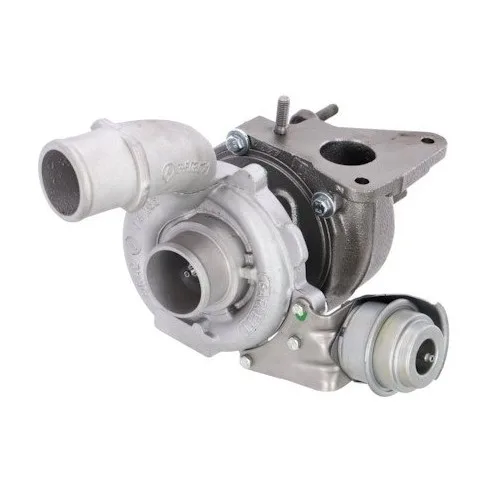
This category brings together exchange-standard turbochargers built for the 1.9 dCi 120 hp diesel engine, a unit shared across several Renault, Nissan, and Dacia models. It serves anyone who arrives with a motorisation in mind rather than a part number: the vehicle, the engine code, and the power output. Independent garages sourcing for a customer's car, drivers troubleshooting a loss of power or a warning light, and hands-on owners planning their own replacement all use the same reference points to narrow down the correct turbocharger.
The range is built around remanufactured units returned through an exchange-standard scheme: a worn turbocharger or cartridge goes back once the replacement is fitted, keeping the core deposit cycle intact. Each reference listed here has been matched to the engine family it serves rather than grouped by brand alone, so the wholesaler's role is to keep the cross-referencing current as engine codes and chassis variants multiply across the range covered by this diesel unit.
Professional uses by trade
The 1.9 dCi 120 hp turbocharger reaches four distinct buyers, each with a different starting point: a repair order, a dashboard warning, a project car, or a search typed in German. The usages below reflect how each one actually approaches the category before settling on a reference.
- Le garagiste independant : Checks the engine code and chassis year printed on the vehicle before ordering, then matches it against the turbocharger reference held in stock for that generation of the 1.9 dCi 120 hp engine.
- L'automobiliste depanne : Notices a loss of power, a dashboard warning light, or a whistling noise under acceleration, and starts by identifying the exact engine code so the search returns the right turbocharger rather than a near match.
- Le passionne qui fait lui-meme : Plans the swap around a weekend, reads through the CHRA and geometry variant details before ordering so the cartridge and actuator match the car's existing wiring and mounting points.
- Der deutsche Kaeufer (DACH) : Searches in German for the engine code and power output first, then cross-checks the reference against the chassis to confirm fitment before placing an order across the border.
- Le garagiste independant : Keeps a shortlist of exchange-standard references for the models it services most often, so a repeat customer's 1.9 dCi turbo replacement can be sourced the same day the fault is diagnosed.
- L'automobiliste depanne : Compares the core deposit terms before ordering, since returning the old turbocharger or cartridge is part of the exchange-standard process for this engine family.
- Le passionne qui fait lui-meme : Cross-references the OEM part number stamped on the removed turbocharger against the listed equivalences to avoid ordering a variant built for a different power output.
Range comparison
The table below lines up the two exchange-standard references carried for this engine family, so a buyer moving between suppliers or checking stock across brands can compare them at a glance before choosing.
| Range | Use | Format |
|---|---|---|
| SL Turbo 708639-5011S | 1.9 dCi 120 hp replacement | |
| Turbo Garrett 738123-5004S | 1.9 dCi 120 hp replacement |
How to choose
Choosing between references on this page comes down to a handful of checks a buyer can run before ordering, rather than a single deciding factor. The points below cover what typically narrows the shortlist for this engine family.
- Match the engine code stamped on the block against the reference sheet, since the same displacement can pair with more than one turbocharger across model years.
- Confirm the chassis and production year, as a mid-life facelift can shift the mounting points or actuator type without changing the engine code itself.
- Check whether the listed reference is the CHRA cartridge alone or the complete turbocharger assembly, since a workshop job may only call for the cartridge.
- Review the core deposit terms attached to the exchange-standard scheme before ordering, since the old part needs to go back once the new one is fitted.
- Cross-reference the OEM part number removed from the vehicle against the equivalences listed for each entry to rule out a near-match that will not fit.
- Note the geometry variant, since a variable-geometry unit and a fixed-geometry unit are not interchangeable even when the engine code matches.
- Keep the actuator type in mind, since references can pair with a pneumatic or an electronic actuator for the same engine family.
Storage & logistics
Turbochargers and CHRA cartridges in this category move through a standard exchange logistics chain: incoming units are checked against the engine code and reference before they are released for order, and outgoing shipments are packed to protect the actuator and turbine housing from impact in transit. Buyers returning a core under the exchange-standard scheme should keep the original packaging where possible, since it is built for the part's shape and weight. Stock is organised by engine family rather than brand, which keeps a repeat order for the same 1.9 dCi 120 hp reference straightforward for a workshop that services the same models regularly.
Since 2026 we have kept our 1.9 dCi turbo references organised by engine code first, brand second, because that is the order in which a garage or a driver actually searches when a vehicle is off the road.— autoKUR team
Related categories
Browse our other ranges:
Useful references
For regulatory and sector references, see Reglement (UE) 461/2010 — pieces de rechange et garantie constructeur.