

Available products
3 references


Frequently asked questions
About this category
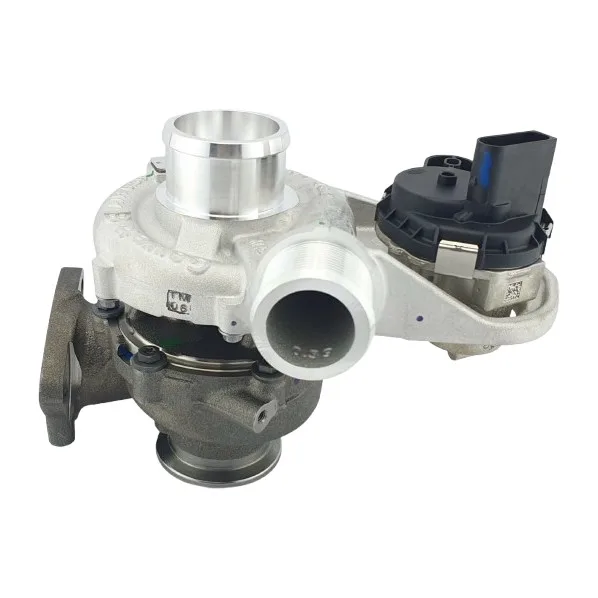
This category covers exchange turbochargers for vehicles fitted with the 2.0 EcoBlue 170 engine. It is built for independent garages sourcing a part between two jobs, motorists facing a stalled or underpowered car, and owners who prefer to handle the swap themselves once the correct reference is confirmed. Each turbocharger listed here corresponds to the engine code and power output associated with this configuration, with details on cartridge, actuator, and geometry type included so the reference can be checked against the original unit before ordering.
The range is built around the standard exchange principle: a reconditioned turbocharger is supplied against the return of the worn unit, keeping cost and lead time closer to what a wholesale buyer expects from a spare-parts grossiste. Reference matching starts with the engine code and turbine identification stamped on the original part, then moves to actuator type and geometry before a unit is confirmed as the correct equivalent for this EcoBlue 170 configuration.
Professional uses by trade
A turbocharger reference is used differently depending on who is ordering it. The following overview groups typical situations by profession, from a garage matching a reference mid-repair to a motorist searching for the right part after a warning light, so each reader can find the case closest to their own.
- Le garagiste independant: Confirms the exact turbocharger reference against the engine code before ordering, avoiding a second trip for a mismatched part mid-repair.
- Le garagiste independant: Orders an EcoBlue 170 exchange turbocharger ahead of a scheduled repair slot, keeping the core return organized for the next batch.
- Le garagiste independant: Cross-checks actuator type and turbine geometry against the failed unit to shorten diagnosis time on a vehicle already on the lift.
- Le garagiste independant: Keeps a small stock of common EcoBlue 170 references on hand to reduce turnaround time for regular customers.
- Le garagiste independant: Compares cartridge and CHRA specifications with a customer's original part number before confirming which reference fits the job.
- L'automobiliste depanne: Searches for the correct turbocharger reference after noticing a loss of power, smoke, or a warning light on the dashboard.
- L'automobiliste depanne: Matches the engine code and power output listed here against the vehicle's registration document before choosing a reference.
- L'automobiliste depanne: Arranges for a garage of their choice to fit the turbocharger once the reference has been ordered and received.
Range comparison
The table below lists the two turbocharger references available for the 2.0 EcoBlue 170 configuration, alongside their typical use and the wholesale format they are supplied in, to make comparison straightforward before ordering.
| Range | Use | Format |
|---|---|---|
| SL Turbo 838417-5002S | engine bay replacement | |
| SL Turbo 850840-5009S | engine bay replacement |
How to choose
Choosing between two closely related references comes down to a handful of practical checks rather than guesswork. The points below outline what a buyer, whether professional or first-time, should verify before confirming an order.
- Match the reference against the turbine and actuator stamped on the original turbocharger rather than relying on the engine code alone.
- Check the core deposit and return conditions before ordering, since the exchange principle depends on sending back the worn unit afterward.
- Verify the packaging is intact on arrival, since a turbocharger's actuator and vanes can be affected by rough handling in transit.
- Confirm the cartridge and CHRA specification match the failed part, particularly when a vehicle has had prior repair work done.
- Ask about stock availability for the specific reference needed, since wholesale rotation can vary between the two configurations listed here.
- Keep the original part number on hand when comparing equivalences, since two similar-looking turbochargers can serve different engine variants.
Storage & logistics
Exchange turbochargers are supplied in individual protective packaging designed to keep the actuator, vanes, and turbine housing free from impact during transit and short-term storage. For a garage or reseller holding stock ahead of demand, keeping units in their original packaging until fitting reduces the risk of dust or moisture reaching the cartridge. Core returns should be packaged with similar care, since a damaged worn unit can complicate the exchange process. Storage space does not need to be climate-controlled, but should stay dry and free of the vibration or stacking pressure that loose warehouse handling can create.
Since 2026, our team has worked through enough EcoBlue 170 references to know that the small details, actuator type, turbine size, core condition, are what decide whether a reference fits on the first try.— autoKUR team
Related categories
Browse our other ranges:
- 2.0 EcoBlue 185 hp
- 2.0 EcoBlue MHEV 170 hp
- 2.2 TDCi 155 hp
- 2.0 EcoBlue 130 hp
- 2.0 EcoBlue MHEV 130 hp
- 2.2 TDCi 125 hp
Useful references
For regulatory and sector references, see Reglement (UE) 461/2010 — pieces de rechange et garantie constructeur.