


Frequently asked questions
A remanufactured turbocharger for the FORD Mondeo 2.0 TDCi 90 CV starts at €266.00. This engine takes 2 different references: the price shown is the lowest, the others varying by supplier or production period.
The references are 728680-5020S, 802419-5001S. They are what settle the match on a FORD Mondeo 3 with the 2.0 TDCi 90 CV engine — not the vehicle's trade name, nor its year.
Because this engine was built with several turbochargers depending on the production period or the original supplier. Each reference matches a precise variant; the code read on the removed part settles which one fits.
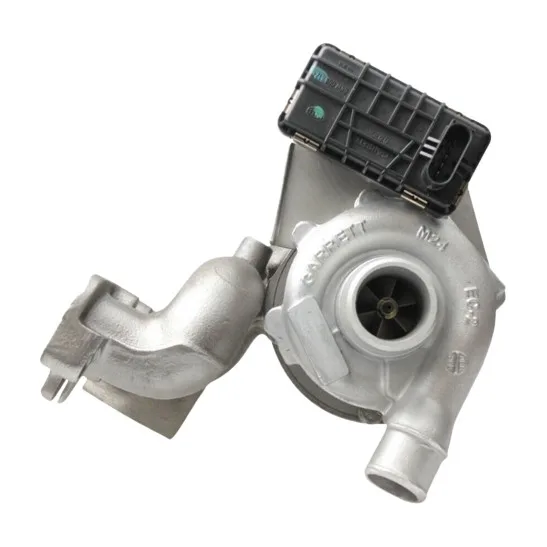
It is on the riveted plate of the centre housing, on the compressor side. The plate holds the marking even on a part coated with oil and soot. It is the only reading that confirms the match with 728680-5020S.
Part 728680-5020S is sold as an exchange unit: it has already been remanufactured and balanced, and the turbocharger you remove goes back into the reconditioning circuit. Return terms are stated at checkout.
An exchange turbocharger is an original part restored to working order: wear parts are replaced and the rotating assembly is rebalanced. It carries the same reference, 728680-5020S, and fits in place of the part removed.
No: it matches Mondeo 3 models fitted with the 2.0 TDCi 90 CV engine. A Mondeo 3 running on petrol, or at a different diesel power output, takes another reference.
No. Two Mondeo of the same year can take different turbochargers depending on their engine. It is the engine-and-power pairing — here 2.0 TDCi 90 CV — that determines the reference, and the code on the removed part that confirms it.
On this diesel engine, a turbocharger nearing the end of its life shows up as a loss of power under acceleration, smoke at the exhaust, a whistle rising with engine speed and a drop into limp mode. These signs overlap with other intake faults: diagnosis is a job for a qualified technician.
On this 2.0 TDCi 90 CV, the ECU limits the engine when it no longer finds the boost pressure expected for the 90 CV rated output. A turbocharger that no longer regulates pressure correctly is one possible cause, alongside an air leak or a faulty pressure sensor.
On this 2.0 TDCi 90 CV diesel engine, blue smoke means oil is passing — turbocharger sealing is one candidate among other parts; black smoke means an over-rich burn, so a lack of air at the intake. Colour guides the diagnosis, it does not replace it.
No. The whistle can come from the turbocharger itself, but equally from a leak on an intake hose, the intercooler or the wastegate. Noise alone is not enough to condemn the part.
Yes. This diesel engine takes a variable-geometry turbocharger, whose movable vanes adapt boost to engine speed. It is the part that seizes most often on this type of engine, and it is among what is restored on reference 728680-5020S.
By a fault code read and a boost pressure check, carried out by a qualified technician, before any order of reference 728680-5020S. That check separates a failed turbocharger from an air leak or a faulty sensor — three faults with similar symptoms but different remedies.
Yes: reference 728680-5020S is the original fitment for a FORD Mondeo 3 with the 2.0 TDCi 90 CV engine. It keeps the dimensions, the mounting and the connections of the part removed. Fitting is a job for a qualified automotive technician.