

Available products
4 references


Frequently asked questions
About this category
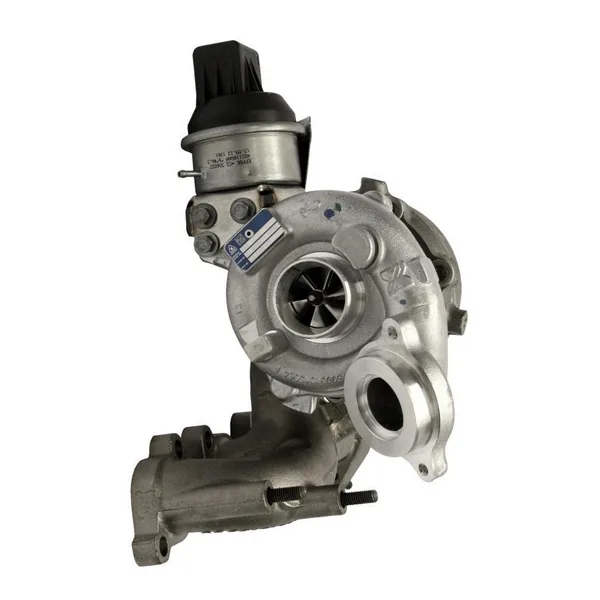
The 2.0 TDI 140 hp category brings together exchange turbochargers, cartridges and related high-pressure components sized for this specific engine and power output. It serves anyone working through a loss of power, exhaust smoke, a whistling noise or a vehicle stuck in limp mode, from an independent garage narrowing down a diagnosis to a driver comparing references before deciding how to proceed. Rather than browsing by car brand, the range is organised around engine code and OEM cross-reference, since the same 2.0 TDI block appears under several badges across more than one manufacturer group.
Each reference is built as a remanufactured exchange unit: the returned core is stripped down, the CHRA and variable-geometry actuator are checked against original tolerances, and the housing is matched to the original mounting points. Covering 132 vehicle brands and more than 1,500 models, the role here is to keep the cross-reference table current, so a search by engine code, OEM number or vehicle detail lands on the correct part rather than a near match found by trial and error.
Professional uses by trade
A TDI 140 turbo exchange is looked up differently depending on who is searching. A workshop diagnosing an intermittent fault reads the same reference table as a driver trying to make sense of a warning light, and a hobbyist planning a weekend job checks the same OEM cross-numbers before ordering.
- Independent garage: Matches the failed turbocharger's engine code and OEM number against the exchange reference before ordering, turning a limp-mode diagnosis into a confirmed part rather than a guess.
- Independent garage: Keeps the core deposit unit ready for return once the replacement turbocharger has been fitted by a technician, closing the exchange loop without holding a worn part on site.
- Motorist facing a breakdown: Compares smoke, a whistling noise or a sudden loss of power against the symptom list here before deciding whether the turbocharger or another part is at fault.
- DIY enthusiast: Checks the variable geometry mechanism and CHRA cartridge specification against the original part before ordering, since a mismatched actuator reproduces the same symptoms as a worn turbo.
- DIY enthusiast: Cross-references the OEM number stamped on the original turbocharger against the equivalences listed here before committing to an exchange unit and a core deposit return.
- German buyer (DACH): Uses the engine code, not the vehicle badge, to confirm that a generaluberholt Austauschteil corresponds to the exact 2.0 TDI 140 hp configuration fitted to the vehicle.
Range comparison
The table below lines up the references carried for this engine and power output, each already checked against the engine code and OEM cross-numbers described above, so the comparison starts from compatibility rather than price.
| Range | Use | Format |
|---|---|---|
| SL Turbo 756062-5004S | turbocharger exchange, core deposit | |
| SL Turbo 765261-5008S | variable geometry turbo exchange | |
| SL Turbo 5303 988 0205 | CHRA cartridge cross-reference | |
| SL Turbo 724930-5010S | actuator and housing exchange |
How to choose
Choosing between these references comes down to matching the failed part rather than the vehicle name, since several engine variants share a badge but not necessarily a turbocharger. The points below cover what to check before ordering.
- Confirm the OEM reference and engine code stamped on the original turbocharger match the equivalence listed here before ordering, since a shared engine block can carry more than one cartridge.
- Check that the variable geometry actuator and CHRA cartridge specification correspond to the failed unit, because a mismatched actuator reproduces the same symptoms as the part it replaces.
- Keep the worn turbocharger protected and its ports sealed while it waits to travel back through the core deposit return, avoiding contamination before the exchange loop closes.
- Look for consistency in how each exchange unit is remanufactured, since the same tolerances applied across a batch reduce the chance of receiving two units that behave differently.
- Verify that the reference is currently held in the rotation for this engine code, since exchange turbochargers move through core return cycles rather than sitting as static stock.
- When the replacement is fitted by an independent technician rather than the buyer, send the OEM reference and core deposit paperwork along with the old part so the return follows the same channel.
Storage & logistics
Once a turbocharger is confirmed faulty, it is worth protecting the mounting flange and oil ports with the original blanking caps or tape before it comes off the vehicle, since grit entering an open port during transit can be mistaken for a manufacturing fault on return. The worn unit should travel back through the core deposit process in the same packaging the replacement arrived in, kept upright where possible, to avoid oil residue reaching the compressor housing. Keeping the OEM number and engine code noted alongside the returned core also shortens the cross-reference check on the other end of the exchange loop.
Since 2026 our team has built this catalogue around the engine code rather than the vehicle badge, because that is the detail a garage or a driver actually has in hand when a turbocharger starts to fail.— autoKUR team
Related categories
Browse our other ranges:
Useful references
For regulatory and sector references, see Reglement (UE) 461/2010 — pieces de rechange et garantie constructeur.