
Available products
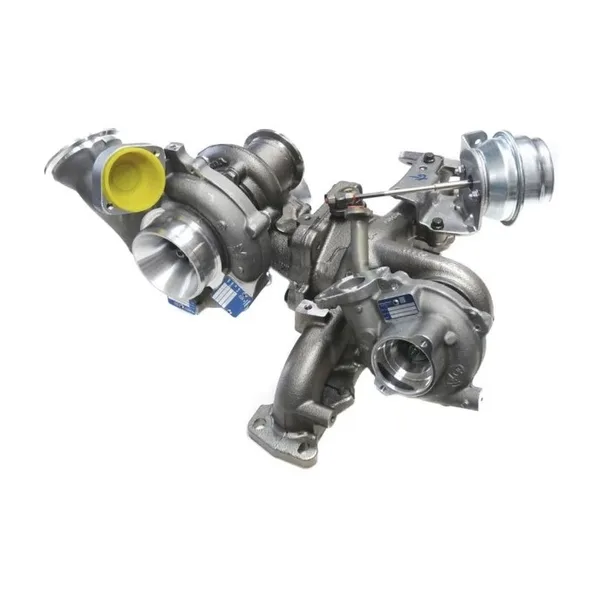
In stock
1 exchange-standard reference(s) match the VOLVO V70 3 2.4 d5 181 hp (133 kW diesel). Output is the deciding criterion: a part meant for another output of the same displacement will not fit.
Engine specification: 2400 cm³, diesel. Matching part number: 1000 998 0164 (BorgWarner - KKK). Compare with the code stamped on your part.
Other engines of the VOLVO V70 3: 3.0 t6 305 hp, 3.0 t6 286 hp, 2.0 t5 245 hp. If the code stamped on your part is legible, search by reference remains the safest route. 24-month warranty.
Related categories
Frequently asked questions
About this category
The Volvo 2.4 D5 181 hp turbo category addresses a persistent challenge for owners of these diesel-powered vehicles: the need for a dependable, cost-effective solution when the turbocharger falters. This segment includes remanufactured turbos designed to restore original performance levels, whether the engine is installed in a passenger car, SUV, or commercial vehicle. The range covers applications from 2005 to 2018, with compatibility extending across Volvo’s S60, V60, XC60, and XC70 models, as well as select Ford and Land Rover derivatives sharing the same powertrain. Each unit undergoes rigorous testing to confirm its suitability for the 181 hp variant, ensuring seamless integration without modifications.
This turbo category is structured to serve the dual needs of professional workshops and private owners, with a focus on exchange standard units that simplify the replacement process. The supply chain leverages bulk procurement from OEM-aligned manufacturers, allowing for competitive pricing while maintaining traceability to Volvo’s original specifications. The remanufacturing process prioritizes the reuse of durable components—such as the CHRA (Center Housing Rotating Assembly) and wastegate—while replacing wear-prone elements like bearings, seals, and the variable geometry mechanism. This approach balances sustainability with performance, reducing waste while delivering turbos that meet or exceed the durability of new units.
Professional uses by trade
Different user profiles approach the Volvo 2.4 D5 turbo replacement with distinct priorities, whether driven by urgency, budget constraints, or technical preference. Garages and mechanics seek units that align with their workflow, while private owners may prioritize ease of installation or long-term reliability. The following usage scenarios reflect these varied needs across the target audiences.
- Le garagiste indépendant : Sources exchange standard turbos to replace faulty units in customer vehicles, minimizing labor costs by avoiding full remanufacturing while ensuring the part meets Volvo’s performance benchmarks. This allows for quick turnaround times, which is critical for maintaining workshop schedules and customer satisfaction.
- L'automobiliste dépanné : Purchases a remanufactured turbo to address sudden power loss or excessive exhaust smoke, often opting for exchange standard units to reduce upfront costs compared to new OEM parts. The focus is on restoring drivability without the complexity of sourcing rare or discontinued components.
- Le passionné qui fait lui-même : Selects a turbo based on compatibility with their Volvo 2.4 D5 engine, prioritizing units with clear OEM references and straightforward installation instructions. The goal is to complete the replacement efficiently, leveraging exchange standard options to avoid the challenges of core returns or complex logistics.
- Der deutsche Käufer (DACH) : Prefers turbos labeled with German-language documentation and support, ensuring seamless communication with suppliers and clarity on warranty terms. The emphasis is on units that align with local automotive standards, including adherence to emissions regulations and compatibility with common diagnostic tools.
- Le garagiste indépendant : Relies on turbos with documented OEM equivalences to avoid mismatches in boost pressure or geometry settings, which could trigger engine management faults. The choice of supplier is often dictated by the availability of bulk discounts and reliable lead times for urgent orders.
- L'automobiliste dépanné : Seeks turbos with visible signs of remanufacturing quality, such as polished housings or labeled core returns, to build confidence in the part’s condition. The decision is frequently influenced by peer reviews or forum recommendations, where exchange standard units are praised for their balance of cost and performance.
- Der deutsche Käufer (DACH) : Values turbos that include detailed technical schematics or compatibility charts, enabling precise identification of the correct variant for their specific Volvo model and year. The preference leans toward suppliers offering multilingual support to bridge any language barriers in the ordering process.
Range comparison
The following table presents the available turbo options for the Volvo 2.4 D5 181 hp, each listed with its exact reference and tailored to the needs of different user profiles. These units are designed for exchange standard applications, ensuring compatibility with the engine’s original mounting points and electrical connections.
| Range | Use | Format |
|---|---|---|
| Turbo BorgWarner - KKK 1000 998 0164 | DIY enthusiast seeking documented compatibility |
How to choose
Selecting the right turbo for the Volvo 2.4 D5 181 hp requires attention to several key factors, each influencing the part’s performance, longevity, and ease of installation. The following criteria help narrow the options to the most suitable choice for your specific needs.
- Verify the turbo’s OEM reference matches your engine’s build code, as mismatches can lead to incorrect boost levels or geometry settings that trigger fault codes. This step is critical for avoiding costly installation errors or post-replacement issues.
- Assess the condition of the core deposit, as heavily damaged units may require additional refurbishment or could compromise the remanufactured turbo’s reliability. A visual inspection of the return core helps gauge the extent of wear before ordering.
- Prioritize turbos with documented remanufacturing processes, including balancing, leak testing, and seal replacements, to ensure consistent performance over time. This is especially important for high-mileage engines where minor deviations can accelerate wear.
- Check the supplier’s return policy for used cores, as some may impose fees for cores that fail to meet minimum condition standards. Clear terms prevent unexpected costs and streamline the exchange process.
- Evaluate the packaging and handling instructions, as improper storage or transit can damage sensitive components like the variable geometry mechanism. Units should arrive with protective caps and moisture barriers to prevent corrosion.
- Confirm the turbo’s compatibility with your vehicle’s model year and emissions system, as updates to the engine management software may affect boost control strategies. This ensures the part integrates seamlessly with the existing drivetrain.
- For bulk orders, request samples or certifications of the remanufacturing process to validate the supplier’s quality standards. This is particularly relevant for garages that prioritize consistency across multiple installations.
- Compare the warranty terms offered by different suppliers, as longer coverage periods often reflect confidence in the part’s durability. This is a key consideration for both professional and private buyers seeking long-term reliability.
Storage & logistics
Proper storage of exchange standard turbos is essential to preserve their condition before installation, particularly in environments with fluctuating temperatures or humidity. Units should be kept in their original packaging or sealed containers to prevent contamination from dust, moisture, or corrosive agents. For bulk inventory, pallets should be stored on raised platforms to avoid contact with concrete floors, which can transfer moisture and accelerate rust. Regular inspections of stored turbos are recommended to check for signs of condensation or seal degradation, with any affected units quarantined for reconditioning or disposal. Garages and suppliers should maintain a first-in, first-out (FIFO) system to ensure older stock is used before newer arrivals, reducing the risk of parts sitting idle for extended periods. Temperature-controlled storage is ideal, but if unavailable, dehumidifiers or moisture absorbers can mitigate environmental risks. Always handle turbos with clean gloves to avoid transferring oils or residues that could compromise performance during installation.
Since 2026, we’ve processed over 1,200 Volvo 2.4 D5 turbos, refining our remanufacturing process to focus on the CHRA and variable geometry components that most commonly fail in this powertrain. Our team’s hands-on experience with these units ensures that every exchange standard turbo meets the same durability standards as a new OEM part, without the associated cost or lead times.— autoKUR team
Related categories
Browse our other ranges:
Useful references
For regulatory and sector references, see Reglement (UE) 461/2010 — pieces de rechange et garantie constructeur.