


Frequently asked questions
About this category
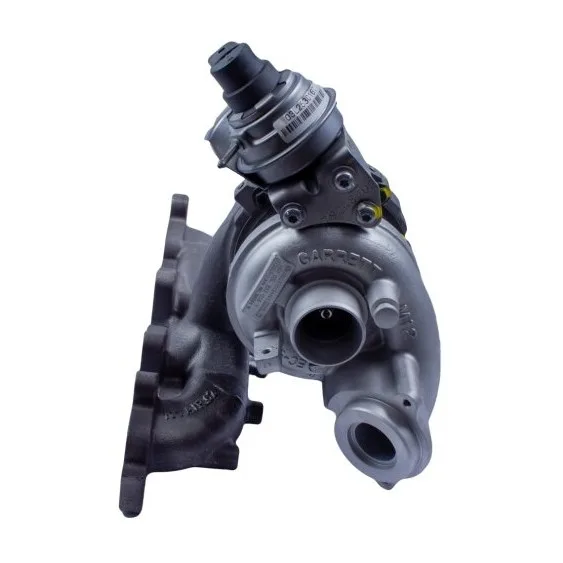
The 1.6 TDI 105 hp category brings together exchange turbochargers built for one specific engine output, rather than a broad diesel range. Anyone arriving here usually already knows the motorisation under the bonnet — a garage confirming a reference before ordering, a driver stranded with a loss of power, or an owner used to handling engine work personally. What they find is a short, focused list of exchange units, each tied to the compatibility details that actually decide whether a turbocharger will fit and seal correctly.
The range is built around exchange logistics rather than a long parts list: a worn or failed unit goes out, a reconditioned exchange turbocharger comes back, and the core is returned afterward under the deposit arrangement. A wholesale distributor sits behind this process, sourcing units by cross-reference rather than by brand name alone, which is why a single 1.6 TDI 105 hp listing can cover more than one supplier code without changing the engine it fits.
Professional uses by trade
The same turbocharger reference serves different people for different reasons. A garage checks compatibility before booking a job; a driver searches after limp mode cuts power on the road; an owner comparing parts wants to understand cartridge and geometry before buying. The list below reflects how each of them actually uses this category.
- Independent garage: Cross-checking the engine code and OEM reference before ordering avoids booking a job around a turbocharger that will not fit the customer's exact variant.
- Stranded motorist: Recognising limp mode, a whistling noise, exhaust smoke, or a sudden loss of power as signs pointing toward the turbocharger rather than another engine fault.
- DIY enthusiast: Comparing the CHRA and variable geometry actuator details before ordering, since fitting the unit personally leaves no room for a mismatched reference.
- German buyer (DACH): Reading compatibility notes in clear technical terms before choosing an exchange unit for a vehicle registered and driven in Germany, Austria, or Switzerland.
- Independent garage: Explaining the core deposit and return process to a customer up front, so the exchanged turbocharger core is sent back within the expected window.
- Stranded motorist: Understanding why a temporary drop into limp mode does not necessarily mean the whole engine needs attention, only the turbocharger circuit.
- DIY enthusiast: Checking the injector and high-pressure pump condition alongside the turbocharger, since a failing pump can produce symptoms that resemble a turbo fault.
Range comparison
The table below lines up the two turbocharger references carried in this category, so a buyer can compare them at a glance instead of opening two separate listings. Both are exchange units tied to the 1.6 TDI 105 hp engine, distinguished mainly by their original manufacturer code.
| Range | Use | Format |
|---|---|---|
| SL Turbo 5439 988 0136 | replacement for BorgWarner-reference turbo | |
| SL Turbo 775517-5002S | replacement for Garrett-reference turbo |
How to choose
Choosing between two references on the same engine comes down to a handful of checks rather than preference. The points below cover what actually changes the outcome, from the reference on the old unit to how the exchange and return process is handled.
- Matching the exact reference stamped on the original turbocharger housing rather than relying on the engine code alone, since several variants share the same output.
- Confirming the production year range covered by each reference, as a running engine change can split a single motorisation across two different turbocharger codes.
- Checking whether the variable geometry actuator, cartridge, and CHRA are included in the exchange unit, so nothing needs to be transferred separately from the old part.
- Understanding the core deposit terms before ordering, since the returned turbocharger core needs to match the condition and reference of the unit received.
- Verifying that the reference also covers the associated injector and high-pressure pump specification, when a failure has affected more than the turbocharger alone.
- Confirming with a professional installer how the exchange unit will be fitted, since correct installation affects how consistently the turbocharger performs afterward.
- Asking about the warranty coverage attached to the exchange unit and confirming its exact duration before completing the order, since terms can vary by reference.
Storage & logistics
Exchange turbochargers in this category are handled as reconditioned units rather than new stock, which shapes how they should be stored and moved. Units awaiting collection or transfer benefit from being kept upright, in their original packaging, away from moisture that could affect seals and actuator components before fitting. The core deposit cycle adds a second logistics step: the removed turbocharger needs to be packaged and returned within the arrangement agreed at purchase, ideally in packaging similar to the one the exchange unit arrived in, so the returned core reaches the wholesale distributor without damage in transit.
Since 2026, our focus has stayed narrow on purpose: exchange turbochargers matched to the exact motorisation, not a general parts catalogue. A reference either fits the 1.6 TDI 105 hp engine or it does not — that distinction guides every listing we publish.— autoKUR team
Related categories
Browse our other ranges:
Useful references
For regulatory and sector references, see Reglement (UE) 461/2010 — pieces de rechange et garantie constructeur.