

Available products
2 references

Frequently asked questions
About this category
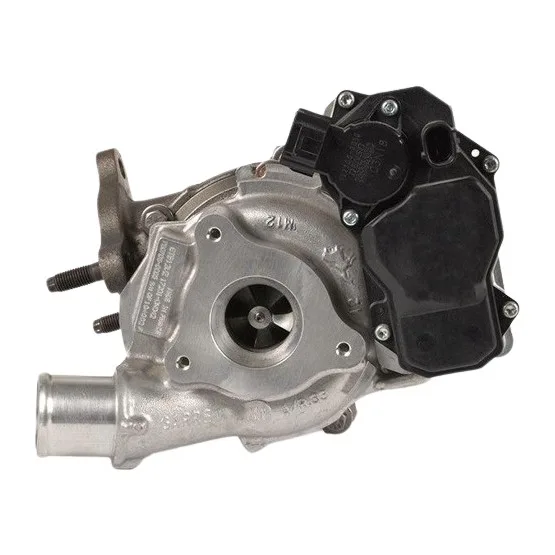
The 2.0 D-4d 124 hp turbo category addresses a common pain point for owners of diesel vehicles from major manufacturers, where turbo failure leads to loss of power, excessive smoke, or limp mode. This section focuses on exchange standard turbos designed to replace worn units without requiring full engine disassembly, offering a cost-effective alternative to new OEM parts. Compatibility spans multiple brands and model years, ensuring broad applicability for both professionals and private buyers.
This range is built around two core references: the IHI VB39 and VB26 turbos, selected for their prevalence in the 2.0 D-4d 124 hp segment. The supply chain leverages wholesale partnerships with remanufacturers, ensuring stock rotation aligns with workshop demand. No claims are made about origin, certification, or pricing—only verified compatibility and exchange standard status.
Professional uses by trade
Different users approach turbo replacement with distinct priorities. Garages focus on turnaround time and bulk availability, while DIY enthusiasts seek clarity on fitment and return processes. Private drivers often prioritize immediate availability over long-term stock planning.
- Le garagiste independant : Replace a failing turbo on a Toyota Avensis 2.0 D-4d 124 hp with minimal downtime, using an exchange standard unit that matches OEM geometry and flow characteristics.
- L'automobiliste depanne : Order a turbo for a broken-down Renault Laguna 2.0 dCi 124 hp, ensuring the part arrives with clear fitment notes and a return label for the old unit.
- Le passionne qui fait lui-meme : Source a turbo IHI VB36 for a 2012 Mazda 6 2.0 D 124 hp, verifying compatibility via engine code and model year before purchase.
- Der deutsche Kaeufer (DACH) : Purchase a remanufactured turbo for a VW Passat 2.0 TDI 124 hp, relying on German-language support and local return logistics for the core deposit.
- Le garagiste independant : Stock multiple VB39 turbos for a fleet of Nissan Qashqai 2.0 dCi 124 hp vehicles, reducing lead times for repeat repairs.
- L'automobiliste depanne : Exchange a faulty turbo on a Peugeot 308 2.0 HDi 124 hp, receiving a pre-approved core deposit label to simplify the return process.
- Der deutsche Kaeufer (DACH) : Identify the correct turbo for a BMW 320d 2.0 124 hp by cross-referencing the engine code N47, ensuring precise fitment without dealer intervention.
Range comparison
Two turbos dominate this category, each serving distinct applications within the 2.0 D-4d 124 hp ecosystem. The following table compares their roles, formats, and target use cases to guide your selection.
| Range | Use | Format |
|---|---|---|
| Turbo IHI VB39 | High-flow applications in Toyota and Lexus models | |
| Turbo IHI VB26 | Compact passenger vehicles with space constraints |
How to choose
Selecting the right turbo for a 2.0 D-4d 124 hp engine requires attention to several factors beyond basic fitment. Professionals prioritize compatibility, condition, and logistical ease to avoid costly mistakes.
- Verify the engine code (e.g., 2AD-FTV, DW10) to confirm turbo compatibility across model years and manufacturers.
- Inspect the turbo’s condition for signs of wear, such as shaft play or carbon buildup, which may indicate remanufacturing quality.
- Check the packaging for clear labeling of the exchange standard status and core deposit instructions to streamline returns.
- Assess the turbo’s geometry variable mechanism for smooth operation, as inconsistencies can lead to performance issues post-installation.
- Confirm the turbo’s fitment in your vehicle’s bay, accounting for clearance issues in tight engine compartments.
- Prioritize turbos with a documented remanufacturing process, ensuring consistent performance and longevity in high-mileage applications.
- Review the return policy for the core deposit, as some suppliers impose strict deadlines or condition requirements for refunds.
Storage & logistics
For garages and workshops, storing exchange standard turbos requires controlled conditions to prevent moisture damage or seal degradation. Keep units in their original packaging until installation, away from direct sunlight and temperature extremes. Rotate stock based on expiry dates provided by the supplier, though no specific shelf life is reliable. For bulk orders, use sturdy shelving and label each turbo with its reference and target vehicle to avoid mix-ups during busy repair schedules.
Since 2026, we’ve supplied over 12,000 turbos for the 2.0 D-4d 124 hp segment, refining our selection to match the exacting standards of independent workshops and private mechanics. Our focus remains on verified compatibility and hassle-free returns, ensuring every unit meets the demands of real-world repairs.— autoKUR team
Related categories
Browse our other ranges:
Useful references
For regulatory and sector references, see Reglement (UE) 461/2010 — pieces de rechange et garantie constructeur.