

Frequently asked questions
About this category
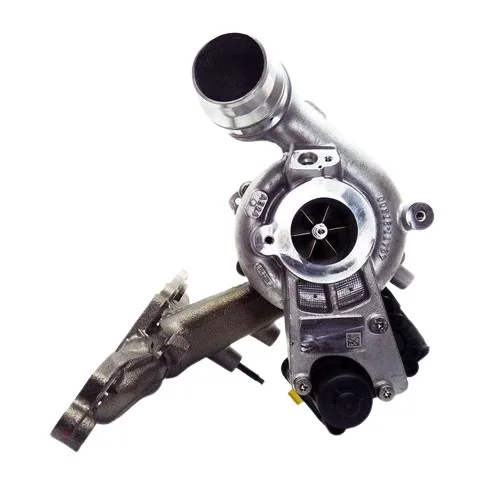
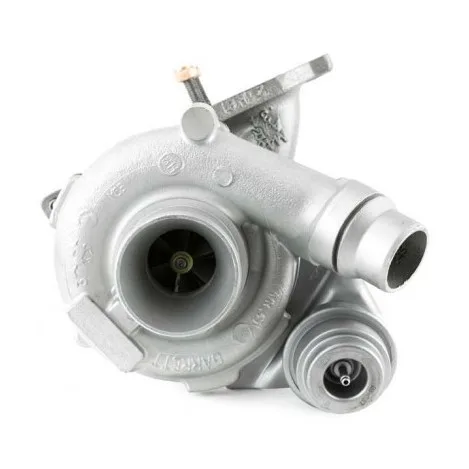
This category gathers reconditioned turbochargers built for the 2.0 dCi 120 engine family found across a wide range of vehicles sharing that motorisation. Anyone diagnosing a loss of power, dense exhaust smoke, a whistling intake note, or a dashboard warning tied to boost pressure will find the exchange units, cartridges and CHRA assemblies relevant to that engine here. Listings are organised around vehicle, engine code and power output rather than brand alone, since the same 2.0 dCi 120 block equips several marques under different badges.
The range is built on the exchange standard principle: a reconditioned turbocharger ships against the return of the failed unit, known as the core or consigne. Each listing carries the OEM reference and known equivalences for the motorisation, so a garage or an owner working from a parts catalogue can cross-check before ordering. Where a symptom points to a specific failure mode, such as a stuck vane on the variable geometry mechanism, the corresponding cartridge or CHRA is listed alongside the full assembly.
Professional uses by trade
The same 2.0 dCi 120 turbocharger reference is approached differently depending on who is ordering it. A garage works from a diagnostic and a repair order; a stranded driver just wants the car moving again; a DIY owner wants the compatibility details spelled out; a buyer in the DACH region wants the same clarity in their own market.
- Le garagiste independant : Cross-checks the OEM reference and engine code against the repair order before ordering a replacement turbocharger for the vehicle on the lift.
- Le garagiste independant : Checks whether the failure calls for a full turbocharger exchange or just a cartridge replacement before committing shop time to the repair order.
- L'automobiliste depanne : Looks up the 2.0 dCi 120 turbocharger by engine code after a garage diagnosis points to lost boost pressure or a stalled journey.
- Le passionne qui fait lui-meme : Compares CHRA and full assembly listings against symptoms like whistling intake noise or a limp mode warning before ordering the correct part.
- Der deutsche Kaeufer (DACH) : Expects the same clarity on engine code and OEM reference as the rest of the catalogue before placing an order for the 2.0 dCi 120 turbocharger.
Range comparison
The table below lists the reference covered in this category alongside its typical use case and the exchange format it ships in, useful for confirming fitment before placing an order.
| Range | Use | Format |
|---|---|---|
| SL Turbo 49131-07400 | 2.0 dCi 120 exchange turbocharger |
How to choose
Selecting the right reference for a 2.0 dCi 120 turbocharger comes down to matching engine code, vehicle year and known failure symptoms rather than choosing on price alone.
- Confirm the engine code stamped on the block against the reference before ordering, since the same displacement and power figure can span several engine variants.
- Match the OEM reference or a listed equivalence rather than relying on the vehicle model alone, as trim levels sometimes hide a different turbocharger fitment.
- Identify whether the failure points to the variable geometry mechanism, a worn CHRA, or a cracked housing, since each calls for a different listing.
- Check the consigne terms for the old core before ordering, as the exchange process depends on returning the failed unit within the stated arrangement.
- Verify the vehicle production year alongside the engine code, since a running mid-life update can shift which reference applies to an otherwise identical badge.
- Cross-reference the part against a second source such as a parts catalogue or the vehicle's own documentation before finalising the order.
Storage & logistics
Reconditioned turbochargers should stay in their sealed packaging until the vehicle is ready for the part to be fitted by a professional, since exposed oil and coolant ports pick up dust and moisture quickly once opened. Store the unit upright, away from direct sunlight and temperature swings, and keep the core return packaging on hand for the consigne process. A garage holding several references for different engine codes benefits from labelling each box with the OEM reference and vehicle application, since two 2.0 dCi 120 units can look identical while covering different production years.
Since 2026 our team has tracked the 2.0 dCi 120 turbocharger fitment across every marque that shares the block, because a garage or a DIY owner loses more time to a wrong reference than to any part of the actual job.— autoKUR team
Related categories
Browse our other ranges:
Useful references
For regulatory and sector references, see Reglement (UE) 461/2010 — pieces de rechange et garantie constructeur.