


Frequently asked questions
About this category
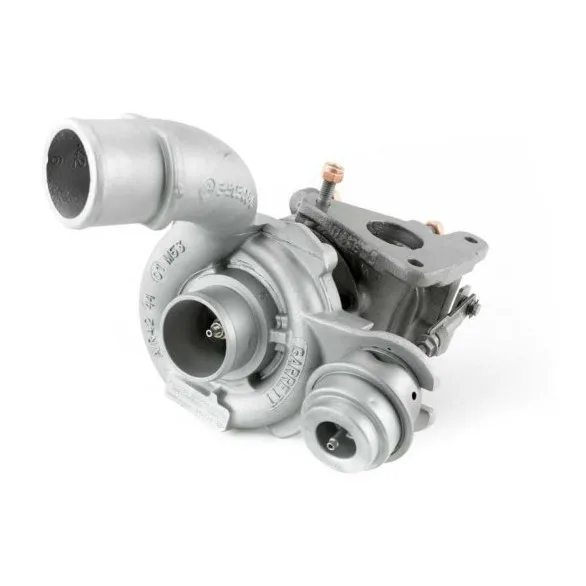
This category gathers standard exchange turbocharger solutions for the 1.9-litre dCi engine rated at 78 hp, a widely used diesel platform maintained by independent garages, professional workshops, and owners who service their own vehicles. Rather than a single generic part, the listing centres on a remanufactured Garrett unit identified by its manufacturer reference, allowing buyers to match compatibility by engine code and power output before ordering. It is built for anyone confronting a failing turbocharger on this motorisation and needing a reconditioned replacement rather than a new-only option.
The range is organised around remanufacturing rather than volume: each turbocharger listed under this engine code goes through the standard exchange process, meaning the worn unit is returned once a working replacement has been fitted by a professional. As a wholesale specialist in reconditioned engine parts, our role is to keep the correct reference traceable, from OEM equivalence to core deposit terms, so garages, resellers, and independent buyers work from consistent, verifiable information.
Professional uses by trade
A 1.9 dCi turbocharger replacement is approached differently depending on who orders it. An independent garage needs fast identification against an existing job; a stranded motorist wants clarity on symptoms and next steps; a DIY enthusiast needs the technical detail to judge the job; a German-speaking buyer needs the same certainty in a market bound by strict service-language limits.
- Le garagiste independant : Cross-checking the OEM reference and engine code against a customer's vehicle before ordering the remanufactured turbocharger for a standard exchange.
- Le garagiste independant : Keeping a reconditioned unit identified for the 1.9 dCi 78 hp platform to shorten turnaround on a job already booked with a customer.
- L'automobiliste depanne : Recognising loss of power, exhaust smoke, or the engine entering limp mode as signs pointing toward a failing turbocharger rather than another fault.
- Le passionne qui fait lui-meme : Comparing the Garrett reference number against the original part removed from the engine to confirm fitment before placing an order.
- Le passionne qui fait lui-meme : Reviewing the core deposit and return process for the worn turbocharger ahead of starting the standard exchange procedure.
- Der deutsche Kaeufer (DACH) : Verifying the OEM equivalence and engine code before a professional workshop carries out the installation.
Range comparison
The table below situates the single reference carried in this category, showing how it applies to the 1.9 dCi 78 hp platform and the generic wholesale format in which it is supplied to garages and resellers.
| Range | Use | Format |
|---|---|---|
| Turbo Garrett 738123-5004S | 1.9 dCi turbo replacement |
How to choose
Choosing the correct 1.9 dCi turbocharger replacement means checking more than a part number. These criteria help garages, resellers, and individual buyers confirm fitment and avoid ordering a unit that will not match the vehicle.
- Confirming the exact engine code stamped on the block rather than relying on the vehicle model alone, since several variants can share the same displacement.
- Matching the OEM reference or an established equivalence table before ordering, to avoid a turbocharger that fits physically but not functionally.
- Checking the core deposit terms in advance so the standard exchange process runs smoothly once the worn turbocharger is ready to be returned.
- Verifying that the remanufactured unit has been stored correctly prior to shipping, since a turbocharger left in unsuitable conditions can develop issues before installation.
- Confirming warranty terms and planning the replacement around a professional installation, since correct fitting affects how the reconditioned unit performs afterward and what coverage applies.
- Considering stock rotation when ordering for a workshop, so a unit purchased in advance is not held long enough to raise doubts about condition.
- Checking whether the application uses a variable-geometry turbine or a fixed-geometry cartridge, since the CHRA design affects which remanufactured unit is correct for the engine code.
Storage & logistics
Turbochargers held under standard exchange logistics need controlled handling well before they reach a garage. Units for the 1.9 dCi 78 hp platform are kept in original packaging until dispatch, protecting inlet and outlet ports from dust and moisture that could compromise a remanufactured cartridge. Stock rotation matters as much as storage conditions: a reference kept too long without movement raises questions a buyer should not have to ask. For resellers managing several engine codes at once, clear labelling by OEM reference and core deposit status keeps the standard exchange cycle traceable from the moment a worn turbocharger is collected to the moment its replacement ships out.
Since 2026, our team has worked exclusively with standard exchange engine parts, and the 1.9 dCi platform remains one we handle daily, matching the right Garrett reference is a habit built from repetition, not guesswork.— autoKUR team
Related categories
Browse our other ranges:
Useful references
For regulatory and sector references, see Reglement (UE) 461/2010 — pieces de rechange et garantie constructeur.