


Frequently asked questions
About this category
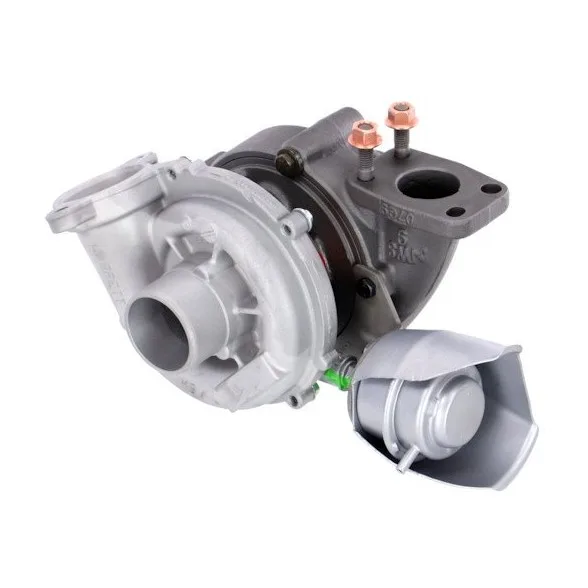
The 1.6 HDi 110 category brings together exchange turbochargers built for the 1.6-litre HDi diesel engine rated at 110 horsepower, an engine code shared across several PSA and Ford-group platforms as well as certain Mazda and Volvo applications. Buyers arriving here are typically working from a known vehicle and engine rather than a part number: a garage diagnosing a loss of power, a driver noticing smoke or a whistling sound, or a home mechanic planning a swap after reading the fault codes. The listings below cover the exchange references currently available for this engine.
The range is built around exchange, not new manufacture: each unit sold here is a reconditioned turbocharger returned to working specification, paired with a core deposit that is refunded once the worn part is sent back into the remanufacturing loop. As a wholesale distributor, autoKUR sources these exchange units from established remanufacturers and cross-references each one against the original equipment number, so the two references listed below map directly onto known 1.6 HDi 110 applications.
Professional uses by trade
The 1.6 HDi 110 turbocharger is called on by different people for different reasons: a professional replacing a failed part between two bookings, someone whose vehicle has just gone into limp mode, an owner who prefers to source the part themselves, and buyers across the DACH region searching in German for the same engine code.
- Independent garage: Ordering a 1.6 HDi 110 turbocharger under a core deposit scheme keeps the exchange cost predictable while the worn cartridge is returned through the same remanufacturing channel.
- Driver in breakdown: Recognising a sudden loss of power, exhaust smoke or a whining noise from under the bonnet often points to this engine's turbocharger reaching the end of its service life.
- Home mechanic enthusiast: Cross-checking the original equipment reference against the exchange part number before ordering avoids receiving a turbocharger with the wrong actuator or flange configuration.
- German-speaking buyer (DACH): Searching for a 1.6 HDi 110 Turbolader by engine code rather than a French or English part number remains the fastest way to confirm this reference fits the vehicle.
- Independent garage: Keeping both exchange references in stock for this engine code shortens turnaround time when a customer's vehicle needs the part replaced without a lengthy wait.
- Home mechanic enthusiast: Understanding the difference between the cartridge, the CHRA and the complete variable-geometry assembly helps decide which exchange unit actually matches the failure observed.
Range comparison
The table below lists the two exchange turbocharger references currently available for the 1.6 HDi 110 engine code, each supplied as a complete unit ready for exchange under the standard core deposit arrangement used across this wholesale range.
| Range | Use | Format |
|---|---|---|
| SL Turbo 762328-5002S | turbocharger exchange, 1.6 HDi 110 | |
| Turbo Garrett 753420-5006S | turbocharger exchange, 1.6 HDi 110 |
How to choose
Selecting between exchange references for the same engine code comes down to a few practical criteria that matter to professionals ordering regularly, from cross-referencing accuracy to how the unit is packaged for transport and storage.
- Confirming the original equipment reference against the vehicle's exact engine code and production date before ordering remains the most reliable way to avoid receiving a mismatched turbocharger.
- Checking whether the exchange unit includes the actuator and associated gaskets avoids a second order once the part arrives at the garage or workshop.
- Verifying that the core deposit and return procedure are clearly stated before purchase helps professional buyers plan the cash flow tied to the exchange scheme.
- Comparing the variable geometry mechanism between references matters when the vehicle's specific production batch used a different actuator design from the original factory fit.
- Reviewing how the reconditioned unit was tested before being listed for exchange gives buyers confidence in the consistent quality of the part they are ordering.
- Considering lead time and stock availability for the specific reference needed helps a garage schedule the replacement around a customer's own availability.
Storage & logistics
Exchange turbochargers should be stored in their original protective packaging until fitment, kept away from moisture and dust that could enter the compressor or turbine housings before the part is installed by a professional. For garages holding stock across several engine codes, keeping references clearly labelled avoids confusion between similar-looking exchange units built for different applications. The core deposit paperwork should travel with the part so the worn cartridge can be identified and matched to the correct exchange record when it is returned into the remanufacturing loop, keeping the wholesale exchange process straightforward for repeat orders.
Since sourcing exchange parts for this engine code, we have prioritised clear cross-referencing between original equipment numbers and exchange units, an approach we have maintained as autoKUR's catalogue has grown since 2026.— autoKUR team
Related categories
Browse our other ranges:
Useful references
For regulatory and sector references, see Reglement (UE) 461/2010 — pieces de rechange et garantie constructeur.