
Available products
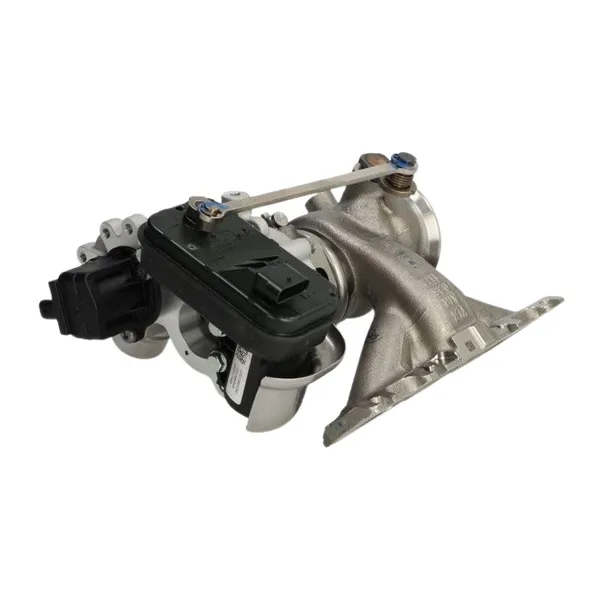
In stock
When your engine loses power, smokes excessively, or emits a high-pitched whistle under load, the issue often traces back to the turbocharger core assembly in 200 to 218 horsepower diesel or gasoline powertrains. This category delivers remanufactured turbochargers designed for direct fitment, ensuring compatibility with your vehicle’s exact motorization without compromising performance. Discover our full range: (H247).
Garages and independent workshops rely on this range for its calibrated remanufacturing process, which restores the turbo’s rotating assembly to factory-like tolerances while maintaining consistent airflow characteristics. The standard exchange format simplifies logistics, allowing professionals to return the worn unit and receive a fully remanufactured core with minimal downtime.
Our team sources these turbos from certified remanufacturers with decades of experience in balancing cartridges and housings, ensuring that each unit meets the thermal and mechanical demands of your engine’s power band. We handle the procurement so you can focus on diagnostics and repairs.
Related categories
Frequently asked questions
About this category
This category covers remanufactured turbochargers for engines producing between 200 and 218 horsepower, a power range common in modern diesel and gasoline vehicles from European and Asian manufacturers. Whether you’re a professional mechanic replacing a failed unit or an enthusiast tackling a DIY repair, these turbos are engineered to restore lost performance without the cost of a brand-new OEM component. The focus here is on exchange-standard cores, where the worn turbo is traded in for a fully remanufactured equivalent.
The range is built around core exchange programs managed by wholesale distributors specializing in powertrain components. These turbos are sourced from remanufacturers who disassemble, inspect, and rebuild each unit to OEM specifications, replacing bearings, seals, and damaged housings as needed. The process ensures that the remanufactured turbo delivers the same airflow and boost characteristics as the original, with the added benefit of a lower price point and reduced environmental impact.
Professional uses by trade
Different users approach turbo replacement with distinct priorities: garages prioritize turnaround time and bulk availability, while DIY enthusiasts seek clear compatibility and straightforward installation. Professionals in Germany and the DACH region often require units that meet local emissions standards, while private owners may focus on cost efficiency and ease of sourcing.
- Le garagiste independant : Replace a failing turbo on a 2018 Renault diesel with 210 horsepower, restoring full boost pressure and eliminating excessive white smoke from the exhaust.
- L'automobiliste depanne : Diagnose a sudden loss of power in a 2015 BMW 320d by swapping the turbocharger with a remanufactured unit, avoiding the high cost of a new OEM part.
- Le passionne qui fait lui-meme : Install a remanufactured turbo on a 2012 Ford Focus ST 2.0 EcoBoost, ensuring the engine regains its original responsiveness after a core exchange.
- Der deutsche Kaeufer (DACH) : Order a turbo for a 2016 VW Golf TDI 2.0 with 204 horsepower, benefiting from a core deposit system that reduces upfront costs and simplifies returns of the old unit.
Range comparison
Below, you’ll find the available turbocharger models for this power range, each listed with its exact reference and intended use case. These units are designed to fit specific engine families and are available in standard exchange formats.
| Range | Use | Format |
|---|---|---|
| Turbo Garrett 850282-5012S | direct fit for 2.0L diesel engines |
How to choose
Selecting the right turbo for your application depends on several factors beyond just horsepower. Compatibility with your vehicle’s engine code, the condition of the core you’re exchanging, and the remanufacturer’s reputation all play a role in ensuring a successful replacement.
- Verify the engine code stamped on your vehicle’s block or listed in the service manual to confirm the turbo’s compatibility before ordering.
- Check the condition of the core you’re exchanging—damaged housings or missing components may incur additional fees or delays in processing.
- Prioritize turbos from remanufacturers with a track record of consistent quality, as airflow characteristics directly impact engine performance.
- For high-mileage engines, consider turbos with reinforced cartridges to withstand prolonged stress and prevent premature failure.
- Ensure the turbo’s housing matches your vehicle’s mounting orientation, whether it’s axial, radial, or variable geometry.
- Confirm that the turbo’s wastegate or variable geometry mechanism is functional, as these components are critical to boost control.
- For diesel applications, select a turbo with a compatible EGR system interface to avoid compatibility issues with emissions controls.
Storage & logistics
Turbochargers in this category are stored in climate-controlled facilities to prevent moisture buildup in the housings and cartridges, which can lead to corrosion or imbalance during operation. The cores are kept in sealed packaging until dispatch, with each unit inspected for shipping damage upon arrival. For garages, bulk storage should be organized by engine family and power rating to streamline picking and reduce handling errors. Regular rotation of stock ensures that older units are used first, maintaining freshness and reliability.
With over a decade of sourcing remanufactured turbos for independent workshops and DIY enthusiasts, our team knows that the right core exchange can turn a day-long repair into a two-hour job—without compromising on quality or performance.— autoKUR team
Related categories
Browse our other ranges:
Useful references
For regulatory and sector references, see Reglement (UE) 461/2010 — pieces de rechange et garantie constructeur.