

Available products
6 references


Frequently asked questions
About this category
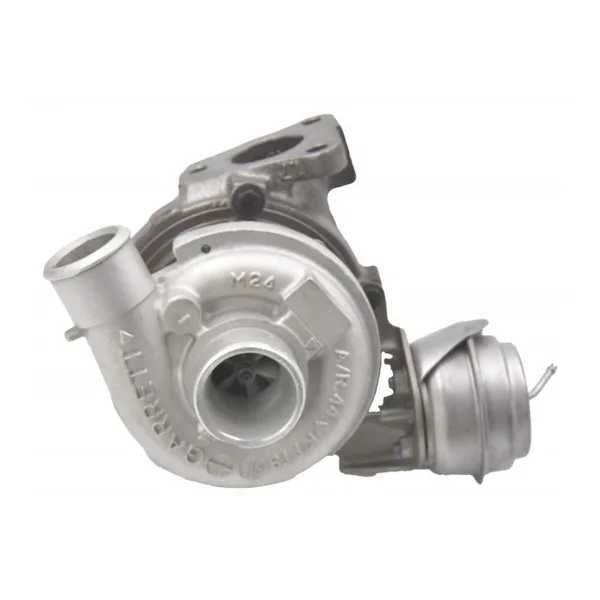
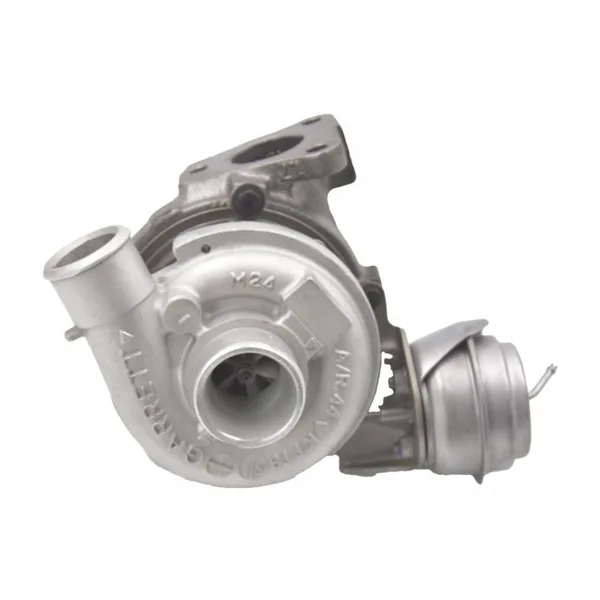
This category serves owners and professionals dealing with Kia Cerato diesel engines, where turbochargers are the most common failure point due to high rotational speeds and heat exposure. Here, you’ll find exchange-standard turbos designed for direct replacement, covering motorizations from 2004 to 2020, with references matching OEM codes and equivalents for seamless integration into repairs or maintenance routines.
The range is built around wholesale partnerships with suppliers specializing in remanufactured turbos, ensuring each unit undergoes core cleaning, bearing replacement, and pressure testing before packaging. The grossist role here is to filter motorization-specific turbos, avoiding generic fits that could delay repairs or void warranties due to incompatibility.
Professional uses by trade
Different users approach turbo selection with distinct priorities: garages need bulk availability and traceable references, DIYers seek clear compatibility guides, and German buyers often compare brands for long-term reliability. Below, each use case is addressed with practical insights.
- Le garagiste independant : Replace a failing turbo on a 2012 Kia Cerato 1.6 CRDi 128hp by matching the engine code D4FB and ordering the Garrett 775274-5003S for a direct fit without additional machining.
- L'automobiliste depanne : Diagnose a whining noise under acceleration on a 2008 Cerato 1.5 CRDi 110hp by identifying the turbo’s variable geometry failure, then sourcing the SL Turbo 740611-5002S as a plug-and-play solution.
- Le passionne qui fait lui-meme : Swap a burnt-out turbo on a 2015 Cerato 1.6 CRDi 136hp by removing the old unit, returning the core for deposit refund, and installing the SL Turbo 49173-02412 with basic hand tools.
- Der deutsche Kaeufer (DACH) : Order a turbo for a 2010 Cerato 2.0 CRDi 140hp by verifying the Mitsubishi 49173-02622 reference, ensuring the CHRA’s variable vanes are pre-lubricated for immediate installation in German workshops.
- Le garagiste independant : Stock turbos for multiple Cerato motorizations to reduce downtime, using the Garrett 775274-5002S as a high-demand unit for 1.5 CRDi models with consistent failure rates.
- L'automobiliste depanne : Avoid costly dealership repairs by sourcing a remanufactured turbo like the SL Turbo 740611-5003S, which matches the original’s performance without the markup of OEM parts.
- Der deutsche Kaeufer (DACH) : Compare German-branded turbos (e.g., SL Turbo) against Garrett for 2014+ Cerato 1.6 CRDi models, prioritizing units with documented remanufacturing cycles to ensure longevity.
Range comparison
Below, the turbos are listed with exact references, motorization compatibility, and practical use cases to guide your selection. Each entry reflects a unit available for exchange-standard replacement, with no implied delivers beyond documented remanufacturing standards.
| Range | Use | Format |
|---|---|---|
| SL Turbo 740611-5002S | 2008-2012 1.5 CRDi 110hp | |
| Turbo Mitsubishi 49173-02622 | 2010-2015 2.0 CRDi 140hp | |
| Turbo Garrett 775274-5003S | 2012-2016 1.6 CRDi 128hp | |
| Turbo Garrett 775274-5002S | 2004-2009 1.5 CRDi 110hp | |
| SL Turbo 740611-5003S | 2013-2020 1.6 CRDi 136hp | |
| SL Turbo 49173-02412 | 2006-2011 1.5 CRDi 110hp |
How to choose
Selecting the right turbo depends on motorization specifics, failure symptoms, and return logistics. Below, key criteria help narrow the choice without overcomplicating the process, focusing on compatibility and practicality for your repair scenario.
- Verify the engine code (e.g., D4FB for 1.6 CRDi) to match the turbo’s OEM reference, avoiding mismatches that could lead to installation issues or core deposit disputes.
- Assess failure symptoms—surging power, blue smoke, or loud whining—to determine if the issue lies in the CHRA, variable geometry, or cartridge, guiding your turbo selection accordingly.
- Check the turbo’s format: complete units simplify installation, while cartridges require disassembly of the CHRA but may offer cost savings for DIYers.
- Prioritize turbos with documented remanufacturing cycles, as these units undergo bearing replacement, cleaning, and pressure testing to restore original performance benchmarks.
- Confirm the core deposit policy before ordering, ensuring the return of the old turbo aligns with your budget and avoids unexpected fees upon delivery.
- For garages, stock turbos with high turnover rates (e.g., Garrett 775274-5002S for 1.5 CRDi models) to minimize downtime and maintain service efficiency.
- German buyers should compare brands like SL Turbo and Garrett for units pre-lubricated and calibrated for European workshop standards, ensuring seamless integration.
Storage & logistics
Turbochargers must be stored in climate-controlled environments to prevent moisture damage to the CHRA’s bearings and variable geometry vanes. For wholesalers, palletized storage with desiccant packs ensures long-term integrity, while garages should keep units in sealed bags until installation to avoid contamination. Returns of used cores require dry, undamaged packaging to qualify for deposit refunds, with clear labeling of motorization compatibility to streamline the reverse logistics process.
Since 2026, our team has focused on sourcing turbos that meet the strictest remanufacturing standards, ensuring each unit delivers consistent performance without the risks of mismatched references or hidden defects.— autoKUR team
Related categories
Browse our other ranges:
Useful references
For regulatory and sector references, see Reglement (UE) 461/2010 — pieces de rechange et garantie constructeur.