


Frequently asked questions
About this category
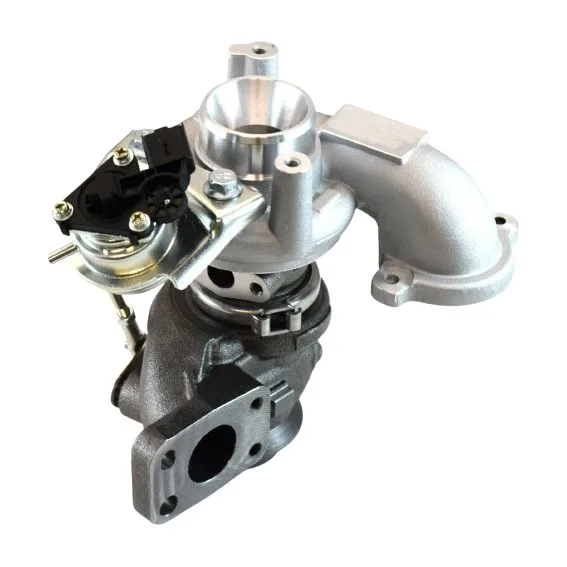
The 1.6 HDi turbocharger category groups exchange units built for the 1.6-litre HDi 92 hp diesel engine, a powerplant shared across several vehicle brands and body styles, from compact hatchbacks to light commercial vans. It addresses anyone facing a loss of power, a warning light, or a whistling noise traced back to the turbocharger, whether that person turns a wrench in a home garage or runs a professional workshop. Vehicle, engine code and power output guide the search, since the same displacement can carry more than one turbocharger design across model years.
The range is built around exchange standard logistics: a reconditioned turbocharger unit is supplied against the return of the worn part, known as the core deposit or Pfand in German-speaking markets. This structure lets a distributor keep the 1.6 HDi turbocharger reference in circulation without each customer paying for new raw material every time, while a professional account benefits from consistent processing across repeat orders placed through the same channel.
Professional uses by trade
A 1.6 HDi turbocharger changes hands for different reasons depending on who orders it. The following overview separates the concerns of an independent garage, a driver stranded by a fault, a hobbyist working from home, and a German-speaking buyer comparing exchange options before committing to a purchase.
- Independent garage: Sourcing a 1.6 HDi turbocharger through an exchange standard channel lets a workshop replace a failing unit quickly without waiting for a rebuild of the original core.
- Independent garage: Matching the OEM reference and variable geometry variant before ordering avoids returning a unit that fits the engine code but not the specific calibration fitted at the factory.
- Stranded driver: A vehicle losing power, entering limp mode, or showing a dashboard warning light often points to the turbocharger rather than the injectors, prompting a search by engine and model.
- Home mechanic: Working from a driveway or a home garage, a hobbyist compares the 1.6 HDi turbocharger reference against the vehicle's engine code before ordering, since fitment mistakes are costly to reverse.
- Home mechanic: Understanding the difference between the turbocharger cartridge, the CHRA, and the complete assembly helps decide which level of exchange unit actually matches the repair being planned.
- German-speaking buyer (DACH): A buyer comparing suppliers in German-speaking markets looks for a generaluberholt exchange unit and a clear Pfand process before deciding where to place an order.
- German-speaking buyer (DACH): Cross-referencing the OEM number against the 1.6 HDi turbocharger listing avoids ordering a part built for a related engine variant that shares only part of its geometry.
Range comparison
The table below summarises the exchange reference stocked for the 1.6 HDi turbocharger, alongside the intended use case and the general packaging format supplied, so a buyer can confirm the match before placing an order.
| Range | Use | Format |
|---|---|---|
| SL Turbo 49373-02013 | 1.6 HDi 92 hp replacement |
How to choose
Choosing the right 1.6 HDi turbocharger reference comes down to a handful of checks that apply whether the buyer runs a workshop or is repairing a single vehicle, listed below to guide the decision.
- Confirming the OEM reference and the engine code together avoids ordering a 1.6 HDi turbocharger built for a related engine that shares the same displacement but a different geometry.
- Checking whether the vehicle uses a cartridge-only repair or requires the complete turbocharger assembly determines which exchange unit actually resolves the symptoms being diagnosed.
- Verifying the core deposit terms in advance clarifies what happens to the worn unit once it is removed, since exchange standard pricing depends on its return.
- Considering how the unit will be stored before fitting matters for a workshop holding several references at once, since a turbocharger left in damp conditions can corrode before it reaches a vehicle.
- Reviewing how consistently a supplier processes repeat orders helps a professional plan stock rotation across the 1.6 HDi turbocharger reference and related engine variants.
- Cross-checking the equivalences listed against the vehicle's build date narrows down which of several turbocharger variants fitted to the same engine family applies to a specific case.
Storage & logistics
A 1.6 HDi turbocharger exchange unit should be kept in its original packaging until fitting begins, away from moisture and direct impact, since the turbine and compressor wheels are precision-balanced components sensitive to handling. A workshop holding several units in stock benefits from organising them by engine code and OEM reference rather than by brand alone, since the same 1.6 HDi turbocharger reference can apply across more than one vehicle marque. Returning the worn core promptly under the exchange standard process keeps the account current and avoids delays on the next order placed through the same channel.
Since 2026 we have followed how the 1.6 HDi turbocharger reference moves across garages and driveways alike, and we keep matching each exchange unit against the exact engine code before it leaves for a workshop bench.— autoKUR team
Related categories
Browse our other ranges:
Useful references
For regulatory and sector references, see Reglement (UE) 461/2010 — pieces de rechange et garantie constructeur.