


Frequently asked questions
About this category
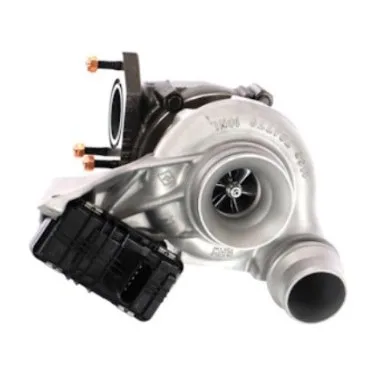
This category serves owners and professionals working on the BMW 518d 143 hp engine, covering model years where the turbocharger is a common wear item. The turbos listed here are exchange-standard units, meaning they arrive ready for installation after a professional removes the faulty component. No additional remanufacturing is required on your end, just swap and return.
The range is built around two core references—Garrett 814501-5006S and Mitsubishi 49335-00585—selected for their widespread use in this engine family. As a wholesale supplier, we aggregate turbos from multiple manufacturers to ensure availability and competitive pricing, acting as a bridge between OEM specifications and aftermarket demand.
Professional uses by trade
Different users approach turbo replacement with distinct priorities: garages need reliability and fast turnaround, DIY enthusiasts seek clear compatibility, and German buyers expect precision engineering. Below, we outline how each group leverages this category to solve real-world problems.
- Le garagiste independant : Replace a failing turbo with a remanufactured unit to minimize vehicle downtime and maintain customer trust in your workshop’s efficiency.
- L'automobiliste depanne : Order an exchange-standard turbo to avoid the expense of a brand-new unit while restoring your BMW’s original power delivery and fuel economy.
- Le passionne qui fait lui-meme : Select a turbo with clear OEM references to ensure a direct fit, then handle the installation yourself to save on labor costs.
- Der deutsche Kaeufer (DACH) : Choose turbos engineered for BMW’s 143 hp diesel engines, where precision and longevity are critical for long-term reliability.
- Le garagiste independant : Use the core deposit system to offset the cost of the new turbo, returning the old unit for recycling and reducing waste disposal fees.
- L'automobiliste depanne : Verify compatibility by cross-referencing your vehicle’s engine code and model year before ordering to avoid mismatched parts.
- Der deutsche Kaeufer (DACH) : Opt for turbos with variable geometry designs, as these are standard in BMW’s 518d engines and require no additional tuning after installation.
Range comparison
Below, you’ll find the two turbos that cover the vast majority of BMW 518d 143 hp applications. Each reference is paired with its primary use case and standard packaging format for wholesale buyers.
| Range | Use | Format |
|---|---|---|
| Turbo Garrett 814501-5006S | Direct replacement for common failure scenarios | |
| Turbo Mitsubishi 49335-00585 | High-mileage engines requiring robust remanufacturing |
How to choose
Selecting the right turbo for a BMW 518d 143 hp involves more than just matching the reference number. Consider factors like packaging, storage conditions, and supplier reliability to ensure the part arrives in optimal condition.
- Verify the turbo’s compatibility with your vehicle’s engine code and model year to avoid mismatched installations that could damage the new unit.
- Check the packaging format—crates for single units or pallets for bulk orders—to align with your workshop’s storage and handling capabilities.
- Prioritize turbos from suppliers with a track record of consistent quality, as irregularities in remanufacturing can lead to premature failures.
- Assess the supplier’s stock rotation practices to ensure you receive a unit that hasn’t been sitting in storage for extended periods.
- Confirm the inclusion of a core deposit system, which allows you to offset costs by returning the old turbo for recycling or remanufacturing.
- Evaluate the supplier’s return policy for defective units, as this protects your investment if the part arrives damaged or incompatible.
- For German buyers, ensure the turbo meets local emissions standards and is labeled for use in the DACH region to avoid compliance issues.
Storage & logistics
Turbochargers should be stored in a dry, temperature-controlled environment to prevent moisture damage to internal components. For bulk orders, use pallets with protective covers and avoid stacking units directly on concrete floors to reduce the risk of condensation. Garages should inspect turbos upon arrival for signs of transit damage, such as bent housings or loose cartridges, and report discrepancies immediately to the supplier to initiate a replacement or refund process.
With over a decade of experience in turbo remanufacturing, our team has seen how a single mismatched unit can cascade into repeated failures. We source turbos that meet the same tolerances as OEM parts, ensuring your BMW 518d runs as intended from day one.— autoKUR team
Related categories
Browse our other ranges:
Useful references
For regulatory and sector references, see Reglement (UE) 461/2010 — pieces de rechange et garantie constructeur.