
Available products
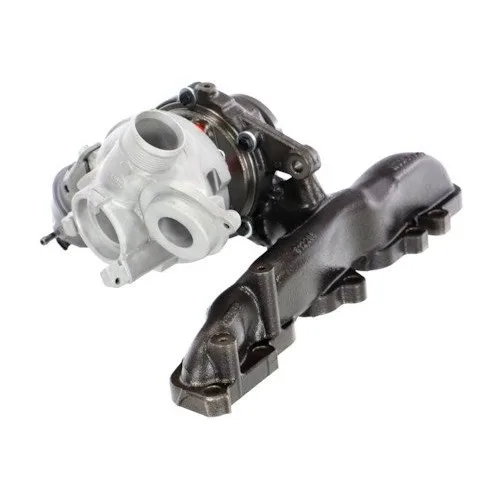
In stock
For the AUDI Q3 (8UB / 8UG) in 2.0 TDI 184 hp (135 kW diesel), the autoKUR catalogue holds 1 exchange-standard reference(s). At equal displacement, two outputs do not call for the same part.
Engine specification: 1968 cm³, diesel, built from 11/2014 to 10/2018. Matching part number: 821866-5009S (SL Turbo). Compare with the code stamped on your part.
Other engines of the AUDI Q3 (8UB / 8UG): 2.0 TFSI 220 hp, 2.0 TFSI 211 hp, 2.0 TDI 177 hp. If the code stamped on your part is legible, search by reference remains the safest route. 24-month warranty.
Related categories
Frequently asked questions
About this category
The 2.0 TDI 184 hp turbocharger exchange standard category serves automotive professionals and enthusiasts seeking remanufactured solutions for Volkswagen Group diesel engines. This range includes turbochargers designed for direct replacement, addressing common failure symptoms such as power loss, excessive smoke, or abnormal noises. Compatibility spans multiple vehicle models and model years, ensuring broad applicability for repair and maintenance operations.
This range is curated from a network of specialized suppliers, with each turbocharger undergoing a standardized remanufacturing process to restore original performance levels. The wholesale model ensures competitive pricing for garages while maintaining traceability through OEM reference matching. Stock rotation is optimized to reduce lead times for critical repairs.
Professional uses by trade
Different user profiles approach the 2.0 TDI 184 hp turbocharger exchange standard category with distinct priorities. Professionals prioritize technical specifications and bulk availability, while DIY users focus on ease of installation and cost efficiency. German-speaking markets often emphasize long-term reliability and OEM-like performance.
- Independent garage: Replace a failing turbocharger on a 2015 Audi A4 2.0 TDI 184 hp with a remanufactured unit matching OEM flow characteristics.
- DIY enthusiast: Source a turbocharger exchange standard for a 2012 Volkswagen Passat 2.0 TDI 184 hp to restore power output after detecting boost pressure drops.
- German buyer: Purchase a remanufactured turbocharger for a 2018 Skoda Octavia 2.0 TDI 184 hp, ensuring compatibility with the vehicle's engine control unit settings.
- Mechanic: Identify the correct turbocharger assembly for a 2016 Seat Leon 2.0 TDI 184 hp by cross-referencing the engine code and vehicle model year.
- Fleet manager: Maintain a stock of exchange standard turbochargers for multiple 2.0 TDI 184 hp vehicles to minimize downtime during scheduled maintenance.
- Restoration specialist: Source a turbocharger for a classic 2008 Audi A6 2.0 TDI 184 hp, prioritizing remanufactured units with documented service history.
- Performance tuner: Select a high-flow turbocharger exchange standard for a modified 2.0 TDI 184 hp engine to enhance power delivery while maintaining drivability.
Range comparison
The following table presents the available turbocharger exchange standard options for the 2.0 TDI 184 hp category, including key compatibility details and packaging formats.
| Range | Use | Format |
|---|---|---|
| SL Turbo 821866-5009S | Direct replacement for VW/Audi 2.0 TDI 184 hp |
How to choose
Selecting the right turbocharger exchange standard for a 2.0 TDI 184 hp application requires evaluating several technical and logistical factors. Compatibility with the vehicle's engine code and model year is paramount, followed by consideration of the turbocharger's internal components.
- Verify the engine code (e.g., CFFB, CFFC) to ensure the turbocharger matches the vehicle's specific motorization and power output requirements.
- Assess the turbocharger's internal state, including the CHRA (Center Housing Rotating Assembly) and variable geometry mechanism, for signs of wear or remanufacturing quality.
- Evaluate packaging options based on order volume, with bulk crates offering cost savings for professional repair shops and individual units for smaller operations.
- Check the remanufacturing process documentation to confirm compliance with OEM flow rates and pressure specifications for the 2.0 TDI 184 hp platform.
- Consider the availability of core deposit options for used turbochargers, which can reduce upfront costs when returning the faulty unit.
- Review the supplier's stock rotation policy to ensure timely delivery of critical components for emergency repairs.
- Prioritize suppliers with transparent traceability systems, linking each turbocharger to its original motorization and remanufacturing batch.
Storage & logistics
For B2B storage and logistics, turbochargers in this category require controlled environments to prevent contamination of internal components. Bulk crates should be stored in dry, temperature-stable conditions away from direct sunlight, with individual units protected by anti-static packaging. Inventory rotation follows a first-in-first-out system to maintain optimal performance characteristics. Professional garages should allocate dedicated storage space for turbocharger exchange standards, separate from other automotive components, to minimize handling errors and contamination risks.
With over 15 years of experience in turbocharger remanufacturing, our team has refined the process to deliver components that meet the demanding standards of the 2.0 TDI 184 hp platform, ensuring consistent performance across applications.— autoKUR team
Related categories
Browse our other ranges:
Useful references
For regulatory and sector references, see Reglement (UE) 461/2010 — pieces de rechange et garantie constructeur.