
Available products
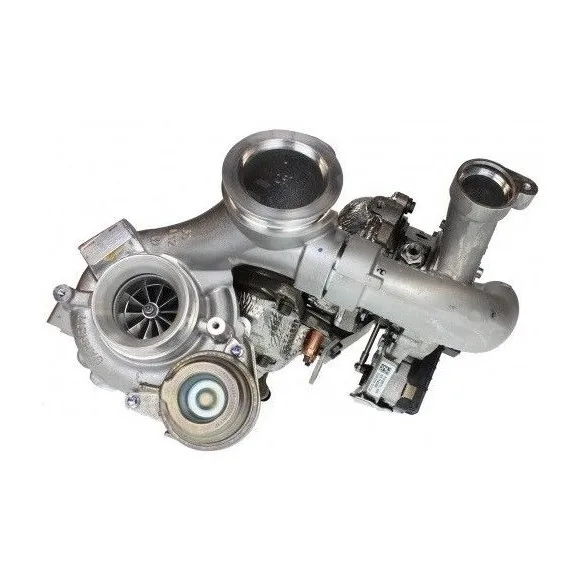
In stock
1 exchange-standard reference(s) match the AUDI A6 (C7) 3.0 TDI 313 hp (230 kW diesel). Output is the deciding criterion: a part meant for another output of the same displacement will not fit.
Engine specification: 2967 cm³, diesel, built from 11/2011 to 09/2018. Matching part number: 805713-5009S (Garrett). Compare with the code stamped on your part.
Other engines of the AUDI A6 (C7): 3.0 TDI 272 hp, 2.0 TFSI 252 hp, 2.0 TFSI 249 hp. If the code stamped on your part is legible, search by reference remains the safest route. 24-month warranty.
Related categories
Frequently asked questions
About this category
The 3.0 TDI 313 HP turbocharger category addresses a critical need in diesel engine repair: replacing a failing turbo without compromising performance or compatibility. These turbos are designed for engines found in Audi Q7, Porsche Cayenne, and Volkswagen Touareg models from 2010 to 2018, where power delivery and emissions compliance depend on precise turbo function. Whether you are a mechanic facing a roadside breakdown or a DIY owner restoring a project vehicle, this category provides the exact part for your motorization.
Each turbo in this range is sourced from suppliers specializing in diesel turbo remanufacturing, where cartridges and CHRA components undergo rigorous testing for variable geometry accuracy and bearing wear. The grossist role ensures bulk availability with core deposit options, allowing workshops to manage stock efficiently while offering customers a cost-effective alternative to new OEM parts.
Professional uses by trade
Different users approach this category with distinct priorities: garages prioritize fast fitment and bulk pricing, stranded drivers need immediate replacement, DIYers seek technical clarity, and German buyers compare options before ordering. The following usages reflect these real-world scenarios without favoring any single approach.
- Independent garage: Replace a failing turbo on a 2015 Audi Q7 3.0 TDI 313 HP with a reconditioned Garrett unit to restore full power delivery and avoid costly engine damage.
- Stranded driver: Order a direct-fit turbo for a broken-down Porsche Cayenne 3.0 TDI 313 HP to resume travel without waiting for OEM parts or workshop appointments.
- DIY enthusiast: Source a compatible turbo for a 2012 Volkswagen Touareg 3.0 TDI 313 HP project, ensuring the part matches OEM geometry and variable vane control for seamless installation.
- German buyer: Compare reconditioned turbos for a 2014 Audi A8 3.0 TDI 313 HP, focusing on core deposit options and supplier reputation before making a purchase.
- Workshop manager: Stock multiple Garrett 805713-5009S turbos to cover common 3.0 TDI 313 HP failures, reducing lead times and improving customer satisfaction with immediate availability.
- Fleet operator: Maintain a rotating inventory of reconditioned turbos for company vehicles, leveraging core deposits to lower long-term maintenance costs while ensuring consistent performance across the fleet.
- Classic car restorer: Find a turbo matching the original specifications for a rare 2010 Porsche Cayenne Turbo S, avoiding modern aftermarket alternatives that may not meet OEM standards.
Range comparison
The following table compares the available turbos for 3.0 TDI 313 HP engines, listing each part by reference, intended use, and packaging format to simplify selection for professionals and owners alike.
| Range | Use | Format |
|---|---|---|
| Turbo Garrett 805713-5009S | Emergency swap for Volkswagen Touareg 3.0 TDI 313 HP |
How to choose
Selecting the right turbo for a 3.0 TDI 313 HP engine requires attention to motorization details, packaging options, and supplier reliability. The following criteria help professionals and owners make an informed decision without overcomplicating the process.
- Verify the turbo matches your vehicle’s motorization code and power output to avoid fitment issues or performance mismatches in the 3.0 TDI 313 HP range.
- Check packaging options: bulk boxes for workshops reduce per-unit costs, while core deposit boxes lower upfront expenses for owners returning a used turbo.
- Prioritize turbos with documented remanufacturing processes, including CHRA inspection and variable geometry calibration, to ensure long-term reliability.
- Compare supplier turnaround times and return policies, as delays can impact workshop schedules or personal project timelines for 3.0 TDI owners.
- Assess the condition of the turbo’s cartridge and housing, looking for signs of wear or damage that could affect performance even after remanufacturing.
- Confirm compatibility with your vehicle’s emission control system, as some 3.0 TDI 313 HP turbos include integrated EGR or DPF-related features.
- Evaluate the core deposit fee and refund process, ensuring it aligns with your budget and willingness to manage the return of a used turbo.
Storage & logistics
For workshops, storing reconditioned turbos requires climate-controlled environments to prevent moisture damage to cartridges and variable vane mechanisms. Bulk boxes should be stacked on pallets with desiccant packs to maintain dry conditions, while single units for emergency swaps benefit from individual protective sleeves. German buyers ordering for personal use should inspect packaging for transit damage and store the turbo in a clean, dry space until installation, avoiding exposure to extreme temperatures or direct sunlight that could degrade seals or lubricants.
With over a decade of sourcing turbos for European diesel engines, our team knows that a 3.0 TDI 313 HP failure often stems from a worn CHRA or misaligned variable geometry, not the engine itself. We prioritize turbos with documented core returns and remanufacturing standards to deliver consistent quality every time.— autoKUR team
Related categories
Browse our other ranges:
Useful references
For regulatory and sector references, see Reglement (UE) 461/2010 — pieces de rechange et garantie constructeur.