

Available products
3 references


Frequently asked questions
About this category
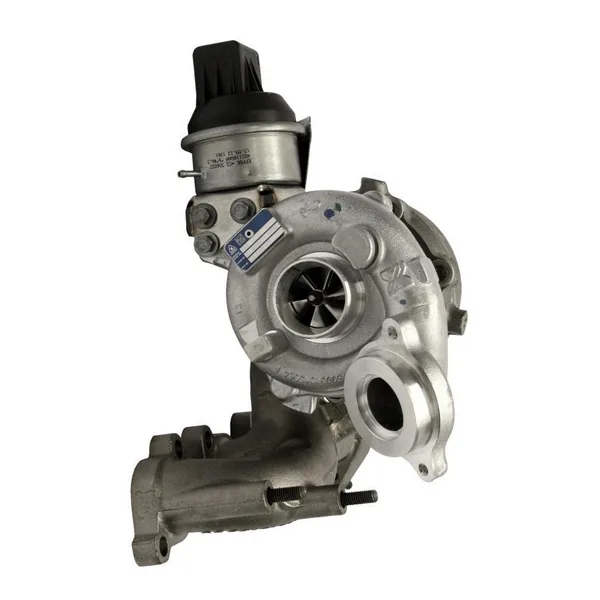
This 2.0 TDI 136 hp category brings together exchange turbochargers built for one engine and power output shared across several Volkswagen Group models. It serves the independent garage sourcing a part between two jobs, the stranded motorist reading a fault code at the roadside, the DIY owner replacing a cartridge in the driveway, and the German-speaking buyer searching by Leistung and Hubraum rather than a catalogue number. Each listing groups the references known to fit this 2.0 TDI turbocharger exchange, so the engine and power rating stay the entry point, not a part number guessed at random.
The range is built around remanufactured units: each core returns through inspection and cartridge exchange before it re-enters stock, under the consigne principle familiar to any garage that has sent a used turbo back for credit. As a wholesaler, we group the references that share the 2.0 TDI 136 hp fitment so a buyer compares variable-geometry mechanisms, turbine housings, and actuator types side by side instead of chasing scattered listings across multiple sellers.
Professional uses by trade
A 2.0 TDI turbocharger exchange reaches this engine family through several different hands: the garage diagnosing a limp-mode fault, the driver stranded by a whistling or smoking engine, the owner replacing the part themselves, and the German-speaking buyer comparing Ersatzteile by engine code. Each profile reads the same reference differently.
- Le garagiste independant : Orders a 2.0 TDI turbocharger exchange unit by engine and power rating when a customer's vehicle needs the part swapped between two scheduled jobs.
- L'automobiliste depanne : Searches for the replacement turbocharger after noticing a whistling noise, blue smoke, or a sudden switch into limp mode on the motorway.
- Le passionne qui fait lui-meme : Compares cartridge assembly and turbine housing details against the worn original before ordering the exchange part for a driveway swap.
- Der deutsche Kaeufer (DACH) : Reads engine power and displacement instead of a part number, then matches the 2.0 TDI turbocharger exchange reference to the Fahrzeug in question.
- Le garagiste independant : Keeps a core deposit cycle running by returning the failed cartridge after fitting the exchange unit, so the next order stays in stock.
- L'automobiliste depanne : Checks the OEM reference printed on the old turbocharger housing against the equivalences listed here before placing an order.
Range comparison
The table below lines up the three 2.0 TDI turbocharger references carried in this category, so a buyer can check which exchange unit matches the vehicle in front of them before ordering.
| Range | Use | Format |
|---|---|---|
| SL Turbo 5303 988 0205 | engine power loss repair | |
| SL Turbo 5440 988 0036 | limp mode fault fix | |
| SL Turbo 724930-5010S | whistling noise replacement |
How to choose
Choosing among these three references comes down to matching the exact reference on the worn part, since 2.0 TDI 136 hp vehicles were built across several years and platforms that do not all share the same turbocharger.
- Match the exact reference stamped on the housing of the worn turbocharger, since 2.0 TDI 136 hp applications do not all share the same part.
- Check whether the actuator is electronic or vacuum-operated, since the two variable-geometry control types are not interchangeable within this engine family.
- Confirm the core deposit terms before ordering, so the used cartridge can be returned under the same exchange scheme once the new unit is fitted.
- Confirm the vehicle's production period and platform before ordering, since several Volkswagen Group models carried the 2.0 TDI 136 hp engine without sharing every turbocharger reference.
- Request the fitment documentation alongside the reference, so the professional carrying out the installation can confirm turbine housing and gasket compatibility before mounting it.
- Compare the OEM reference and its listed equivalences against the number on the old part, rather than relying on the engine code alone.
Storage & logistics
Exchange turbochargers travel and store as sealed mechanical assemblies rather than perishable stock, but handling still matters: each unit should stay boxed until the moment of fitting, with the turbine and compressor housings protected from impact during transport between wholesaler, garage, and driveway. The core deposit cycle depends on the returned cartridge arriving intact, so the same care applies on the way back. For a garage managing several 2.0 TDI turbocharger exchange references at once, keeping each boxed unit labelled by reference avoids mismatching cartridges during a busy week, and protects the actuator and geometry mechanism from dust before the housing is opened at the workbench.
Since 2026 our team has tracked which 2.0 TDI turbocharger references fail most often across this engine family, and we build the exchange range around what garages actually order, not a guess at what might fit.— autoKUR team
Related categories
Browse our other ranges:
Useful references
For regulatory and sector references, see Reglement (UE) 461/2010 — pieces de rechange et garantie constructeur.