
Available products
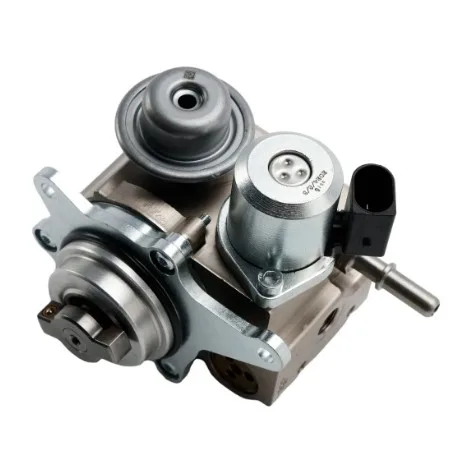
In stock
The PEUGEOT 308 1 1.6 16v 140 hp (103 kW petrol) is covered by 1 exchange-standard reference(s). Check output before displacement: it determines the part.
Engine specification: 1598 cm³, petrol, built from 09/2007 to 10/2014. Matching part number: 1675941280 (Mister Turbo). Compare with the code stamped on your part.
Other engines of the PEUGEOT 308 1: 1.6 16v 174 hp, 1.6 16v 156 hp, 1.6 16v 150 hp. If the code stamped on your part is legible, search by reference remains the safest route. 24-month warranty.
Related categories
Frequently asked questions
About this category
The 1.6 16v 140 hp engine category covers a wide range of vehicles where the high-pressure pump plays a decisive role in performance and reliability. Whether you are a mechanic diagnosing a misfire, a car owner facing sudden power loss, or a German buyer seeking a cost-effective replacement, this section provides the technical clarity needed to identify the right pump. Exchange-standard units offer a balance between affordability and performance, making them a practical choice for both professionals and enthusiasts.
This range is built around the needs of independent garages and DIY mechanics, prioritizing compatibility and ease of installation. As a wholesale supplier, we aggregate high-pressure pumps from leading manufacturers, ensuring that workshops and car owners alike have access to reliable, pre-approved solutions. The focus remains on functional remanufacturing, where each pump undergoes rigorous testing to restore its original performance characteristics.
Professional uses by trade
Different users approach the high-pressure pump for distinct reasons, whether to resolve a persistent issue, maintain fleet efficiency, or perform a DIY repair. Garages rely on these pumps to minimize vehicle downtime, while car owners seek durable replacements that restore engine responsiveness. German buyers, in particular, value the balance between cost and reliability in exchange-standard components.
- Le garagiste independant : Replace a failing pump during routine maintenance to prevent unexpected breakdowns and customer complaints about power loss or rough idling.
- L'automobiliste depanne : Diagnose a sudden drop in fuel efficiency or a whining noise from the engine bay, then order the correct pump to restore normal operation without costly dealership visits.
- Le passionne qui fait lui-meme : Swap out a worn pump using basic tools, leveraging exchange-standard units to avoid the complexity of OEM sourcing or expensive repairs.
- Der deutsche Kaeufer (DACH) : Seek a cost-effective alternative to OEM pumps, prioritizing compatibility with common 1.6 16v 140 hp applications in the German market.
- Le garagiste independant : Address a customer complaint of hard starting or prolonged cranking by installing a remanufactured pump, ensuring the vehicle meets emission standards.
- L'automobiliste depanne : Notice excessive black smoke from the exhaust, trace it to a faulty pump, and order a replacement to restore clean combustion and engine smoothness.
- Der deutsche Kaeufer (DACH) : Prefer exchange-standard pumps for their balance of price and performance, especially when OEM parts are unavailable or prohibitively expensive.
Range comparison
The following table compares high-pressure pumps available in exchange-standard format, focusing on compatibility and practical use cases for professionals and car owners alike.
| Range | Use | Format |
|---|---|---|
| High-pressure pump Mister Turbo 1675941280 | direct replacement for common 1.6 16v 140 hp engines |
How to choose
Selecting the right high-pressure pump requires attention to compatibility, condition, and intended use, whether for a one-time repair or fleet maintenance.
- Verify the engine code and vehicle model to ensure the pump matches the motorization exactly, avoiding mismatches that lead to poor performance or damage.
- Inspect the pump’s condition for signs of wear, such as corrosion or damaged fittings, as these indicate whether an exchange-standard unit is suitable for immediate use.
- Check the packaging for protective seals and documentation, ensuring the pump arrives in a condition ready for installation without additional preparation.
- Prioritize pumps with a history of consistent performance in similar applications, as this reduces the risk of repeat failures or compatibility issues.
- For workshops, consider the pump’s availability in bulk to streamline inventory and reduce lead times for repeat customers with the same motorization.
- Assess the pump’s compatibility with the vehicle’s fuel system, including pressure ratings and connector types, to avoid installation complications.
- Evaluate the pump’s warranty terms, even if limited, as this provides a baseline for quality assurance and customer confidence in the repair.
Storage & logistics
High-pressure pumps in exchange-standard format require careful storage to maintain their condition until installation. Keep units in a dry, temperature-controlled environment away from direct sunlight and contaminants like dust or oil. For workshops, organize pumps by vehicle model or engine code to simplify retrieval and reduce handling errors. Avoid stacking heavy items on top of the packaging, as this can deform seals or damage internal components. Regularly inspect stored pumps for signs of degradation, such as rust or cracked housings, and rotate stock to ensure older units are used first.
With over a decade of experience in remanufacturing high-pressure pumps, our team has seen how the right exchange-standard unit can transform a vehicle’s performance overnight. We don’t just sell pumps; we restore confidence in every repair, one motorization at a time.— autoKUR team
Related categories
Browse our other ranges:
- 1.6 16v 174 hp
- 1.6 16v 156 hp
- 1.6 16v 150 hp
- 1.6 HDi 92 hp
- 1.6 163 hp
- 2.0 HDi 136 hp
Useful references
For regulatory and sector references, see Reglement (UE) 461/2010 — pieces de rechange et garantie constructeur.