


Frequently asked questions
About this category
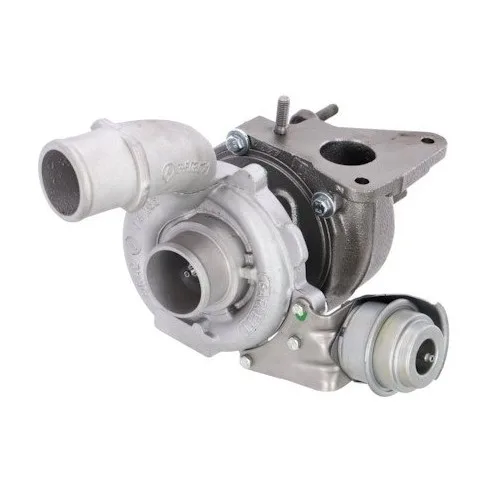
The 1.9 dCi 120 turbo category brings together the exchange turbochargers associated with this widely used Renault-Nissan diesel engine, fitted across several passenger and light commercial models over the years. It is built for three overlapping audiences: independent garages replacing a failed unit for a customer, drivers dealing with a sudden loss of power or a warning light, and hobbyists who prefer to identify and order the part themselves. Inside, buyers find remanufactured units referenced by their original turbo code, ready to be matched against the vehicle's engine number.
Each reference in this range is built from a documented core-exchange process: a used turbocharger is returned, and a remanufactured or reconditioned unit is issued in its place under the same reference. The wholesale role in this chain is to keep the cross-reference table current — OEM numbers, engine codes, and known equivalences — so that a garage or reseller can identify the correct part from a vehicle description alone, without needing to dismantle anything first.
Professional uses by trade
Each profession approaches this category with a different starting point: a garage arrives with a diagnostic code, a driver arrives with a symptom, and a hobbyist arrives with a part number already in hand. The uses below reflect how each of these readers is likely to search and what they need confirmed before ordering.
- Independent garage: Cross-checking a customer's engine code and turbo reference before ordering an exchange unit, to avoid a return trip for the wrong part.
- Independent garage: Sourcing a wholesale reference in advance of a scheduled repair so the vehicle is not left waiting on a single part.
- Stranded driver: Identifying which turbocharger reference matches a 1.9 dCi 120 turbo engine after a sudden loss of power or a dashboard warning light.
- Passionate DIY mechanic: Comparing OEM numbers and equivalences listed here against the reference stamped on the removed turbocharger before placing an order.
- Passionate DIY mechanic: Reading through symptom descriptions, such as whistling or reduced boost, to narrow down which exchange unit fits the vehicle.
- German buyer (DACH): Looking up the correct exchange turbocharger for a 1.9 dCi 120 engine before arranging installation with a workshop of their choice.
Range comparison
The table below lists the two exchange turbocharger references stocked for the 1.9 dCi 120 turbo engine, each shown with its typical use case and the wholesale format it ships in, to help narrow down the right one before ordering.
| Range | Use | Format |
|---|---|---|
| Turbo Garrett 738123-5004S | engine code match check | |
| SL Turbo 708639-5011S | OEM equivalence cross-check |
How to choose
Selecting the right turbo among near-identical references comes down to a handful of checks a buyer can run before paying, rather than after a part arrives that does not fit the vehicle in front of them.
- Match the reference stamped on the removed turbocharger against the OEM numbers listed here, since visually similar units can carry different actuator calibrations.
- Confirm the engine code on the vehicle's documents rather than the model name alone, since one model can carry several 1.9 dCi 120 turbo variants.
- Check whether the core-exchange process applies to the order, since the used turbocharger will need to be returned once the replacement is fitted.
- Ask whether the packaging suits a single repair or a batch order, since ordering in volume calls for a different format than a one-off replacement.
- Review the cross-reference list for equivalent OEM numbers, since the same physical unit is sometimes sold under more than one manufacturer code.
- Consider having the fitting checked by a qualified workshop once the part arrives, since correct installation affects how the new turbocharger performs.
Storage & logistics
Exchange turbochargers should be stored upright in their original packaging until fitting, with oil and coolant ports left capped to keep contaminants out of the internal bearings and variable geometry mechanism. For garages holding several references on a shelf, keeping the packaging intact preserves the reference label needed for the core-exchange return, and prevents mixing up visually similar units meant for different engine codes. Wholesale orders shipped as a batch benefit from being logged by reference number on arrival, so that when a specific 1.9 dCi 120 turbo code is needed for a repair, it can be located without unpacking the whole batch.
Since 2026, our team has focused on getting the reference right the first time — matching engine codes, OEM numbers, and known equivalences before a turbocharger ever leaves the warehouse for a 1.9 dCi 120 repair.— autoKUR team
Related categories
Browse our other ranges:
Useful references
For regulatory and sector references, see Reglement (UE) 461/2010 — pieces de rechange et garantie constructeur.