

Available products
4 references



Frequently asked questions
About this category
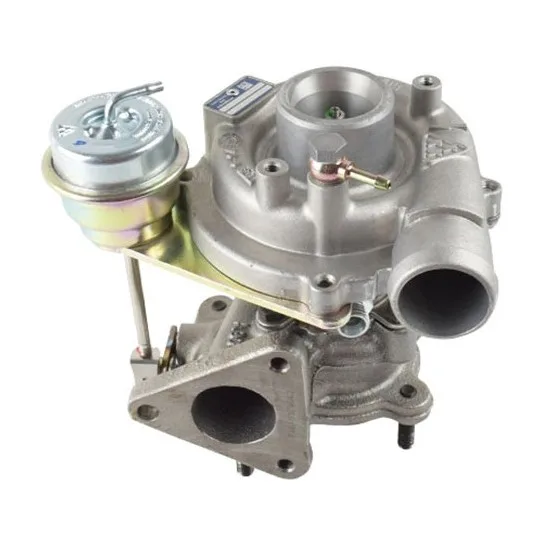
This category gathers exchange-standard turbochargers built for the 1.9 TDI engine family rated at 90 hp, a widely fitted diesel unit across several vehicle generations. It serves anyone working from a motorization rather than a part number: the independent garage diagnosing a limp-mode fault, the driver stranded by a sudden loss of power, and the DIY enthusiast comparing a BorgWarner unit against a Garrett equivalent. Every reference here is remanufactured under an exchange-standard process rather than sold as new.
The range is built around engine code and known OEM cross-references rather than brand loyalty alone, so a BorgWarner KKK unit and a Garrett equivalent sit side by side when both fit the same 1.9 TDI 90 hp block. A wholesale distributor's role here is cross-referencing: matching each incoming core to its correct geometry, cartridge type, and actuator before listing it, so a professional installer or a confident DIY buyer can order against a motorization instead of guessing.
Professional uses by trade
A 1.9 TDI turbo replacement is rarely bought casually — it follows a specific symptom or a professional diagnosis. The following usages describe how each audience typically approaches the decision, from a garage confirming a part number to a driver reacting to a sudden warning light.
- The independent garage: Cross-references a customer's engine code against known OEM numbers before ordering, avoiding a mismatched geometry or actuator on an exchange-standard core.
- The independent garage: Keeps a rotation of common 1.9 TDI references on hand to shorten turnaround when a customer reports sudden power loss or a limp-mode warning.
- The stranded driver: Searches by vehicle and engine variant after a workshop diagnosis points to the turbocharger rather than the injectors or the high-pressure pump.
- The hands-on enthusiast: Compares a BorgWarner KKK reference against a Garrett equivalent, checking variable-geometry design before ordering a core-exchange unit for a home installation.
- The hands-on enthusiast: Reads the failure symptoms — whistling, blue smoke, or a sluggish response — to confirm the turbocharger before ordering, rather than the injector system.
- Der deutsche Käufer (DACH): Looks for exact engine-code compatibility and clear core-deposit terms before ordering a 1.9 TDI turbo replacement across a cross-border route.
Range comparison
The table below groups the two exchange-standard references available for the 1.9 TDI 90 hp engine family, each matched to the same motorization but built on a different original manufacturer's geometry.
| Range | Use | Format |
|---|---|---|
| Turbo BorgWarner - KKK 5303 988 0006 | 1.9 TDI 90 hp replacement | |
| Turbo Garrett 454172-0002 | 1.9 TDI 90 hp replacement |
How to choose
Choosing between these references comes down to matching the exact engine code and geometry rather than brand preference alone. The criteria below help a garage or a DIY buyer confirm fit before committing to a core exchange.
- Match the engine code stamped on the block against the reference's known compatibility list, since two 90 hp variants can carry different turbo geometries.
- Confirm whether the original unit uses variable geometry before ordering, since a fixed-geometry replacement will not interface with the vehicle's existing actuator wiring.
- Check the cartridge and CHRA design against the failure symptom reported — a worn CHRA often causes whistling, while a stuck actuator causes limp mode.
- Verify the OEM reference number printed on the old unit against the equivalence list, since aftermarket numbering can differ between BorgWarner and Garrett catalogs.
- Review the core-deposit and return terms for the worn turbocharger, since exchange-standard pricing depends on returning a complete, rebuildable core within the agreed window.
- Ask about the warranty terms attached to the exchange-standard unit before ordering, since coverage conditions can vary between a BorgWarner and a Garrett reference.
- Plan for professional installation by a workshop when the job involves recalibrating the actuator or bleeding the oil feed line, since this exceeds a typical driveway repair.
Storage & logistics
A core-exchange turbocharger should stay in its original packaging until installation, kept upright and away from moisture to protect the actuator and the oil and coolant ports from contamination. When a garage holds several 1.9 TDI references in rotation, tagging each unit with its engine code and OEM reference prevents mix-ups between the BorgWarner and Garrett geometries. The worn core returned under the exchange-standard terms should be drained, capped, and packaged the same way it arrived, since a damaged or incomplete core can affect the deposit return.
Since 2026 we've matched exchange-standard turbochargers to engine codes rather than guesswork, and the pattern holds: a garage that confirms geometry and OEM reference before ordering avoids most of the comebacks on a 1.9 TDI 90 hp core exchange.— autoKUR team
Related categories
Browse our other ranges:
Useful references
For regulatory and sector references, see Reglement (UE) 461/2010 — pieces de rechange et garantie constructeur.