


Frequently asked questions
About this category
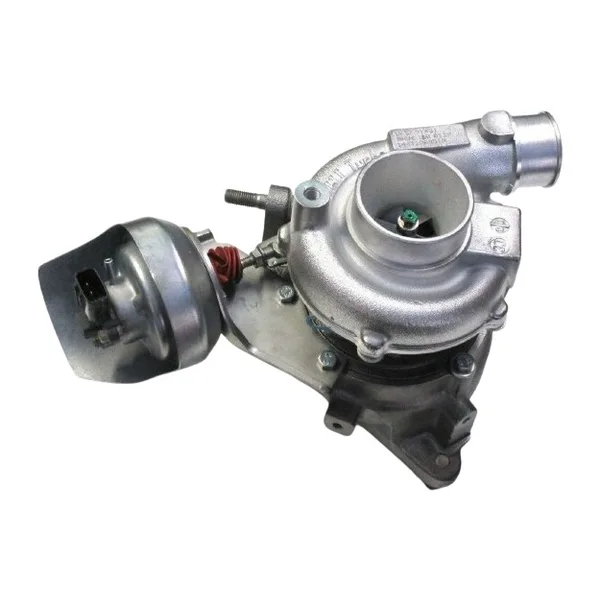
This category serves owners and repair professionals seeking remanufactured turbochargers for 2.0 D 150 HP diesel engines, a segment where performance and reliability hinge on precise engineering. Whether you’re a mechanic sourcing parts for a client’s vehicle or an enthusiast restoring a project car, these turbos are designed to restore lost power and efficiency without the cost of new OEM units.
The range is curated from leading remanufacturers, with each turbo selected for its compatibility with specific engine codes and vehicle models. The role of the wholesaler here is to aggregate these units, ensuring consistent availability and competitive pricing for independent workshops and DIY mechanics alike.
Professional uses by trade
Different users approach this category with distinct needs: garages prioritize bulk availability and core return logistics, while DIY enthusiasts focus on single-unit compatibility and ease of installation.
- Le garagiste independant : Uses remanufactured turbos as direct replacements for customer vehicles, leveraging core deposit systems to reduce upfront costs and maintain profit margins on labor.
- L'automobiliste depanne : Seeks a remanufactured turbo to resolve sudden power loss or excessive exhaust smoke, often opting for units with clear OEM equivalency to avoid compatibility issues.
- Le passionne qui fait lui-meme : Prefers remanufactured turbos for restoration projects, prioritizing units with documented compatibility and straightforward installation instructions.
- Der deutsche Kaeufer (DACH) : Relies on remanufactured turbos for cost-effective repairs, often comparing core deposit options and warranty terms before committing to a purchase.
- Le garagiste independant : Orders remanufactured turbos in bulk to stock high-demand models, ensuring quick turnaround for common engine failures without tying up capital in slow-moving inventory.
- L'automobiliste depanne : Chooses remanufactured turbos for budget-conscious repairs, balancing price against the risk of hidden defects by selecting units from reputable remanufacturers.
- Der deutsche Kaeufer (DACH) : Uses remanufactured turbos as a stopgap solution for older vehicles, where new OEM parts are prohibitively expensive or unavailable.
Range comparison
Below, you’ll find the three remanufactured turbocharger models compatible with 2.0 D 150 HP diesel engines, each listed with its primary use case and standard packaging format.
| Range | Use | Format |
|---|---|---|
| Turbo IHI VF55 | direct fit for Renault engines | |
| SL Turbo VF50 | universal diesel applications | |
| Turbo IHI VF57 | high-performance variants |
How to choose
Selecting the right remanufactured turbo requires evaluating several factors, from core deposit policies to long-term reliability, ensuring the unit meets both technical and economic needs.
- Conditioning: Prefer turbos with protective packaging to prevent damage during transit, especially for bulk orders destined for workshops with high turnover.
- Conservation: Check storage instructions to avoid exposure to moisture or extreme temperatures, which can degrade seals and bearings over time.
- Regularity: Opt for turbos from remanufacturers with documented quality control processes, reducing the risk of premature failure after installation.
- Rotation: For garages, prioritize models with high turnover to minimize dead stock and maximize return on investment in inventory.
- Compatibility: Verify OEM reference numbers and engine codes to ensure the turbo matches the vehicle’s specifications without modifications.
- Core deposit: Compare deposit amounts and return policies, as these directly impact the net cost of the turbo and the hassle of core disposal.
- Warranty terms: Review warranty length and coverage, focusing on whether it includes labor costs in case of failure post-installation by a third party.
Storage & logistics
For workshops, storing remanufactured turbos requires climate-controlled environments to prevent seal degradation and bearing corrosion, with bulk units organized by engine code for quick retrieval. Palletized orders should be stacked no higher than three units to avoid crushing damage, while individual cartons benefit from shelf storage away from direct sunlight. Always inspect packaging for punctures or moisture before accepting delivery, as even minor breaches can compromise the turbo’s integrity during storage.
With over a decade of sourcing experience, our team ensures every remanufactured turbo meets the same standards we’d demand for our own vehicles, prioritizing consistency over shortcuts in the supply chain.— autoKUR team
Related categories
Browse our other ranges:
Useful references
For regulatory and sector references, see Reglement (UE) 461/2010 — pieces de rechange et garantie constructeur.