
Available products
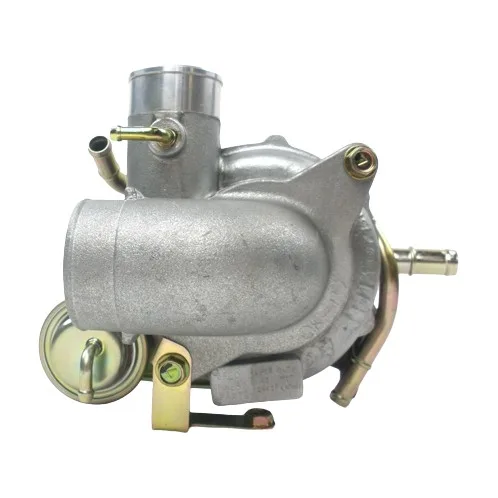
In stock
For the SUBARU Legacy 2 in 2.0 TURBO SUPER 200 hp (147 kW petrol), the autoKUR catalogue holds 1 exchange-standard reference(s). At equal displacement, two outputs do not call for the same part.
Engine specification: 2000 cm³, petrol, built from 01/1991 to 12/1993. Matching part number: VF12 (IHI). Compare with the code stamped on your part.
Other engines of the SUBARU Legacy 2: 2.0 GT 280 hp. If the code stamped on your part is legible, search by reference remains the safest route. 24-month warranty.
Related categories
Frequently asked questions
About this category
The 2.0 turbo super 200 hp category targets owners and technicians working with high-performance turbocharged engines in the 200 horsepower range. This segment includes vehicles from major manufacturers where the turbocharger plays a pivotal role in maintaining power output, fuel economy, and emissions compliance. Here, you will find exchange standard turbochargers designed to restore lost performance without the need for costly repairs or dealership interventions.
This range is curated to address the specific needs of garages and motorists by sourcing remanufactured turbochargers that undergo rigorous testing for performance and durability. The focus is on providing units that match OEM specifications, ensuring compatibility with the vehicle’s engine management system and emissions controls. The role of the wholesaler is to streamline access to these high-demand components while maintaining competitive pricing for bulk orders.
Professional uses by trade
Different user profiles rely on this category for distinct reasons, whether it’s restoring a vehicle’s performance, avoiding downtime in a professional workshop, or ensuring a reliable fit for a DIY project. Each use case demands precision in compatibility and ease of installation, which this range is designed to deliver.
- Le garagiste independant : Restores lost power in customer vehicles with minimal labor time by installing a pre-tested exchange standard turbocharger that matches the exact motorization.
- L'automobiliste depanne : Quickly replaces a failing turbocharger to avoid prolonged vehicle downtime, ensuring the engine returns to optimal performance levels without costly dealership visits.
- Le passionne qui fait lui-meme : Sources a high-quality, remanufactured turbo for a DIY installation, benefiting from clear compatibility data and straightforward fitting instructions.
- Der deutsche Kaeufer (DACH) : Finds a reliable exchange standard solution for German-engineered vehicles where OEM parts are expensive or difficult to source, ensuring long-term reliability.
- Le garagiste independant : Avoids the hassle of core returns by selecting a turbocharger with a straightforward exchange process, reducing administrative overhead for workshop operations.
- L'automobiliste depanne : Chooses a turbocharger that comes with clear documentation on compatibility, reducing the risk of mismatched installations and subsequent issues.
- Der deutsche Kaeufer (DACH) : Benefits from a range that includes models compatible with popular German marques, ensuring seamless integration with existing engine systems.
Range comparison
This section presents the available turbocharger models within the 2.0 turbo super 200 hp category, each designed to meet the exacting standards of modern engines. The table below highlights key specifications and compatibility details to guide your selection.
| Range | Use | Format |
|---|---|---|
| Turbo IHI VF12 | OEM-compatible performance restoration |
How to choose
Selecting the right turbocharger for a 2.0 turbo super 200 hp engine requires attention to several key factors. Compatibility with the vehicle’s motorization, the condition of the core, and the availability of supporting documentation are all critical to ensuring a successful installation.
- Verify the engine code and vehicle model to ensure the turbocharger matches the exact motorization, avoiding mismatches that could lead to performance issues or damage.
- Check the condition of the core deposit to confirm it is free of excessive wear or damage, as this can impact the remanufacturing quality and longevity of the replacement unit.
- Prioritize turbochargers with clear OEM reference numbers and compatibility charts, which simplify the selection process and reduce the risk of incorrect installations.
- Opt for units that come with documented testing procedures, ensuring the turbocharger meets performance standards before it leaves the warehouse.
- Consider the availability of technical support and installation guidance, which can be invaluable for both professionals and DIY enthusiasts during the fitting process.
- Evaluate the packaging and handling instructions to ensure the turbocharger arrives in optimal condition and is protected during transit.
- Assess the return policy for core deposits, as a straightforward process can save time and reduce administrative burdens for workshops and private buyers.
Storage & logistics
For professionals managing inventory, storing exchange standard turbochargers requires attention to environmental conditions to prevent corrosion or damage. Units should be kept in a dry, temperature-controlled environment away from direct sunlight and contaminants. Regular stock rotation ensures that older units are used first, maintaining the freshness and reliability of the inventory. For workshops, organizing by vehicle make and model simplifies retrieval and reduces the risk of mismatched installations. Clear labeling and digital tracking systems further enhance efficiency, allowing technicians to quickly locate the correct turbocharger for any given motorization.
With over a decade of experience in turbocharger remanufacturing, our team understands the critical role these components play in modern engines. We focus on delivering products that restore performance without compromise, ensuring every unit meets the high standards expected by both professionals and enthusiasts.— autoKUR team
Related categories
Browse our other ranges:
Useful references
For regulatory and sector references, see Reglement (UE) 461/2010 — pieces de rechange et garantie constructeur.