
Available products
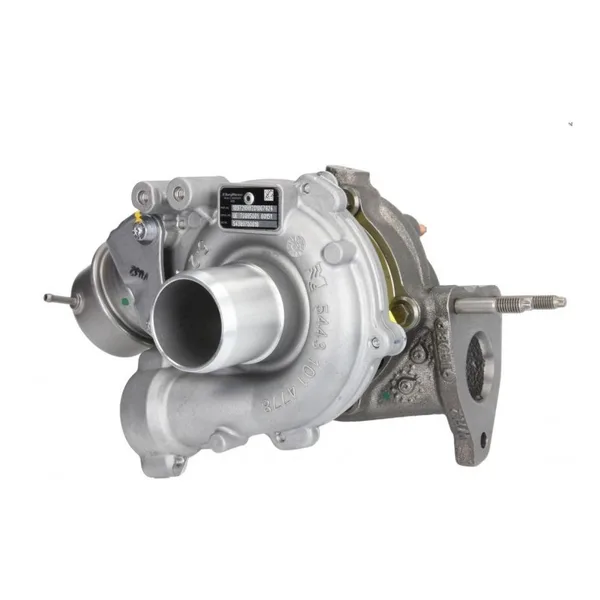
In stock
The RENAULT Scenic 3 1.6 DCi 130 hp (96 kW diesel) is covered by 1 exchange-standard reference(s). Check output before displacement: it determines the part.
Engine specification: 1598 cm³, diesel, built since 04/2011. Matching part number: 5438 988 0018 (SL Turbo). Compare with the code stamped on your part.
Other engines of the RENAULT Scenic 3: 2.0 DCi 160 hp, 2.0 DCi 150 hp, 1.2 TCe 132 hp. If the code stamped on your part is legible, search by reference remains the safest route. 24-month warranty.
Related categories
Frequently asked questions
About this category
This category brings together the exchange-standard turbocharger reference associated with the 1.6 dci 130 engine code, a configuration found across a range of passenger and light commercial vehicles sharing this power output. It is built for anyone who arrives already knowing their engine rather than a part number: the independent garage ordering for a customer's car, the driver dealing with a sudden loss of power, the home mechanic tackling the replacement themselves, and buyers in Germany and neighbouring markets researching the same engine platform under its local naming.
The range is organised around the exchange-standard principle: a reconditioned unit is supplied against the return of the worn part, known as a core deposit or Pfand depending on the market. As a wholesaler, the role here is to match the engine code to the correct reference reliably, rather than requiring the buyer to identify component-level part numbers themselves, which keeps ordering straightforward whether the vehicle is queued for professional installation or self-directed replacement.
Professional uses by trade
The 1.6 dci 130 turbocharger reference is approached differently depending on who is ordering it. A garage plans it into a scheduled repair, a stranded driver needs it identified quickly, a home mechanic wants confidence in compatibility before ordering, and a German-speaking buyer expects the same clarity in their own language. The list below reflects each of these entry points.
- Independent garage: scheduling the exchange-standard 1.6 dci 130 turbocharger reference into a customer repair once the engine code and power output have been confirmed on the vehicle.
- Independent garage: cross-checking the OEM reference against this listing before ordering, so the correct exchange unit reaches the workshop without a second trip to source it.
- Stranded driver: recognising symptoms such as a noticeable loss of power, unusual exhaust smoke, or a whistling noise before requesting the matching engine reference from a garage.
- Home mechanic: reviewing the compatibility of this exchange-standard reference against the vehicle's engine code and production years before removing the original unit.
- Home mechanic: preparing the core return of the worn turbocharger alongside the order, since the exchange-standard principle requires the used part to come back.
- German-speaking buyer (DACH): searching for the 1.6 dci 130 engine reference under its local terminology while comparing generalüberholt exchange units for the same engine code.
Range comparison
The table below lists the exchange-standard reference available in this category, alongside its typical use case and the wholesale format in which it is supplied, to help professional buyers plan their order.
| Range | Use | Format |
|---|---|---|
| SL Turbo 5438 988 0018 | 1.6 dci 130 engine replacement |
How to choose
Choosing the right reference for a 1.6 dci 130 turbocharger replacement comes down to a handful of practical checks that apply whether the buyer is a workshop, a home mechanic, or ordering across the German border.
- Confirm the engine code and power output stamped on the vehicle rather than relying on the model name alone, since several variants share the same designation.
- Check that the reference matches the geometry type fitted to the original unit, since variable geometry and fixed geometry turbochargers are not interchangeable.
- Verify whether the failure concerns the full cartridge, the CHRA, or an associated component such as the injector or high-pressure pump before ordering.
- Confirm the exchange-standard core deposit process in advance, since the worn part must be returned once the replacement has been installed by a professional.
- Ask about the warranty duration attached to the reconditioned reference before finalising the order, as terms can differ between suppliers of exchange-standard parts.
- For professional accounts, confirm the wholesale packaging and the degressive pricing structure applicable to recurring orders of the same engine reference.
Storage & logistics
Exchange-standard turbocharger units should be kept in their original packaging until installation, stored in a dry area away from direct sunlight and temperature extremes that can affect seals and gaskets over time. For garages managing rotating stock, keeping the reference clearly labelled alongside its associated engine code reduces the risk of mismatched orders when multiple 1.6 dci 130 variants pass through the workshop in the same period. When a core return is due, the worn unit should be packaged separately and clearly identified, since exchange-standard logistics depend on that part travelling back through the same distribution channel it came from.
Since 2026, we have organised our exchange-standard references by engine code rather than by vehicle brand, because that is how professionals and home mechanics actually search when a 1.6 dci 130 turbocharger needs replacing.— autoKUR team
Related categories
Browse our other ranges:
Useful references
For regulatory and sector references, see Reglement (UE) 461/2010 — pieces de rechange et garantie constructeur.