
Available products
In stock
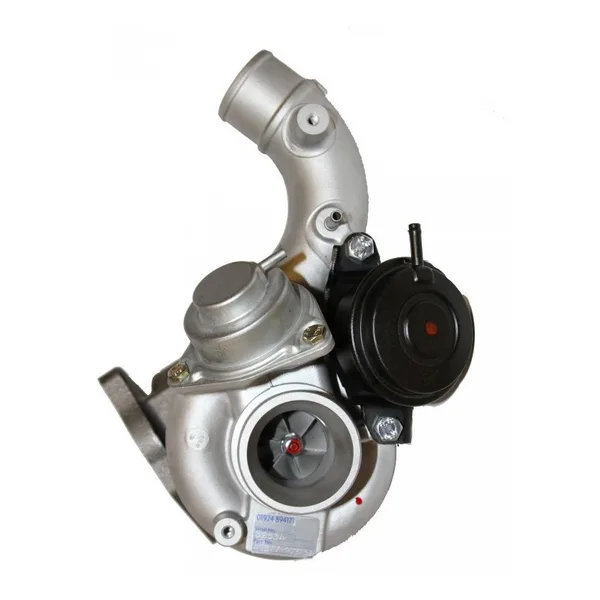
For the RENAULT Megane 3 RS in 2.0 TCe 250 hp (184 kW petrol), the autoKUR catalogue holds 1 exchange-standard reference(s). At equal displacement, two outputs do not call for the same part.
Engine specification: 1998 cm³, petrol, built since 05/2009. Matching part number: 49377-07325 (Mitsubishi). Compare with the code stamped on your part.
Other engines of the RENAULT Megane 3 RS: 2.0 TCe 273 hp, 2.0 TCe 265 hp. If the code stamped on your part is legible, search by reference remains the safest route. 24-month warranty.
Related categories
Frequently asked questions
About this category
The 2.0 TCe 250 hp category covers exchange turbochargers built for this specific petrol engine, remanufactured from cores returned through the exchange-standard process rather than sold new from a factory line. It is aimed at anyone who arrives already knowing their vehicle, engine code, and power figure, not a reference number: independent garages sourcing a replacement for a customer's car, motorists dealing with a loss of power or warning light, and enthusiasts who plan to fit the part themselves. Everything listed here is scoped to this one motorisation.
The range is built around exchange-standard remanufacturing: a worn turbocharger is returned as a core deposit, and a reconditioned unit is supplied in its place, keeping the wholesale flow moving without waiting on new production. A wholesaler's role here is to hold verified references across engine variants, sort them by geometry and calibration, and make the compatible unit findable by vehicle and engine code rather than by part number alone.
Professional uses by trade
The people who search this category rarely share the same starting point. A garage is confirming a reference before ordering for a customer, a motorist is reacting to a dashboard warning, an enthusiast is planning a driveway repair, and a German buyer is comparing calibration and core-deposit terms. The uses below reflect each entry point.
- Independent garage owner: Confirms the exact engine code and power figure before ordering an exchange turbocharger, avoiding a mismatched geometry that would delay a customer's repair.
- Independent garage owner: Compares wholesale conditioning and core-deposit terms across several references to keep workshop stock turning without tying up capital in unused units.
- Stranded motorist: Searches by vehicle and engine after noticing a loss of power, thick exhaust smoke, or a dashboard warning, trying to identify which part actually failed.
- Hands-on enthusiast: Cross-references the OEM part number and equivalences before buying, since fitting the turbocharger without professional help still requires an exact geometry match.
- Hands-on enthusiast: Reads through variable geometry and cartridge details to understand what the exchange unit includes before ordering, rather than assuming it covers everything.
- German buyer (DACH): Checks calibration and core-deposit conditions in advance, since a mismatched Pfand process can delay the return of the used part.
Range comparison
The table below groups the exchange turbocharger listed for this engine by intended use and wholesale format, so a professional buyer can see at a glance how the reference is conditioned before requesting a quote.
| Range | Use | Format |
|---|---|---|
| Turbo Mitsubishi 49377-07325 | engine exchange replacement |
How to choose
Choosing an exchange turbocharger from this category comes down to a handful of wholesale criteria beyond the reference number itself, particularly for buyers ordering in volume or planning cross-border shipment to a workshop outside France.
- Conditioning of the exchange unit matters as much as the reference itself, since packaging suited to freight handling reduces the risk of damage before it reaches the workshop.
- Conservation of the core deposit process should be confirmed upfront, since the used turbocharger must be returned in a condition that allows it to be remanufactured.
- Regularity of supply across a given engine variant lets a garage plan repairs around a predictable lead time instead of reordering each time stock runs low.
- Rotation of exchange stock by engine variant helps a professional buyer avoid holding a reference that rarely turns over in a specific regional vehicle fleet.
- Calibration data tied to the engine code should match the vehicle exactly, since a geometry mismatch on a variable-geometry turbo affects how the engine responds under load.
- Compatibility with OEM references and their known equivalences should be checked line by line rather than assumed from the engine name alone.
Storage & logistics
Exchange turbochargers held in this category should be stored in a dry, temperature-stable space, upright where the housing design allows it, to avoid stress on seals and variable-geometry mechanisms during the wait between core return and reconditioning. For wholesale volumes, batching by engine variant on clearly labelled pallets shortens picking time and lowers the chance of shipping the wrong geometry to a workshop. Core deposits awaiting return should be kept separate from ready-to-ship reconditioned units, since mixing the two flows is the most common source of fulfilment delay in cross-border orders.
Since 2026, our team has focused on matching exchange turbochargers to the exact engine variant they were built for, rather than treating a reference number as interchangeable across a whole model range.— autoKUR team
Related categories
Browse our other ranges:
Useful references
For regulatory and sector references, see Reglement (UE) 461/2010 — pieces de rechange et garantie constructeur.