
Available products
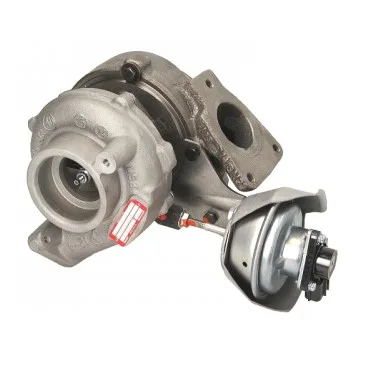
In stock
1 exchange-standard reference(s) match the PEUGEOT 308 CC 2.0 HDi 140 hp (103 kW diesel). Output is the deciding criterion: a part meant for another output of the same displacement will not fit.
Engine specification: 1997 cm³, diesel, built from 04/2009 to 12/2012. Matching part number: 756047-5005S (SL Turbo). Compare with the code stamped on your part.
Other engines of the PEUGEOT 308 CC: 1.6 THP 200 hp, 2.0 HDi 163 hp, 1.6 16v 156 hp. If the code stamped on your part is legible, search by reference remains the safest route. 24-month warranty.
Related categories
Frequently asked questions
About this category
The Renault 2.0 HDi 140 hp turbo category addresses a common need among vehicle owners and repair professionals: restoring engine performance after turbo failure. This engine, widely used in Renault models from the mid-2000s onward, relies on a turbocharger that can degrade over time due to carbon buildup, bearing wear, or vane damage. Exchange standard turbos provide a cost-effective solution, offering the same functionality as new units but at a fraction of the price, while reducing environmental impact by reusing core components.
This range is built around the principle of remanufacturing, where worn turbos are disassembled, cleaned, and rebuilt with new bearings, seals, and vanes to OEM standards. The process is overseen by specialists who ensure each unit meets strict quality controls before being reintroduced to the market. Wholesale suppliers play a key role in distributing these parts, bridging the gap between remanufacturers and end-users like garages and DIY mechanics.
Professional uses by trade
Different user profiles approach the 2.0 HDi 140 hp turbo category with distinct priorities. Garages focus on turnaround time and compatibility, while DIY enthusiasts prioritize cost savings and ease of installation. German buyers, in particular, value precision engineering and long-term reliability in their turbo choices.
- Le garagiste independant : Replace a failing turbo on a Renault Laguna III 2.0 dCi 140 to restore full engine power and avoid costly customer downtime.
- L'automobiliste depanne : Source an exchange standard turbo for a Peugeot 407 2.0 HDi 140 to resolve sudden power loss and excessive smoke from the exhaust.
- Le passionne qui fait lui-meme : Install a remanufactured turbo on a Renault Megane II 2.0 dCi 140 to extend the vehicle's lifespan without professional labor costs.
- Der deutsche Kaeufer (DACH) : Purchase a high-quality exchange standard turbo for a Citroen C5 2.0 HDi 140, prioritizing durability and OEM-like performance for long-distance driving.
- Le garagiste independant : Use an exchange standard turbo to repair a fleet vehicle with a 2.0 HDi 140 engine, ensuring consistent performance across multiple units.
- L'automobiliste depanne : Find a compatible turbo for a Renault Espace IV 2.0 dCi 140 after diagnosing a boost pressure drop and unusual whistling noises.
- Der deutsche Kaeufer (DACH) : Opt for a remanufactured turbo with variable geometry for a Peugeot 308 2.0 HDi 140, balancing cost and performance for daily commuting.
Range comparison
The following turbos are specifically designed for the Renault 2.0 HDi 140 hp engine, covering a range of vehicle models and model years. Each unit is tested for compatibility and performance to ensure a direct fit and reliable operation.
| Range | Use | Format |
|---|---|---|
| SL Turbo 756047-5005S | DIY installation with core return |
How to choose
Selecting the right turbo for a 2.0 HDi 140 hp engine requires attention to several key factors. Compatibility with the vehicle's model year and engine code is essential, as is the condition of the core unit being replaced. Packaging and warranty terms also play a role in the decision-making process for both professionals and private buyers.
- Verify the engine code (e.g., P9X, P9Y) to ensure the turbo matches the vehicle's specifications and avoids installation issues.
- Check the condition of the core unit being returned, as some suppliers require a functional core for the exchange standard process to apply.
- Assess the packaging quality, as well-lubricated and protected turbos arrive ready for immediate installation without additional preparation.
- Prioritize suppliers with a track record of consistent quality, as turbos for the 2.0 HDi 140 hp must withstand high temperatures and pressures.
- Consider the warranty terms, which typically cover defects but not installation errors or external damage to the turbo.
- Evaluate the supplier's return policy for cores, as some may charge fees for damaged or non-returned units.
- For variable geometry turbos, ensure the vane mechanism is free of carbon deposits and operates smoothly before installation.
Storage & logistics
Proper storage of exchange standard turbos is critical to maintaining their condition before installation. Keep units in a dry, temperature-controlled environment away from direct sunlight and contaminants. For bulk purchases, use sturdy packaging that prevents movement and vibration, which can damage internal components. Garages should rotate stock based on expiration dates, if applicable, and inspect turbos for signs of moisture or corrosion before use. Always handle turbos with care, avoiding drops or impacts that could misalign the CHRA or damage the housing.
With over a decade of experience in turbo remanufacturing, our team has seen firsthand how a well-chosen exchange standard unit can transform a struggling engine into a reliable powerhouse. Every turbo we distribute undergoes rigorous testing to ensure it meets the demands of the 2.0 HDi 140 hp category, from city driving to long-haul journeys.— autoKUR team
Related categories
Browse our other ranges:
Useful references
For regulatory and sector references, see Reglement (UE) 461/2010 — pieces de rechange et garantie constructeur.