
Available products
In stock
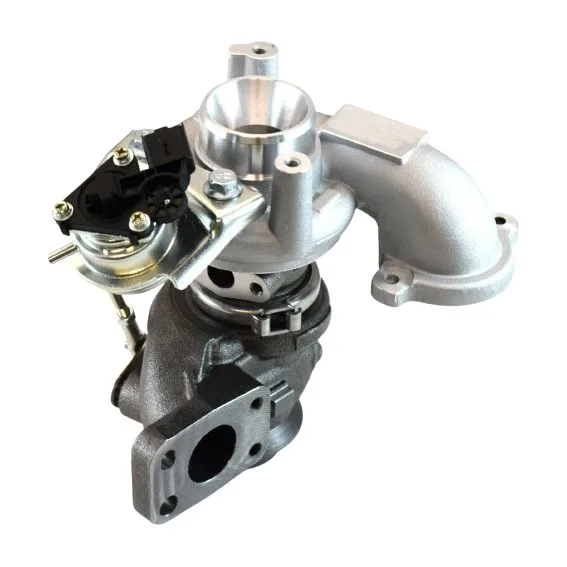
For the PEUGEOT 207 SW in 1.6 HDi 92 hp (68 kW diesel), the autoKUR catalogue holds 1 exchange-standard reference(s). At equal displacement, two outputs do not call for the same part.
Engine specification: 1560 cm³, diesel, built from 11/2009 to 12/2013. Matching part number: 49373-02013 (SL Turbo). Compare with the code stamped on your part.
Other engines of the PEUGEOT 207 SW: 1.6 16v 174 hp. If the code stamped on your part is legible, search by reference remains the safest route. 24-month warranty.
Related categories
Frequently asked questions
About this category
This category groups the exchange turbocharger reference associated with the 1.6 HDi 92 HP engine, a diesel unit fitted across several passenger car and light commercial platforms under different manufacturer badges. It is built for anyone working from the vehicle rather than a catalogue number: an independent garage confirming a diagnosis, a driver managing a breakdown, an enthusiast handling their own maintenance, and buyers researching the equivalent unit for vehicles registered in Germany, Austria, or Switzerland. Each listing states the compatible engine codes and the OEM references it replaces.
The range is built around a single exchange-standard reference rather than a wide spread of near-duplicates, which keeps the choice straightforward once the engine code is confirmed. Each unit is offered as a core-exchange item: the failed part is returned once the replacement is fitted, which is how remanufactured turbochargers keep a consistent supply without relying on a newly manufactured component for every order.
Professional uses by trade
A turbocharger failure on the 1.6 HDi 92 HP reads differently depending on who is looking at it. The signs below - a flat spot in power, visible smoke, a whistling noise, or the engine dropping into limp mode - are read against the profile of each buyer searching for this part.
- Le garagiste independant : Confirms the engine code against the vehicle's documentation before ordering, since several manufacturers shared this turbocharger across unrelated model ranges.
- L'automobiliste depanne : Searches for the part after a diagnosis has already named the failing component, arriving with the engine code rather than a turbocharger reference.
- Le passionne qui fait lui-meme : Cross-checks the OEM reference against the part already fitted to the vehicle before ordering, planning the swap without outside help.
- Der deutsche Kaeufer (DACH) : Looks for the equivalent exchange unit for a vehicle registered in Germany, Austria, or Switzerland, matching it by engine code rather than commercial name.
- Le garagiste independant : Plans the core return alongside the order, since the exchange process depends on sending the failed unit back once the replacement is fitted.
- L'automobiliste depanne : Checks whether the reported symptoms point to the turbocharger itself or to a related component before committing to a single part.
Range comparison
This engine family is served by a single confirmed reference, listed below with the practical role it plays and how it typically reaches a workshop or driver rather than a retail shelf.
| Range | Use | Format |
|---|---|---|
| SL Turbo 49373-02013 | turbocharger core exchange |
How to choose
Ordering the right part depends on matching a handful of details before checkout, since the engine code carries more weight here than the vehicle's commercial name.
- Confirm the exact engine code stamped on the vehicle rather than relying on the commercial engine name, since several codes share the same displacement and power rating.
- Check the OEM reference already fitted to the vehicle against the equivalence listed for this turbocharger before finalizing the order.
- Verify whether the reported symptoms match a turbocharger fault or point instead to a related component sharing the same warning signs.
- Account for the core return as part of the order from the outset, since the exchange process depends on sending the failed unit back.
- Match the part to the exact registration details for vehicles registered under DACH-market documentation, where model naming can differ from the domestic market.
- Cross-reference the packaging and handling instructions before repeated orders, particularly for garages purchasing several units across different engine codes.
Storage & logistics
A core-exchange turbocharger should stay in its original packaging until the moment it is fitted, since the housing and actuator are more exposed once unboxed than a fully assembled engine component. Workshops holding several units across different engine codes benefit from keeping each reference labelled and separated, since visually similar turbochargers can carry different calibrations for what looks like the same engine. The returned core should be kept dry and protected from further damage between removal and shipment, as its condition on return is assessed before the exchange is closed.
Since 2026, our team has read the 1.6 HDi 92 HP turbocharger through its engine code and reported symptoms first, because that pairing tells us more about the actual fault than the vehicle's badge ever could.— autoKUR team
Related categories
Browse our other ranges:
Useful references
For regulatory and sector references, see Reglement (UE) 461/2010 — pieces de rechange et garantie constructeur.