
Available products
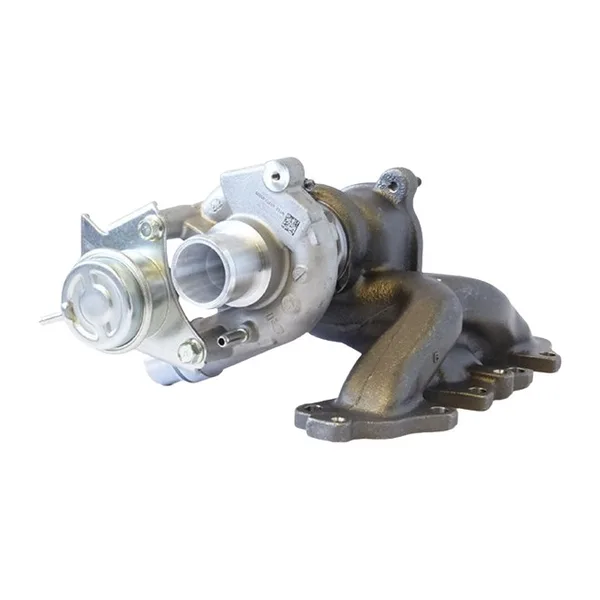
In stock
For the NISSAN Juke 1 in 1.2 DIG-T 115 hp (85 kW petrol), the autoKUR catalogue holds 1 exchange-standard reference(s). At equal displacement, two outputs do not call for the same part.
Engine specification: 1197 cm³, petrol, built since 05/2014. Matching part number: 49373-05005 (Mitsubishi). Compare with the code stamped on your part.
Other engines of the NISSAN Juke 1: 1.6 DIG-T NISMO RS 218 hp, 1.6 DIG-T NISMO RS 214 hp, 1.6 DIG-T NISMO 200 hp. If the code stamped on your part is legible, search by reference remains the safest route. 24-month warranty.
Related categories
Frequently asked questions
About this category
This category covers the exchange turbocharger for the 1.2 DIG-T 115 engine, one specific reference identified for vehicles built around that engine and power output. It addresses the reader who arrives with a motorisation in mind rather than a part number: an independent garage checking a customer's vehicle, a driver stranded by a loss of power or a whistling noise, a hands-on owner planning to fit the part themselves, and a German-speaking buyer comparing exchange parts across the DACH market. What is listed here is the part itself, its identification, and its exchange condition.
The range here is built around a single, precisely identified reference rather than a broad shelf of near-matches, because a turbocharger that fits the wrong engine code creates more disruption than an empty shelf would. Behind that single listing sits a distributor relationship that tracks the part from the manufacturer through to the exchange and return of the worn core, so that what reaches a garage or an owner's driveway is the reference they searched for, not an approximation of it.
Professional uses by trade
The same reference serves four different moments: a workshop confirming a diagnosis, a driver whose car has just gone into limp mode, an owner who intends to fit the part without booking a workshop slot, and a DACH buyer comparing listings in German. Each reads the same technical facts differently.
- Le garagiste independant : An independent garage cross-checks the engine code and OEM reference here before ordering, avoiding a wasted core deposit on a mismatched part.
- L'automobiliste depanne : A driver facing a sudden loss of power, exhaust smoke, or a whistling noise identifies this as the turbocharger matching their exact motorisation.
- Le passionne qui fait lui-meme : A hands-on owner planning to fit the part themselves reads the cartridge and CHRA details here to confirm compatibility first.
- Der deutsche Kaeufer (DACH) : A German-speaking buyer compares this exchange turbocharger against listings from other sellers, checking the engine code and core deposit terms first.
- Le garagiste independant : A workshop ordering several units for similar vehicles relies on the same engine code family to avoid checking a separate catalogue each time.
- L'automobiliste depanne : A driver in limp mode checks the variable geometry description against the symptoms felt on the road before ordering the part.
Range comparison
This listing sits alone in its category, matched to a single engine and power output rather than offered as one option among several. The table below states what it is, who reaches for it, and how it is supplied as an exchange part.
| Range | Use | Format |
|---|---|---|
| Turbo Mitsubishi 49373-05005 | engine code identification |
How to choose
Choosing the right part here is less about preference than about elimination: which engine code, which core condition, and which documentation the buyer already holds. The points below are what a garage or a careful owner checks before placing the order.
- Confirm the engine code stamped on the original part or found in the vehicle's documentation matches this reference exactly, since a close match is not enough.
- Check whether the old turbocharger is returned as a core deposit, since the exchange system relies on the worn cartridge and CHRA coming back.
- Identify whether the symptoms felt on the road, such as a loss of power, exhaust smoke, or a whistling noise, point to the turbocharger itself.
- Verify the OEM reference and its equivalences against the part number already known for the vehicle, rather than relying on the engine code alone.
- Note that installation is carried out by a qualified professional, so the part should reach the workshop or the owner's garage in its original, undamaged packaging.
- Ask whether a warranty period accompanies the exchange part, since coverage and its conditions vary and should be confirmed before the old turbocharger is removed.
Storage & logistics
An exchange turbocharger should be kept in its original packaging until the moment of fitting, away from moisture and direct contact with metal shelving that could damage the housing or the variable geometry mechanism. For a garage holding several references at once, keeping the worn core separate from new stock avoids mixing an item awaiting core deposit return with parts still to be sold. A hands-on owner storing the part for a short period should treat it the same way a workshop would: sealed, upright, and away from a work area. Once a professional has completed the fitting, the old cartridge and CHRA should be returned promptly to close the core deposit.
Since 2026, our team has treated the DIG-T 115 turbocharger as one reference among many, not a rare part: the engine code, the OEM equivalence, and the core deposit terms are checked before it ever reaches a garage or a driveway.— autoKUR team
Related categories
Browse our other ranges:
- 1.6 DIG-T NISMO RS 218 hp
- 1.6 DIG-T NISMO RS 214 hp
- 1.6 DIG-T NISMO 200 hp
- 1.6 DIG-T 190 hp
- 1.5 DCi 110 hp
Useful references
For regulatory and sector references, see Reglement (UE) 461/2010 — pieces de rechange et garantie constructeur.