
Available products
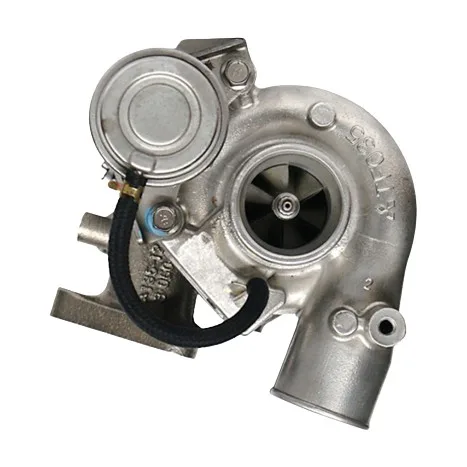
In stock
For the MITSUBISHI Pajero 3 in 3.2 DI-D 160 hp (118 kW diesel), the autoKUR catalogue holds 1 exchange-standard reference(s). At equal displacement, two outputs do not call for the same part.
Engine specification: 3200 cm³, diesel, built from 04/2000 to 12/2006. Matching part number: 49135-03412 (Mitsubishi). Compare with the code stamped on your part.
Other engines of the MITSUBISHI Pajero 3: 2.4 DI-D 181 hp, 3.2 DI-D 165 hp, 2.5 TD 115 hp. If the code stamped on your part is legible, search by reference remains the safest route. 24-month warranty.
Related categories
Frequently asked questions
About this category
This category serves owners and professionals dealing with Mitsubishi vehicles equipped with the 3.2 DI-D 160 hp engine, a motorization known for its balance of power and efficiency. Here, you will find turbocompressors engineered for exchange-standard fitment, meaning each unit is remanufactured to restore factory-level performance. Whether you are a mechanic troubleshooting a customer’s vehicle or an enthusiast tackling a DIY repair, these turbos address common failure symptoms like lag, overheating, or oil leaks without the need for costly OEM replacements.
The range is curated by a specialist wholesaler with deep expertise in diesel engine components, ensuring every turbo in this category meets strict compatibility criteria. The role of the supplier is to bridge the gap between OEM specifications and aftermarket availability, providing a reliable alternative that maintains the engine’s original performance benchmarks. This approach eliminates the uncertainty of sourcing parts from fragmented suppliers, offering a streamlined solution for both garages and private owners.
Professional uses by trade
Different users approach turbo replacement with distinct priorities, whether it’s minimizing downtime for a commercial fleet or ensuring a long-term fix for a personal vehicle. Mechanics prioritize ease of installation and consistent quality, while private owners may focus on cost efficiency and immediate availability. Below, we outline how each group leverages these turbos to resolve common engine issues.
- Le garagiste independant : Uses the turbo to restore a customer’s Mitsubishi with 3.2 DI-D 160 hp engine to full operational status, avoiding costly OEM delays by selecting a remanufactured unit that matches the original specifications.
- L'automobiliste depanne : Relies on the turbo to address sudden power loss or unusual noises in their vehicle, opting for an exchange-standard part to restore performance without the expense of a brand-new unit.
- Le passionne qui fait lui-meme : Chooses this turbo for a DIY repair, trusting its compatibility with their exact motorization to avoid mismatched fits or performance drops after installation.
- Der deutsche Kaeufer (DACH) : Selects the turbo for its reputation in the German market, where Mitsubishi’s 3.2 DI-D engines are common in commercial and utility vehicles, ensuring reliable fitment and long-term durability.
Range comparison
Below, you will find the available turbos for the Mitsubishi 3.2 DI-D 160 hp engine, listed with their exact reference and designed for direct replacement. Each unit is selected for its compatibility and remanufacturing quality, ensuring a seamless fit into your repair workflow.
| Range | Use | Format |
|---|---|---|
| Turbo Mitsubishi 49135-03412 | direct replacement for 3.2 DI-D 160 hp |
How to choose
Selecting the right turbo for your Mitsubishi 3.2 DI-D 160 hp engine requires attention to several key factors beyond just the reference number. Compatibility, remanufacturing quality, and packaging integrity all play a role in ensuring a successful repair.
- Verify the turbo’s compatibility with your vehicle’s exact model year and motorization to avoid mismatches that could lead to performance issues or premature failure.
- Prioritize turbos with a documented remanufacturing process, as this ensures the internal components meet the original equipment’s durability standards.
- Check the packaging for robust protection against transit damage, especially if the turbo is being shipped to a remote location or a busy workshop.
- Assess the supplier’s return policy for used cores, as this can impact the overall cost and logistics of the exchange-standard process.
- Confirm the availability of technical documentation, such as torque specifications or installation guides, to streamline the repair process for mechanics.
- Evaluate the supplier’s track record in the diesel engine component market, as consistency in quality reduces the risk of repeat failures.
Storage & logistics
For garages and wholesalers, proper storage of exchange-standard turbos is critical to maintaining their performance and longevity. Keep units in a dry, temperature-controlled environment away from direct sunlight or moisture, which can degrade seals and bearings. Store turbos in their original packaging or on designated racks to prevent physical damage, and rotate stock based on the oldest units first to ensure freshness. Avoid stacking heavy items on top of turbos, as this can warp housings or damage internal components. Regularly inspect stored turbos for signs of corrosion or contamination before installation.
Since 2026, our team has specialized in sourcing remanufactured turbos that meet the exacting standards of Mitsubishi’s 3.2 DI-D 160 hp engines. We focus on delivering parts that restore performance without the premium of OEM pricing, ensuring mechanics and owners alike can trust the reliability of every unit.— autoKUR team
Related categories
Browse our other ranges:
Useful references
For regulatory and sector references, see Reglement (UE) 461/2010 — pieces de rechange et garantie constructeur.