
Available products
In stock
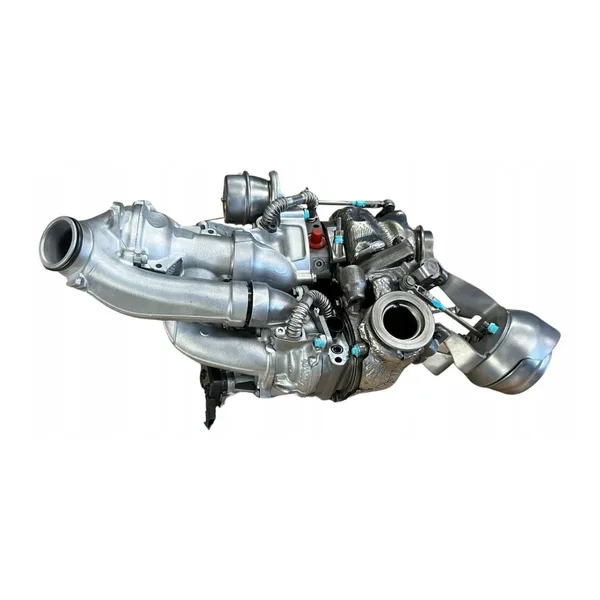
For the MERCEDES Classe V (W447) in 300 CDI 239 hp (176 kW diesel), the autoKUR catalogue holds 1 exchange-standard reference(s). At equal displacement, two outputs do not call for the same part.
Engine specification: 1950 cm³, diesel. Matching part number: AL0082 (BorgWarner - KKK). Compare with the code stamped on your part.
Other engines of the MERCEDES Classe V (W447): 300 D 239 hp, 300 CDI 237 hp, 300 D 237 hp. If the code stamped on your part is legible, search by reference remains the safest route. 24-month warranty.
Related categories
Frequently asked questions
About this category
The Mercedes-Benz OM642 300 CDI 239 hp turbo exchange standard category addresses a common need in diesel engine repair: restoring lost power and efficiency without replacing the entire assembly. This range includes turbos designed for direct installation, compatible with vehicles from 2005 to 2018, covering both passenger cars and light commercial models. The focus is on remanufactured units that undergo rigorous testing to ensure they meet or exceed original equipment performance benchmarks.
This category is built around a network of trusted remanufacturers who specialize in diesel turbochargers, ensuring each unit is disassembled, inspected, and rebuilt to OEM tolerances. The role of the wholesaler is to aggregate these products, providing garages and DIYers with a single point of access to a curated selection of exchange standard turbos. This model reduces lead times and simplifies the sourcing process for high-demand components.
Professional uses by trade
Different users approach this category with distinct priorities: garages require reliability and fast turnaround, while DIY enthusiasts seek cost-effective solutions that can be installed with basic tools. The exchange standard format appeals to both, as it eliminates the need for core returns in many cases, though consignment policies vary by supplier.
- Independent garage: Replace a failing turbo on a 2012 Mercedes-Benz Sprinter 316 CDI with minimal downtime.
- DIY enthusiast: Source a remanufactured turbo for a 2008 Mercedes-Benz C320 CDI to avoid costly dealership repairs.
- German workshop: Order a turbo for a 2015 Mercedes-Benz Vito 119 CDI with confidence in fitment accuracy.
- Passionate driver: Restore power to a 2010 Mercedes-Benz ML350 CDI after noticing excessive smoke and lag.
- Fleet manager: Maintain a consistent supply of exchange standard turbos for a mixed fleet of Mercedes-Benz diesel vehicles.
Range comparison
The following table compares the available turbos for the Mercedes-Benz OM642 300 CDI 239 hp, highlighting key attributes that influence selection for different use cases.
| Range | Use | Format |
|---|---|---|
| Turbo BorgWarner - KKK AL0082 | Direct replacement for Sprinter and Vito models |
How to choose
Selecting the right turbo for the OM642 300 CDI 239 hp requires attention to several factors beyond basic compatibility. These include the condition of the core, the remanufacturing process used, and the supplier’s return policy for cores.
- Verify the turbo’s compatibility with your vehicle’s model year and power output to avoid mismatches.
- Check the remanufacturing process: units with full cartridge replacement offer longer service life.
- Confirm the core deposit policy—some suppliers require returns of the old turbo within a set timeframe.
- Prioritize turbos with documented testing for boost pressure and leak rates to ensure reliability.
- Assess packaging: robust protection is essential for shipping to prevent damage during transit.
- Review the supplier’s rotation policy to ensure you receive a unit with minimal wear.
- Consider the warranty terms, which typically cover defects but not installation or misuse.
Storage & logistics
For B2B customers, proper storage of exchange standard turbos is essential to maintain their condition until installation. Store units in a dry, temperature-controlled environment away from direct sunlight and contaminants. Avoid stacking turbos to prevent deformation of the housing or damage to the cartridge. Label each unit with its part number and vehicle compatibility to streamline inventory management. Regularly inspect stored turbos for signs of corrosion or moisture ingress, and rotate stock to ensure older units are used first. Suppliers should provide guidance on shelf life, though exchange standard turbos generally retain their performance characteristics for years when stored correctly.
With over 15 years in the exchange standard turbo market, our team has seen how a well-sourced turbo can transform a vehicle’s performance overnight. We don’t just sell parts—we provide solutions that keep workshops running and enthusiasts on the road.— autoKUR team
Related categories
Browse our other ranges:
Useful references
For regulatory and sector references, see Reglement (UE) 461/2010 — pieces de rechange et garantie constructeur.