


Frequently asked questions
About this category
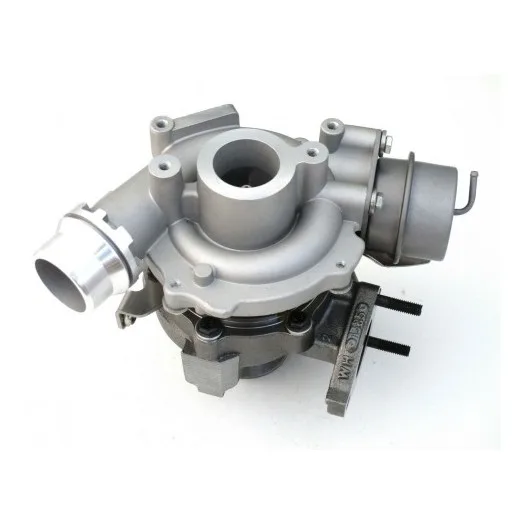
The 1.5 DCi 90 hp turbocharger category addresses a common challenge for owners of Renault, Dacia, and Nissan vehicles: maintaining engine performance without overspending. This range includes remanufactured turbos designed to replace worn or failing units, restoring original power levels and fuel efficiency. Whether you're a garage owner sourcing parts for multiple clients or a car owner tackling repairs yourself, this category provides the essential components needed to keep these diesel engines running smoothly.
This range is built on a foundation of remanufactured turbos that meet or exceed OEM standards, ensuring durability and performance for the 1.5 DCi 90 hp engine. The turbos are sourced from specialized remanufacturers who focus on restoring core components to like-new condition, reducing waste and cost. For professionals, this means access to high-quality parts at competitive prices, while DIY enthusiasts benefit from the same reliability without the markup of brand-new units.
Professional uses by trade
Different users approach the 1.5 DCi 90 hp turbocharger category with distinct needs, whether for professional repair, emergency replacements, or hands-on maintenance. Each group relies on these turbos to address specific challenges tied to the engine's design and common failure points.
- Le garagiste independant : Uses exchange standard turbos to quickly restore customer vehicles to full operational status, minimizing downtime and ensuring repeat business from satisfied clients.
- L'automobiliste depanne : Relies on these turbos to resolve sudden power loss or excessive smoke, often as a temporary fix before a permanent solution is implemented.
- Le passionne qui fait lui-meme : Prefers exchange standard turbos for their balance of affordability and reliability, allowing self-repairs without compromising on quality.
- Der deutsche Kaeufer (DACH) : Seeks remanufactured turbos that meet strict European standards, ensuring long-term performance for vehicles like the Renault Clio or Dacia Sandero.
- Le garagiste independant : Sources turbos that align with OEM torque and boost specifications, avoiding mismatches that could lead to premature failure or warranty issues.
- L'automobiliste depanne : Chooses turbos with clear compatibility notes to avoid installation errors, especially when working with limited technical documentation.
- Der deutsche Kaeufer (DACH) : Prioritizes turbos with documented remanufacturing processes, ensuring consistency in performance across multiple repairs.
Range comparison
The following turbos are specifically designed for the 1.5 DCi 90 hp engine, each offering a solution tailored to different repair scenarios and vehicle models. These units are selected for their compatibility and remanufacturing quality.
| Range | Use | Format |
|---|---|---|
| SL Turbo 5435 998 0028 | Direct replacement for common failure scenarios | |
| SL Turbo 5438 988 0006 | High-mileage vehicles requiring robust performance |
How to choose
Selecting the right turbo for the 1.5 DCi 90 hp engine requires attention to several key factors, including compatibility, remanufacturing quality, and long-term reliability. Professionals and enthusiasts alike must evaluate these aspects to ensure a successful repair.
- Conditioning: Opt for turbos with clear documentation of remanufacturing steps, including cleaning, bearing replacement, and balancing to ensure longevity.
- Conservation: Choose units stored in controlled environments to prevent moisture damage or corrosion, which can compromise performance.
- Regularity: Select turbos from suppliers with consistent supply chains to avoid delays in critical repairs.
- Rotation: Prioritize turbos with documented stock rotation to ensure freshness and reduce the risk of hidden defects.
- Compatibility: Verify OEM reference matches and vehicle model years to avoid mismatches that could lead to immediate failure.
- Brand reputation: Source from remanufacturers with a track record in diesel turbo applications, ensuring expertise in the 1.5 DCi platform.
- Warranty terms: While not a deliver, documented warranty policies from the supplier provide an additional layer of confidence in the purchase.
Storage & logistics
For professionals sourcing turbos in bulk, proper storage is essential to maintain part integrity until installation. These components should be kept in climate-controlled environments to prevent moisture buildup, which can lead to corrosion or bearing damage. Units must be stored in their original packaging or sealed containers to avoid contamination from dust or debris. Regular inventory checks are recommended to ensure first-in, first-out rotation, reducing the risk of stock aging beyond recommended shelf life. For garages with limited space, vertical storage racks designed for turbos help prevent deformation of the housing or shaft. Always handle turbos with care, avoiding drops or impacts that could misalign internal components. Suppliers should provide guidance on storage conditions specific to their remanufacturing processes, as some units may require additional precautions.
With over a decade of experience in turbo remanufacturing, our team has seen firsthand how the right exchange standard turbo can transform a struggling 1.5 DCi engine back into reliable service, saving both time and money for professionals and car owners alike.— autoKUR team
Related categories
Browse our other ranges:
Useful references
For regulatory and sector references, see Reglement (UE) 461/2010 — pieces de rechange et garantie constructeur.