
Available products
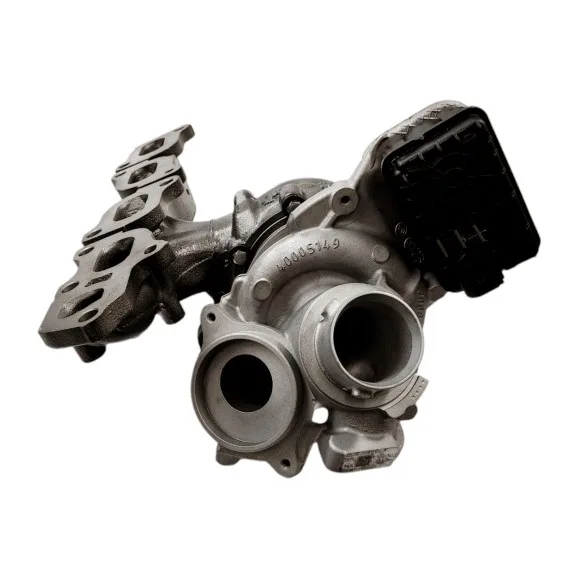
In stock
For the CUPRA Formentor (KM7) in 2.0 TDI 150 hp (110 kW diesel), the autoKUR catalogue holds 1 exchange-standard reference(s). At equal displacement, two outputs do not call for the same part.
Engine specification: diesel. Matching part number: 05L253019F (BMTS). Compare with the code stamped on your part.
Other engines of the CUPRA Formentor (KM7): 2.0 TDI 4drive 150 hp. If the code stamped on your part is legible, search by reference remains the safest route. 24-month warranty.
Related categories
Frequently asked questions
About this category
The 2.0 TDI 150 hp turbo category addresses a common need among Volkswagen Group vehicles, where turbo failure can lead to significant performance issues. This range includes exchange standard turbos designed for direct replacement, ensuring compatibility with motorizations such as the EA827 engine family. Whether for a stranded driver or a repair shop, these turbos provide a cost-effective solution without compromising on quality.
This category is built around a wholesale model, where turbos are sourced from specialized remanufacturers and distributed through a network of independent garages. The role of the wholesaler is to ensure that each turbo meets strict remanufacturing standards, offering a balance between affordability and reliability for the 2.0 TDI 150 hp motorization.
Professional uses by trade
Different users approach the 2.0 TDI 150 hp turbo exchange standard with distinct priorities. Garages prioritize bulk availability and fast turnaround, while DIY enthusiasts seek clarity on compatibility and installation. Motorists stranded by a failed turbo need a quick, reliable replacement to restore their vehicle’s performance.
- Independent garage: Replace a failing turbo on a 2012-2018 Volkswagen Passat 2.0 TDI 150 hp with a remanufactured unit, ensuring minimal downtime for the customer.
- Stranded motorist: Purchase an exchange standard turbo for a 2015 Audi A4 2.0 TDI 150 hp to resume driving after a sudden loss of power and excessive smoke from the exhaust.
- DIY enthusiast: Install a turbo from this category on a 2010 Skoda Octavia 2.0 TDI 150 hp, following detailed compatibility guides to avoid mismatches.
- German buyer (DACH): Order a turbo for a 2013 Seat Leon 2.0 TDI 150 hp, leveraging the exchange standard system to reduce costs while maintaining performance standards.
- Fleet manager: Procure multiple turbos for a fleet of company vehicles with 2.0 TDI 150 hp engines, ensuring uniform reliability across the fleet.
- Trucking workshop: Source turbos for commercial vehicles with 2.0 TDI 150 hp engines, where downtime directly impacts operational costs.
Range comparison
The following turbos are available for the 2.0 TDI 150 hp motorization, each designed for exchange standard use. These units are remanufactured to meet original equipment specifications, ensuring compatibility and performance.
| Range | Use | Format |
|---|---|---|
| Turbo BMTS 05L253019F | Fits Seat Leon and Toledo 2.0 TDI 150 hp models |
How to choose
Selecting the right turbo for a 2.0 TDI 150 hp motorization requires attention to several key factors. Compatibility with the vehicle’s engine code and model year is essential, as is the condition of the turbo’s core components.
- Verify the engine code (e.g., CFFB, CFGC) to ensure the turbo matches the exact motorization, avoiding mismatches that could lead to further issues.
- Check the turbo’s remanufacturing status, as a general overhaul ensures consistent performance and longevity compared to a basic repair.
- Assess the core deposit system, which allows for a refundable deposit when returning the old turbo, reducing upfront costs for the exchange.
- Evaluate the packaging, as bulk shipments for garages should include protective materials to prevent damage during transit and storage.
- Consider the availability of supporting components like gaskets or oil seals, which may be required for a complete installation.
- Review the return logistics, ensuring the process for sending back the old turbo is straightforward and well-documented for both professionals and private buyers.
- Prioritize turbos from reputable remanufacturers, as their processes and quality controls are critical for long-term reliability.
Storage & logistics
For garages and wholesalers, proper storage of exchange standard turbos is essential to maintain their condition until installation. These units should be kept in a dry, temperature-controlled environment, away from direct sunlight and contaminants. Bulk packaging should be inspected for damage upon arrival, and individual turbos should be stored in sealed containers to prevent moisture ingress. Regular inventory checks ensure that turbos are rotated based on their shelf life, maintaining a fresh supply for customers. For motorists, storing a spare turbo at home is less common, but if done, it should be kept in its original packaging in a clean, dry space to avoid premature wear.
Since 2026, our team has processed hundreds of turbos for the 2.0 TDI 150 hp motorization, refining our exchange standard process to minimize errors and maximize customer satisfaction. Each unit undergoes rigorous testing before leaving our warehouse, ensuring it meets the demands of both professional garages and DIY enthusiasts.— autoKUR team
Related categories
Browse our other ranges:
Useful references
For regulatory and sector references, see Reglement (UE) 461/2010 — pieces de rechange et garantie constructeur.