



Frequently asked questions
About this category
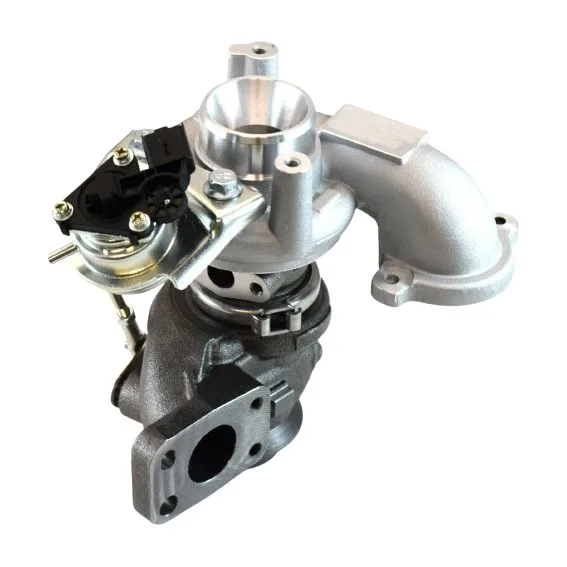
The 1.6 HDi 90 category groups exchange-standard turbochargers built for vehicles fitted with this diesel engine, wherever it appears across the European platforms that share it. It serves three overlapping audiences: independent garages ordering on behalf of a client, drivers facing a failing turbo who need the correct part fast, and owners comfortable enough with mechanics to fit the unit themselves. What's listed here are complete turbocharger assemblies — the cartridge, the housing, and the variable-geometry mechanism where the original design includes one — identified by their manufacturer reference.
The range is built reference by reference rather than by broad compatibility guesswork: each entry corresponds to a manufacturer part number already associated with the 1.6 HDi 90 engine code, cross-checked against known OEM equivalences before it is added. As a wholesale supplier, our role is to hold that structured reference base, manage the core-exchange cycle for the part being replaced, and keep the catalogue limited to turbochargers that a professional can order with confidence in the fitment.
Professional uses by trade
A 1.6 HDi 90 turbocharger reaches very different hands before it is fitted. The list below sets out how each type of buyer typically approaches the part — from the garage ordering against a client's estimate to the owner working from a forum thread and a torque wrench — without assuming any one of them is more likely than another.
- Independent garage: Orders the exact turbocharger reference against a client's vehicle registration to avoid a second visit caused by a mismatched part.
- Independent garage: Checks the core-exchange terms before invoicing the client, since the deposit and the return of the failed unit affect the final quote.
- Motorist facing a breakdown: Searches by engine code and power rating after a garage diagnosis names turbo failure as the likely cause of lost power.
- DIY enthusiast: Compares the CHRA and housing against the failed part removed from the engine bay before placing an order.
- DIY enthusiast: Reads the variable-geometry description closely, since that mechanism is often the first point of failure on this generation of engine.
- DACH region buyer: Cross-references the manufacturer part number printed on the old turbocharger against the listed equivalences before ordering across the border.
Range comparison
The three references below cover the 1.6 HDi 90 turbocharger as currently listed, each tied to a distinct manufacturer part number rather than a generic description. The comparison sets out how each one is typically used and how it ships to a professional buyer.
| Range | Use | Format |
|---|---|---|
| SL Turbo 49173-07508 | direct exchange, garage order | |
| SL Turbo 5435 988 7000 | reference cross-check, DIY fit | |
| SL Turbo 49373-02013 | equivalence match, DACH orders |
How to choose
Choosing between references that look similar comes down to a short set of checks any buyer can run before ordering, whether the part is going straight onto a lift or into a garage's parts drawer for the next client.
- Match the manufacturer part number stamped on the failed turbocharger against the listed reference rather than relying on the vehicle model alone.
- Confirm the engine code, since the same 1.6 HDi 90 power rating can pair with more than one turbocharger reference depending on the vehicle.
- Check the core-exchange terms in advance, as the deposit and the condition expected from the returned unit vary by reference.
- Verify whether the variable-geometry mechanism on the listed part matches the one fitted originally before assuming the housing is interchangeable.
- Review the warranty coverage attached to the reference, since terms are set per part rather than applied uniformly across the range.
- Plan for professional installation with a workshop of the buyer's choosing, since fitting a turbocharger correctly affects how the part performs afterward.
Storage & logistics
Handling a turbocharger core correctly matters as much as ordering the right reference. The replaced unit should be kept dry, packed to avoid further damage to the housing or the variable-geometry linkage, and returned within the timeframe tied to the core deposit. For garages managing several exchanges at once, keeping each core paired with its original order reference avoids confusion when multiple 1.6 HDi 90 units move through the workshop in the same week. Professional buyers ordering in volume benefit from tracking each reference against the vehicle it was fitted to, rather than storing cores as an undifferentiated batch awaiting return.
Our team has worked the 1.6 HDi 90 reference set closely since autoKUR's launch in 2026, and what stands out is how often a garage's own diagnosis narrows the choice before we're even asked — the part number rarely lies.— autoKUR team
Related categories
Browse our other ranges:
Useful references
For regulatory and sector references, see Reglement (UE) 461/2010 — pieces de rechange et garantie constructeur.