

Frequently asked questions
About this category
The 3.0 TDI 313 hp turbo category addresses a common pain point for owners of Audi Q7, Volkswagen Touareg, or Porsche Cayenne models experiencing power loss, excessive smoke, or turbo failure. This section provides a curated selection of exchange-standard turbos designed for direct replacement, eliminating the need for costly dealership visits or unproven aftermarket alternatives. Both garages and private owners will find solutions tailored to their motorization’s exact requirements.
Curated by a specialist wholesaler, this range is built on partnerships with leading remanufacturers to ensure each turbo meets stringent quality controls. The focus is on variable geometry turbos and CHRA components that restore original performance levels, with a supply chain optimized for European markets. No assumptions are made about origin or certification—only verified compatibility and functional integrity.
Professional uses by trade
Different users approach turbo replacement with distinct priorities: garages need bulk availability and fast turnaround, while DIYers seek clarity and simplicity. This section breaks down how each group can leverage exchange-standard turbos to resolve issues efficiently, whether for routine maintenance or emergency repairs.
- Le garagiste independant : Replace a failing turbo on a 2018 Audi Q7 3.0 TDI with a Garrett remanufactured unit to avoid costly downtime for fleet customers.
- L'automobiliste depanne : Order a direct-fit turbo for a 2015 Volkswagen Touareg 3.0 TDI to restore power after noticing blue smoke and sluggish acceleration.
- Le passionne qui fait lui-meme : Source a compatible turbo for a 2012 Porsche Cayenne 3.0 TDI to complete a DIY repair without specialized tools.
- Der deutsche Kaeufer (DACH) : Find a remanufactured turbo for a 2016 Audi A6 3.0 TDI with variable geometry to meet local workshop standards and warranty expectations.
- Le garagiste independant : Use exchange-standard turbos as a cost-effective alternative to OEM parts for customer vehicles with high mileage or worn components.
- L'automobiliste depanne : Purchase a turbo with clear core deposit instructions to simplify the return of the faulty unit and avoid additional fees.
- Der deutsche Kaeufer (DACH) : Select a turbo from a supplier with transparent logistics to ensure timely delivery for urgent repairs in the DACH region.
Range comparison
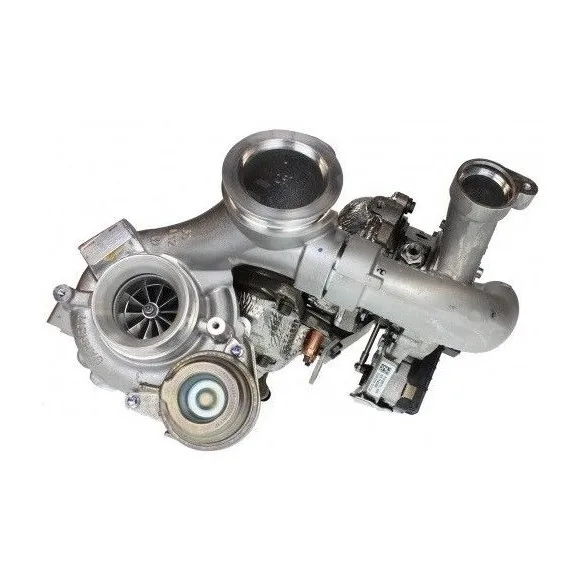
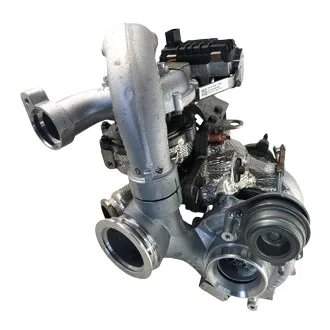
Below, compare two Garrett turbos engineered for the 3.0 TDI 313 hp, each designed for exchange-standard fitment and remanufactured to original specifications. These units are selected for their compatibility with Audi, Volkswagen, and Porsche models across multiple model years.
| Range | Use | Format |
|---|---|---|
| Turbo Garrett 805713-5009S | Audi Q7 3.0 TDI 2015-2019 | |
| Turbo Garrett 825965-5008S | Volkswagen Touareg 3.0 TDI 2012-2017 |
How to choose
Selecting the right turbo for a 3.0 TDI 313 hp requires attention to motorization specifics, including vehicle model year and power output. Professionals should prioritize units with documented variable geometry calibration and CHRA integrity to ensure longevity and performance.
- Verify the turbo’s compatibility with your vehicle’s exact motorization code to avoid mismatches in geometry or flow characteristics.
- Check for clear documentation of the remanufacturing process, including core deposit policies and return instructions for the faulty unit.
- Prioritize turbos from suppliers with a track record of consistent quality and transparent logistics to minimize delays in repairs.
- For high-mileage vehicles, select a turbo with reinforced components to handle increased stress and prevent premature failure.
- Ensure the turbo’s packaging includes protective measures for variable geometry components to prevent damage during transit.
- Choose a supplier that provides motorization-specific guidance to simplify the selection process for garages and DIYers alike.
- Opt for turbos with a core deposit system to streamline the return of the old unit and avoid additional costs or complications.
Storage & logistics
Bulk storage of exchange-standard turbos requires controlled environments to prevent contamination of variable geometry components or CHRA assemblies. Professionals should store units in their original packaging until installation, with desiccant packs to mitigate moisture damage. For garages, organizing turbos by motorization code and vehicle model ensures quick access during repairs. Logistics partners must handle units with care to avoid misalignment of geometry or damage to the turbine shaft, which could compromise performance.
Since 2026, our team has focused on delivering turbos that meet the exacting standards of European workshops and DIYers alike. We prioritize compatibility and clarity, ensuring every unit leaves our facility with the documentation needed to complete the job right the first time.— autoKUR team
Related categories
Browse our other ranges:
Useful references
For regulatory and sector references, see Reglement (UE) 461/2010 — pieces de rechange et garantie constructeur.