

Available products
5 references


Frequently asked questions
About this category
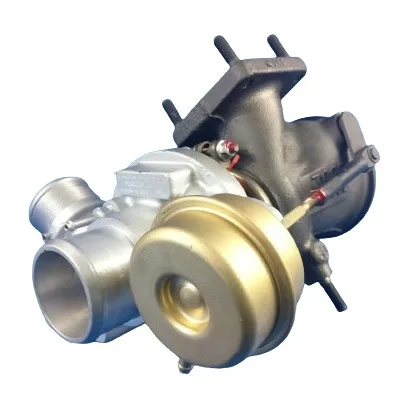
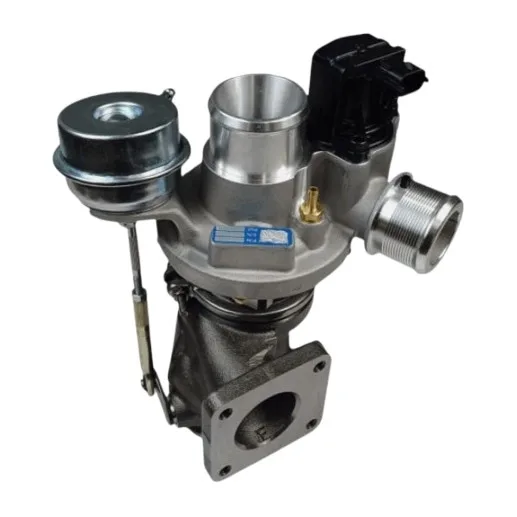
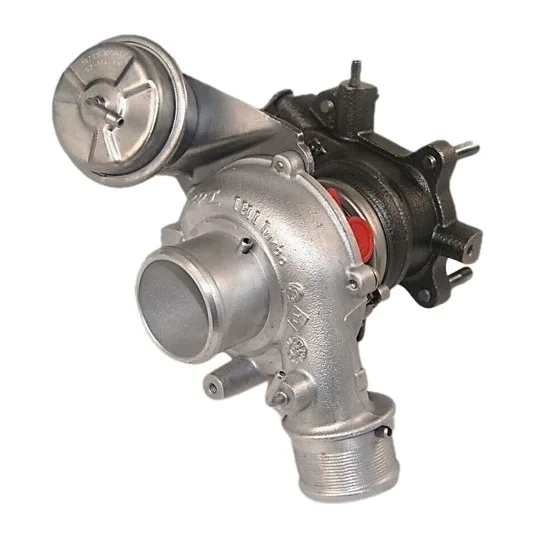
This category brings together the turbocharger exchange unit references numbered 500, 595, and 695 in the catalog, covering complete units and cartridge assemblies for diesel and petrol applications. It is built for anyone who arrives with an engine in mind rather than a part number: the independent garage diagnosing a loss of power, the driver dealing with a breakdown who needs a working vehicle again, and the DIY enthusiast comfortable removing and refitting a turbo themselves. Each reference is listed with the vehicle, engine, and power data needed to confirm a match before ordering.
The range is built application by application rather than brand by brand: each turbocharger exchange unit is added once its fitment data, engine code, and OEM reference equivalences have been checked against the vehicles it is meant to serve. As a wholesaler sourcing from several remanufacturers, the catalog is organized so a buyer can compare a Garrett-branded unit against an SL Turbo reference for the same application without leaving the category page.
Professional uses by trade
A turbocharger exchange unit is bought for different reasons depending on who is ordering it. The same reference can end a diagnostic search, get a vehicle back on the road after a breakdown, or supply a home workshop project. The uses below reflect how each audience actually approaches this category.
- Independent garage: Confirms a turbocharger exchange unit against the engine code on the repair order before quoting a customer, avoiding a second visit for a mismatched part.
- Independent garage: Keeps a small stock of frequently requested turbocharger exchange unit references on hand to reduce the time a customer's vehicle spends off the road.
- Stranded motorist: Orders a turbocharger exchange unit once a mechanic has identified the failing component, using the compatibility data to check the part before it is fitted.
- DIY enthusiast: Removes the failed turbocharger, sends it back as the exchanged core, and fits the replacement unit using the reference data listed for the vehicle.
- DIY enthusiast: Compares cartridge and CHRA options against a full exchange unit before deciding which level of rebuild suits the symptoms observed on the vehicle.
- German-speaking buyer (DACH): Uses the listed engine code and OEM reference equivalences to confirm a turbocharger exchange unit before arranging fitting through a workshop of their choice.
Range comparison
The table below lines up the turbocharger exchange unit references carried in this category, so the intended use and general wholesale format can be compared side by side before a specific reference is opened for its full application list.
| Range | Use | Format |
|---|---|---|
| SL Turbo VL38 | variable-geometry turbo exchange | |
| Turbo Garrett 827727-5001S | complete turbo exchange | |
| SL Turbo VL36 | variable-geometry turbo exchange | |
| Turbo Garrett 812812-5006S | complete turbo exchange | |
| Turbo Garrett 812811-5004S | complete turbo exchange |
How to choose
Choosing between references in this category comes down to a handful of practical checks rather than brand preference. The points below cover what a professional buyer typically verifies before adding a turbocharger exchange unit to an order.
- Engine code match: verifying the exact engine code against the reference sheet before ordering avoids a return caused by a shared model name covering several motorizations.
- Core deposit terms: understanding how the returned core is packaged and shipped back keeps the exchange process moving without holding up the deposit.
- OEM reference equivalence: cross-checking OEM numbers against the listed equivalences confirms that a Garrett-branded unit and an SL Turbo reference genuinely cover the same application.
- Symptom review: matching the reported symptoms, such as power loss, smoke, or limp mode, against the failure notes helps narrow the choice between a full unit and a cartridge.
- Packaging condition: checking that the exchange unit arrives boxed and undamaged protects the actuator and variable-geometry mechanism during transport and short-term storage.
- Order rotation: tracking which turbocharger exchange unit references move fastest in a given workshop helps decide which ones are worth keeping on the shelf.
Storage & logistics
Turbocharger exchange units should be stored boxed, upright where the packaging indicates, and away from damp conditions that can affect the actuator or the variable-geometry mechanism before fitting. For a workshop or wholesaler carrying several references at once, keeping the original packaging and reference labels intact until the point of sale makes it easier to confirm the correct part against an order and to manage the return of an exchanged core. Rotating older stock ahead of newly received references limits the time any single turbocharger exchange unit spends in storage before it reaches an engine.
Since 2026, our team has built this category around one habit: checking the engine code twice before a turbocharger exchange unit reference is listed, because a shared model name is rarely the whole story.— autoKUR team
Related categories
Browse our other ranges:
Useful references
For regulatory and sector references, see Reglement (UE) 461/2010 — pieces de rechange et garantie constructeur.