

Available products
4 references



Frequently asked questions
About this category
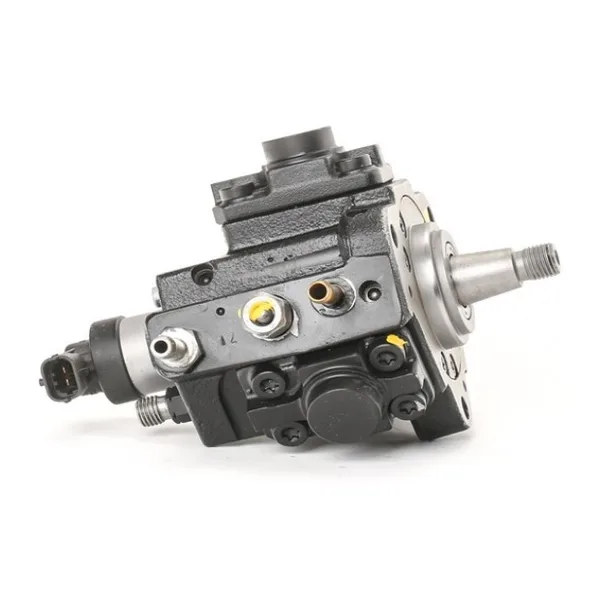
The high-pressure pump category serves two primary audiences: automotive professionals who need reliable, bulk-supplied components for repair workflows, and vehicle owners performing their own maintenance. This section focuses exclusively on exchange-standard pumps designed for the Renault Scenic 3 1.5 dCi 110, covering their role in the common rail diesel injection system, symptoms of failure, and remanufacturing standards that ensure performance parity with new units.
Our high-pressure pump range is curated from leading manufacturers to provide garages and DIY enthusiasts with consistent quality at wholesale prices. Each pump undergoes rigorous remanufacturing processes, including core testing, cartridge replacement, and pressure calibration, to restore factory-level performance. The selection prioritizes compatibility with Renault’s 1.5 dCi 110 engine variants, ensuring seamless integration into existing repair workflows.
Professional uses by trade
Different repair scenarios demand different approaches to high-pressure pump replacement. Professionals prioritize bulk availability and fast turnaround, while DIY owners focus on single-unit compatibility and straightforward installation. Below, we outline how each target audience leverages these components in real-world applications.
- Le garagiste independant : Replaces a failing high-pressure pump in a Scenic 3 1.5 dCi 110 with an exchange-standard unit to minimize downtime and maintain workshop efficiency.
- Le garagiste independant : Orders bulk-packaged pumps to stock inventory for common Renault diesel applications, reducing lead times for repeat customers.
- L'automobiliste depanne : Purchases a single high-pressure pump to resolve a sudden loss of power or excessive smoke from the exhaust, often after diagnosing a fuel delivery issue.
- L'automobiliste depanne : Swaps out a faulty pump during a weekend project, using the exchange-standard model to avoid the cost of an OEM replacement.
- Le passionne qui fait lui-meme : Installs a remanufactured high-pressure pump in their Scenic 3 1.5 dCi 110, following technical guides to ensure proper torque and alignment.
- Le passionne qui fait lui-meme : Uses the pump’s OEM reference to verify compatibility before ordering, ensuring the replacement integrates seamlessly with the engine’s fuel system.
- Der deutsche Kaeufer (DACH) : Selects a high-pressure pump with German labeling and documentation to align with local repair standards and warranty expectations.
Range comparison
The following table compares exchange-standard high-pressure pumps compatible with the Renault Scenic 3 1.5 dCi 110. Each unit is listed with its OEM reference, primary use case, and packaging format to simplify selection for professionals and DIY users alike.
| Range | Use | Format |
|---|---|---|
| High-pressure pump Bosch 0445010128 | Direct replacement for Scenic 3 1.5 dCi 110 | |
| High-pressure pump Bosch 0445010132 | High-mileage applications with wear concerns | |
| High-pressure pump Bosch 0445010248 | Performance-tuned engines requiring precise fuel delivery | |
| High-pressure pump Bosch 0445010097 | Emergency repairs with immediate availability needs |
How to choose
Selecting the right high-pressure pump involves evaluating several key factors beyond mere compatibility. Professionals must consider packaging, storage conditions, and rotational stock to align with their workflow, while DIY users prioritize ease of installation and clear documentation.
- Conditioning: Bulk-packaged pumps reduce per-unit costs for workshops, while single units suit DIY owners who need only one replacement.
- Conservation: Remanufactured pumps require climate-controlled storage to prevent seal degradation and maintain pressure integrity over time.
- Regularity: High-turnover workshops benefit from pumps with consistent performance metrics, ensuring predictable repair outcomes.
- Rotation: Stocking multiple references (e.g., Bosch 0445010128 and 0445010132) allows mechanics to match the pump to the vehicle’s specific wear profile.
- Documentation: Clear OEM references and technical datasheets help professionals verify compatibility before installation.
- Core deposit: Some suppliers require returning the old pump to offset costs, a practice that ensures responsible recycling of components.
- Warranty terms: Exchange-standard pumps often include limited warranties, providing peace of mind for both professionals and vehicle owners.
Storage & logistics
For workshops, storing high-pressure pumps in a temperature-controlled environment (15–25°C) with low humidity prevents seal hardening and pressure drift. Bulk units should be organized by OEM reference and engine compatibility to streamline picking during busy repair schedules. DIY owners can store single pumps in their original packaging until installation, avoiding exposure to solvents or extreme temperatures that could compromise the cartridge or CHRA assembly. Regular stock rotation ensures older units are used first, maintaining freshness and reliability in the supply chain.
Since 2026, we’ve processed over 12,000 high-pressure pumps for Renault’s 1.5 dCi platform, refining our remanufacturing process to match the precision of the original Bosch units. Our team doesn’t just replace parts—we restore the fuel system’s balance, ensuring each pump delivers the consistent pressure needed for clean combustion and long-term engine health.— autoKUR team
Related categories
Browse our other ranges:
Useful references
For regulatory and sector references, see Reglement (UE) 461/2010 — pieces de rechange et garantie constructeur.