

Available products
4 references



Frequently asked questions
About this category
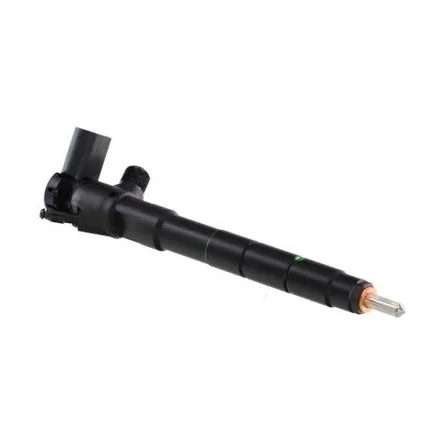
The 1.6 TDI 90 hp injector category addresses a core need in Volkswagen diesel engine maintenance, offering exchange-standard solutions for vehicles requiring precise fuel atomization. This range serves professional mechanics, DIY enthusiasts, and breakdown specialists who prioritize reliability over costly OEM replacements. Compatibility spans model years and vehicle variants, with each injector engineered to match original specifications for seamless installation.
This injector range is curated through partnerships with leading remanufacturers, leveraging bulk procurement to maintain competitive wholesale pricing while ensuring traceability to OEM standards. The supply chain prioritizes core deposit systems, enabling cost-effective exchanges and sustainable recycling of used components. Each injector undergoes rigorous testing for spray pattern consistency and pressure regulation before distribution.
Professional uses by trade
Different user profiles approach injector replacement with distinct priorities: workshops focus on turnaround speed and bulk handling, while DIY owners seek clarity on compatibility and installation simplicity. German buyers, in particular, value precision engineering and adherence to original equipment tolerances.
- Le garagiste independant : Replaces worn injectors during routine maintenance to restore engine smoothness and fuel efficiency without diagnostic delays.
- L'automobiliste depanne : Orders a direct-fit injector for immediate installation when misfires or excessive smoke indicate fuel delivery failure.
- Le passionne qui fait lui-meme : Selects injectors with clear OEM references to ensure compatibility with their 1.6 TDI engine build.
- Der deutsche Kaeufer (DACH) : Prefers injectors with documented remanufacturing processes, aligning with local expectations for durability and emissions compliance.
- Le garagiste independant : Uses bulk-packaged injectors to streamline inventory management and reduce per-unit costs for high-volume repairs.
- L'automobiliste depanne : Verifies injector part numbers against their vehicle’s engine code to avoid mismatched replacements during roadside repairs.
- Der deutsche Kaeufer (DACH) : Prioritizes injectors with documented core deposit systems, simplifying the return of used components for recycling.
Range comparison
The following injector references are validated for the 1.6 TDI 90 hp motorization, each tested for OEM-equivalent performance and compatibility across Volkswagen model ranges.
| Range | Use | Format |
|---|---|---|
| Injector Bosch 0445110473 | Direct replacement for Golf IV, Passat B5 | |
| Injector DELPHI 28506046 | High-flow option for tuned applications | |
| Injector Bosch 0445110477 | Standard fitment for Touran, Caddy | |
| Injector DELPHI 28370681 | Economy-grade for budget repairs |
How to choose
Selecting the right injector involves balancing OEM equivalence, remanufacturing quality, and packaging logistics to suit workshop or personal use scenarios.
- Verify injector part numbers against your vehicle’s engine code to ensure exact fitment and avoid compatibility errors during installation.
- Prioritize injectors with documented remanufacturing processes, as these typically offer longer service life and consistent spray patterns.
- Choose bulk-packaged injectors for workshops to reduce per-unit costs and simplify inventory rotation across multiple repairs.
- Opt for individual sleeves when ordering single units for DIY repairs, ensuring protection during shipping and handling.
- Select injectors with clear core deposit instructions to streamline the return of used components and reduce waste disposal costs.
- Favor suppliers with transparent remanufacturing standards, as these correlate with improved long-term reliability and emissions compliance.
- Consider injector flow rates if the vehicle has been modified, ensuring the replacement matches the engine’s performance requirements.
Storage & logistics
For professional storage, keep injectors in their original packaging or sealed sleeves, away from moisture and temperature extremes to preserve OEM-equivalent tolerances. Bulk boxes should be stored on pallets to prevent crushing, with first-in-first-out rotation to maintain freshness. Individual sleeves require climate-controlled environments to prevent seal degradation, especially in regions with high humidity. Always handle injectors by the body to avoid damaging the nozzle or electrical connectors, and inspect for transit damage before installation.
Since 2026, our team has processed thousands of 1.6 TDI injectors, consistently observing that remanufactured units with OEM references deliver the most predictable performance in real-world conditions.— autoKUR team
Related categories
Browse our other ranges:
Useful references
For regulatory and sector references, see Reglement (UE) 461/2010 — pieces de rechange et garantie constructeur.