

Frequently asked questions
About this category
The Mercedes-Benz OM651 2.1-litre diesel engine, found in models like the 220 D 170 hp, is renowned for its efficiency and reliability, yet its fuel injectors are subject to wear from high-pressure cycles and diesel contaminants. This category focuses exclusively on reconditioned injectors designed to restore original performance levels, addressing issues like power loss, excessive smoke, or rough idling. Whether you are a mechanic sourcing parts for a client’s vehicle or an owner tackling repairs yourself, these components offer a cost-effective alternative to new OEM injectors while maintaining the engine’s precision fuel delivery system.
The range of reconditioned injectors for the OM651 220 D 170 hp is curated from leading suppliers, ensuring compatibility with the engine’s 170 horsepower output and turbocharged configuration. Each injector undergoes a multi-stage remanufacturing process, including ultrasonic cleaning, nozzle testing, and pressure calibration, to restore factory-like performance. The role of the wholesaler in this ecosystem is to aggregate these high-quality parts, providing garages and private buyers with access to bulk pricing and efficient logistics, while managing core deposit returns for used injectors.
Professional uses by trade
Different users approach injector replacement with distinct priorities: garages prioritize turnaround speed and bulk availability, while DIY owners focus on cost savings and ease of installation. Private buyers may also seek parts for long-term projects, whereas German buyers in the DACH region often require precise OEM equivalences and documentation for warranty compliance.
- Le garagiste independant : Replaces injectors in batches to minimize vehicle downtime during scheduled maintenance or diagnostic repairs.
- L'automobiliste depanne : Orders a single reconditioned injector to address sudden power loss or excessive exhaust smoke in their daily driver.
- Le passionne qui fait lui-meme : Sources a compatible injector to restore performance in a project car, often combining it with a new high-pressure pump.
- Der deutsche Kaeufer (DACH) : Verifies OEM part numbers and supplier certifications to ensure compliance with local automotive regulations and warranty requirements.
- Le garagiste independant : Uses core deposit systems to offset costs when customers return used injectors for remanufacturing.
- L'automobiliste depanne : Selects injectors based on vehicle model year to match the engine’s evolving emissions and fuel system specifications.
- Der deutsche Kaeufer (DACH) : Prefers suppliers with transparent remanufacturing processes to align with environmental and quality standards.
Range comparison
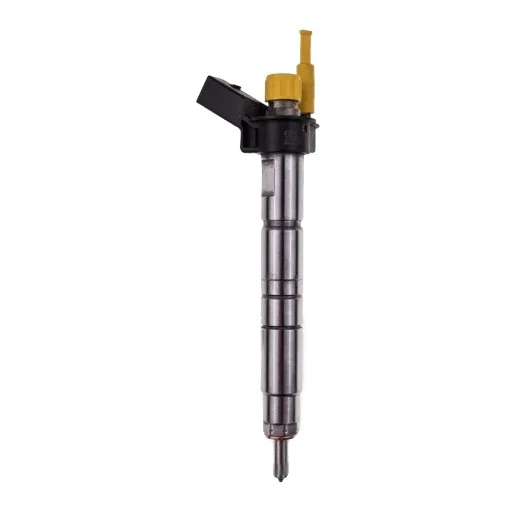
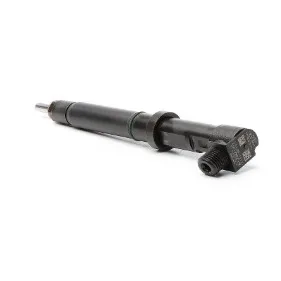
Below, you will find the two most widely specified reconditioned injectors for the Mercedes-Benz OM651 220 D 170 hp, each tested for compatibility and performance restoration.
| Range | Use | Format |
|---|---|---|
| Injector Bosch 0445117035 | Direct replacement for OM651 engines | |
| Injector DELPHI 28236714 | High-flow alternative for tuned applications |
How to choose
Selecting the right injector involves more than matching the part number; factors like nozzle geometry, pressure rating, and electrical compatibility must align with the engine’s specifications. Professionals also consider the injector’s condition, storage history, and supplier reliability to avoid premature failures.
- Conditioning: Opt for injectors stored in sealed, anti-static packaging to prevent contamination or corrosion during transit.
- Conservation: Prefer suppliers who maintain climate-controlled warehouses to preserve injector seals and solenoids over time.
- Regularity: Choose parts from suppliers with consistent remanufacturing cycles to ensure uniform performance across batches.
- Rotation: Select injectors with recent calibration dates to minimize the risk of drift in fuel delivery precision.
- Compatibility: Verify the injector’s OEM code against the vehicle’s engine control unit (ECU) mapping to avoid misfires.
- Documentation: Request test reports or batch certificates to confirm the injector’s remanufacturing standards.
- Supplier trust: Prioritize suppliers with a track record in diesel injection systems to reduce the likelihood of counterfeit or substandard parts.
Storage & logistics
For garages and wholesalers, proper storage of reconditioned injectors is critical to maintaining their condition until installation. These components should be kept in a dry, temperature-controlled environment, away from direct sunlight and sources of vibration. Anti-static bags and protective caps are essential to prevent damage to the nozzle or electrical connectors. Regular inventory rotation ensures that older stock is used first, reducing the risk of seal degradation or calibration drift. Suppliers should also provide clear handling instructions to prevent accidental contamination during unpacking or installation.
With over a decade of experience in diesel injection systems, our team has seen how a single faulty injector can cascade into turbocharger failure or DPF clogging. By remanufacturing parts to OEM tolerances, we give engines a second life—without the premium of new OEM components.— autoKUR team
Related categories
Browse our other ranges:
Useful references
For regulatory and sector references, see Reglement (UE) 461/2010 — pieces de rechange et garantie constructeur.