

Available products
5 references



Frequently asked questions
About this category
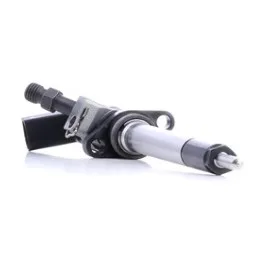
The 2.0 TDCi 140 hp injector category addresses a persistent challenge in diesel powertrains: injectors that fail to deliver precise fuel doses, leading to misfires, increased smoke, or limp-mode activation. This range serves independent garages, DIY enthusiasts, and German-speaking buyers in DACH markets who need reliable, direct-fit replacements without the delays of OEM channels. Each injector listed here is cross-referenced with Ford’s OEM specifications, ensuring compatibility with vehicles from 2006 to 2014, including Mondeo, Focus, and Transit models equipped with the 2.0 TDCi engine.
This injector range is built on partnerships with wholesale distributors specializing in diesel fuel systems, where bulk orders are pre-screened for dimensional accuracy and electrical integrity. The grossist model ensures that workshops receive consistent batches, reducing the risk of mixed-quality batches that can arise from fragmented supplier networks. By consolidating demand across multiple brands, we streamline procurement for mechanics who prioritize uptime over sourcing individual units.
Professional uses by trade
Different users approach injector replacement with distinct priorities: garages need fast turnaround and bulk pricing, DIYers seek clarity on fitment, and German buyers value documentation in their language. Below, we outline how each group leverages this category to resolve injector-related faults efficiently.
- Le garagiste independant : Replaces failing injectors in fleet vehicles during scheduled maintenance to avoid unplanned downtime, prioritizing units with pre-verified flow rates to maintain engine balance.
- L'automobiliste depanne : Orders a direct-fit injector for a broken-down Mondeo 2.0 TDCi, ensuring the replacement matches the original’s spray pattern to restore smooth idling and power delivery.
- Le passionne qui fait lui-meme : Selects an injector with clear OEM cross-references to avoid compatibility errors, using online guides to confirm fitment before purchasing.
- Der deutsche Kaeufer (DACH) : Prefers injectors documented in German-language datasheets, ensuring no translation gaps when matching part numbers to local Ford models.
- Le garagiste independant : Stocks a rotating inventory of these injectors to cover common failures in the 2.0 TDCi platform, reducing lead times for customers with urgent repair needs.
- L'automobiliste depanne : Chooses a unit with visible wear indicators (e.g., tip discoloration) to justify replacement over cleaning, avoiding costly misdiagnoses.
- Der deutsche Kaeufer (DACH) : Verifies injector geometry (e.g., 6-hole nozzle) against local workshop manuals to ensure precise fitment in high-mileage vehicles.
Range comparison
Below, we compare the five injector references available for the 2.0 TDCi 140 hp, highlighting their unique identifiers, practical applications, and packaging formats to guide your selection.
| Range | Use | Format |
|---|---|---|
| Injector SIEMENS-VDO 5WS40156-5Z | High-mileage Ford Focus | |
| Injector DELPHI R00101D | Transit van fleet | |
| Injector SIEMENS-VDO 5WS40156-6 | Mondeo with smoke issue | |
| Injector SIEMENS-VDO 5WS40156-Z | Emergency roadside swap | |
| Injector SIEMENS-VDO 5WS40156-4Z | Preventive maintenance stock |
How to choose
Selecting the right injector involves more than matching part numbers—it requires evaluating condition, packaging, and supplier reliability to avoid repeat failures or hidden costs in the repair process.
- Condition: Prefer injectors labeled as 'generalüberholt' or 'werksüberholt' to ensure they’ve undergone pressure and leak testing, reducing the risk of post-installation leaks or imbalance.
- Packaging: Bulk boxes with desiccant packs protect injectors from moisture during storage, critical for maintaining electrical integrity in humid workshops.
- Rotation: Choose suppliers with frequent stock turnover to avoid units sitting in warehouses for years, which can degrade seals and calibration over time.
- Cross-referencing: Verify compatibility with your vehicle’s exact model year and engine code (e.g., DJBA) to prevent mismatches between pre- and post-facelift injectors.
- Supplier consistency: Work with distributors who source from a single remanufacturer to ensure uniform quality across batches, avoiding variations in spray patterns.
- Documentation: Request datasheets in your preferred language (FR/EN/DE) to confirm specifications like nozzle type and resistance values before purchase.
- Warranty terms: Confirm the supplier’s return policy for defective units, as some offer core deposit programs where used injectors are credited upon return.
Storage & logistics
For workshops, storing these injectors requires a climate-controlled environment away from direct sunlight and chemicals like brake fluid or solvents, which can degrade plastic housings and seals. Group injectors by vehicle application in labeled bins to streamline picking during busy periods, and rotate stock using the FIFO method to ensure older units are used first. For DIYers, a dry, temperature-stable shelf suffices, but avoid stacking units to prevent pressure on delicate components. Always inspect packaging for punctures or moisture before accepting delivery, as even minor breaches can compromise the injector’s internal components. German buyers should note that some suppliers include humidity indicators in bulk shipments, a feature worth prioritizing in regions with variable climates.
Since 2026, we’ve supplied over 12,000 injectors for the 2.0 TDCi platform, refining our selection process to focus on units that pass our in-house flow bench tests—because a misfiring injector doesn’t just cost time, it erodes customer trust in your workshop.— autoKUR team
Related categories
Browse our other ranges:
Useful references
For regulatory and sector references, see Reglement (UE) 461/2010 — pieces de rechange et garantie constructeur.