

Available products
8 references




Frequently asked questions
About this category
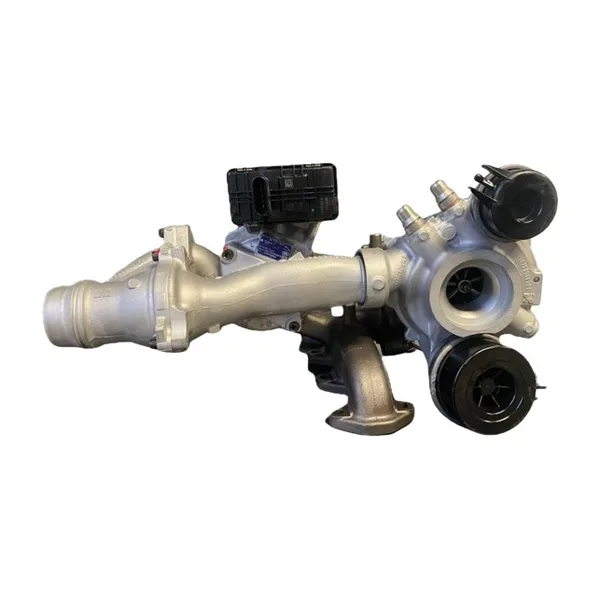
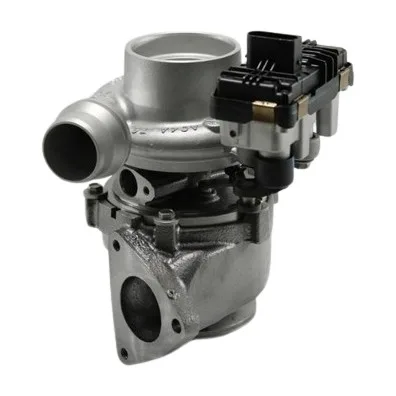
The turbocharger exchange standard category brings together remanufactured units for diesel and petrol applications identified by their original equipment reference rather than by vehicle trim alone. It serves independent garages ordering by the engine code on a repair order, motorists whose vehicle has entered a reduced power mode, and hobbyists who plan to fit the part themselves once the worn core has been removed and set aside. Every reference here corresponds to a documented housing or CHRA cartridge, not a generic substitute described only by size or shape.
The range is built reference by reference rather than by broad vehicle families: each BorgWarner KKK, Mitsubishi, Garrett, or SL unit listed here corresponds to a specific OEM number and to the injectors and high-pressure pumps that share the same engine bay. As a wholesaler, the role is to keep these references traceable from the moment an order is placed to the moment the returned core is logged against the same reference, avoiding mismatched substitutions.
Professional uses by trade
Each reference in this category answers a different starting point: a repair order already naming an engine code, a warning light with no code attached, or a removed part waiting to be matched against its housing markings. The following distinguishes how each audience typically approaches the search.
- Independent garage mechanic: Cross-references the OEM part number against the customer's engine code before ordering, reducing the risk of a mismatched exchange unit reaching the workshop counter.
- Independent garage mechanic: Keeps a rotating small stock of common turbocharger references on hand, shortening the wait between diagnosis and the part reaching the vehicle owner.
- Stranded motorist: Searches by vehicle, engine, and power output after a loss of power or a warning light, needing a clear match rather than a catalogue of unfamiliar codes.
- DIY enthusiast: Compares the variable geometry mechanism and the CHRA cartridge specifications against the removed unit before confirming an exchange standard replacement is the correct fit.
- DIY enthusiast: Reads the OEM reference stamped on the housing to confirm equivalence before returning the worn core, understanding how the deposit and exchange process fits together.
- German buyer (DACH): Looks for the exact reference and equivalence table in a market where distinguishing a genuine remanufactured unit from an unclear substitute matters at resale.
- Independent garage mechanic: Plans workshop time around the return of the exchanged core, since the consigned part is central to how the replacement pricing structure works.
Range comparison
The table below lists each exchange standard reference stocked in this category alongside its typical wholesale use and packaging format, allowing a quick comparison before an order is placed by reference number rather than by vehicle description alone.
| Range | Use | Format |
|---|---|---|
| Turbo BorgWarner - KKK 1000 988 0131 | engine code matched replacement | |
| SL Turbo 49335-01970 | reference-based exchange order | |
| Turbo Mitsubishi 49477-01214 | housing code verification fit | |
| Turbo BorgWarner - KKK 1000 988 0130 | workshop stock replacement item | |
| Turbo Garrett 753546-5023S | variable geometry cartridge match | |
| Turbo BorgWarner - KKK 1635 970 0006 | core deposit exchange order | |
| Turbo Mitsubishi 49335-04230 | power loss diagnosis follow-up | |
| Turbo BorgWarner - KKK 5303 998 0505 | OEM reference confirmed swap |
How to choose
Selecting the correct reference from this range depends on more than the vehicle name on the invoice. The points below outline what a garage or a careful DIY installer should confirm before ordering an exchange standard turbocharger.
- Match the OEM number stamped on the housing or CHRA cartridge to the reference listed here rather than relying on the vehicle model and year alone.
- Confirm the variable geometry mechanism type, since two turbochargers fitting the same engine bay can use different actuator designs that are not interchangeable.
- Check whether the injector or high-pressure pump paired with the turbo shares the same reference family, since a mismatch between the two can affect the whole repair.
- Verify the core deposit and return process before ordering, since the exchange standard pricing structure depends on the worn part coming back through the same reference.
- Ask about the packaging the unit ships in, since a turbocharger housing can be damaged in transit if it travels without the protection the reference requires.
- Note the warranty terms attached to the specific reference before ordering, since coverage can differ between remanufactured units even within the same brand family.
- Plan the order around workshop turnaround, since a garage juggling several repair orders benefits from knowing which references are readily available versus back-ordered.
Storage & logistics
Turbocharger and injector references belonging to this category are the kind of part that benefits from being logged by exact number rather than by general description, since a housing that looks similar to another can carry a different actuator or a different set of mounting points. A garage stocking more than one reference at a time typically separates them by OEM number on the shelf, keeping the exchanged core reserved for the same reference until the return is processed, so that the deposit tied to that specific part is not confused with a different unit sitting nearby.
Since 2026, our team has organized this catalogue reference by reference, because a garage searching for a turbocharger exchange standard part needs the OEM number confirmed before the worn core ever leaves the workshop counter.— autoKUR team
Related categories
Browse our other ranges:
Useful references
For regulatory and sector references, see Reglement (UE) 461/2010 — pieces de rechange et garantie constructeur.