


Frequently asked questions
About this category
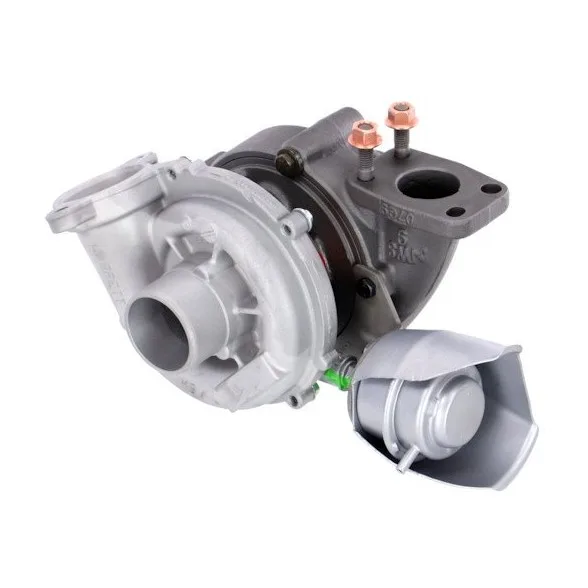
The 1.6 HDi 112 hp category brings together the exchange-standard turbocharger built specifically for this diesel engine code, rated at 112 horsepower. It serves anyone facing the classic warning signs of turbo wear: a noticeable loss of power under acceleration, a whistling noise at higher revs, blue or black smoke from the exhaust, or the engine entering limp mode. Rather than browsing by brand alone, buyers here start from the motorization itself, then confirm the part through its OEM reference and known equivalences.
The range is built around remanufacturing: each turbocharger is stripped, inspected, and rebuilt to match the original engine code before being listed as an exchange-standard unit, with the worn core returned afterward under the deposit scheme. Coverage follows how the 1.6 HDi 112 was actually fitted across the wider vehicle catalogue, so a garage or a hobbyist can move from a known engine code straight to a compatible turbocharger without cross-referencing unrelated part numbers.
Professional uses by trade
The same 1.6 HDi 112 turbocharger reaches different buyers for different reasons, from a workshop diagnosing a fault code to a driver stranded with a smoking exhaust. The usages below reflect how each group actually approaches the search, starting from symptoms, engine codes, or a vehicle already on the lift.
- The independent garage mechanic: cross-checks the OEM reference and engine code against the vehicle on the lift before ordering an exchange-standard turbocharger to keep the job moving.
- The independent garage mechanic: diagnoses limp mode and boost-pressure faults on a 1.6 HDi 112, then narrows the search to a turbocharger matching that exact engine code.
- The stranded motorist: notices a sudden loss of power, blue smoke, or a whistling noise from the engine bay and searches for a replacement turbocharger before booking a garage visit.
- The DIY enthusiast: compares cartridge and CHRA condition against variable-geometry wear before choosing a rebuilt turbocharger to fit on a home workbench.
- The DIY enthusiast: researches the core-deposit process in advance, since the worn turbocharger must be returned once the replacement is installed.
- The DACH-region buyer: searches by engine code rather than vehicle brand, since the same 1.6 HDi 112 turbocharger fits multiple manufacturers across the catalogue.
- The DACH-region buyer: expects clear reference and equivalence information before ordering a turbocharger for a vehicle registered outside France.
Range comparison
The table below lists the exchange-standard turbocharger currently cataloged for the 1.6 HDi 112 hp engine code, together with its typical use and the general wholesale format it ships in.
| Range | Use | Format |
|---|---|---|
| SL Turbo 806291-5003S | 1.6 HDi 112 replacement |
How to choose
Choosing among 1.6 HDi turbo replacement options comes down to matching the part precisely to the engine, not just the vehicle model, and understanding the exchange-standard process before ordering.
- Confirm the exact engine code stamped on the block rather than relying on the vehicle model alone, since several variants share a similar 1.6 HDi designation.
- Cross-reference the OEM part number and any listed equivalences to rule out turbochargers built for a similar but non-matching application.
- Check that the worn core unit is in a condition suitable for return, since the exchange-standard process depends on it going back after installation.
- Look for documented remanufacturing of the cartridge and CHRA rather than a bare resale of a used part.
- Verify that variable-geometry function is addressed during rebuild, since this is a common failure point on the 1.6 HDi 112.
- Consider how the part will be installed, whether on a lift by a professional or on a home workbench, and plan the core return accordingly.
- Ask about the warranty duration attached to the specific unit before ordering, since terms vary by product.
Storage & logistics
Once ordered, a 1.6 HDi turbo replacement should be kept in its original packaging until installation, stored upright and away from moisture or extreme temperature swings that could affect gaskets and seals. For garages managing several units at once, keeping each turbocharger paired with its engine-code documentation avoids mix-ups on a busy bench. The worn core being returned under the exchange-standard scheme should be drained of oil, bagged to contain residue, and kept in a dry area until collection, since a core arriving damaged or incomplete can affect how the deposit return is processed.
Since our early cataloguing work, our team has treated the engine code, not the vehicle badge, as the starting point for every 1.6 HDi turbocharger we list, which is what keeps the reference matching consistent across markets.— autoKUR team
Related categories
Browse our other ranges:
Useful references
For regulatory and sector references, see Reglement (UE) 461/2010 — pieces de rechange et garantie constructeur.