


Frequently asked questions
About this category
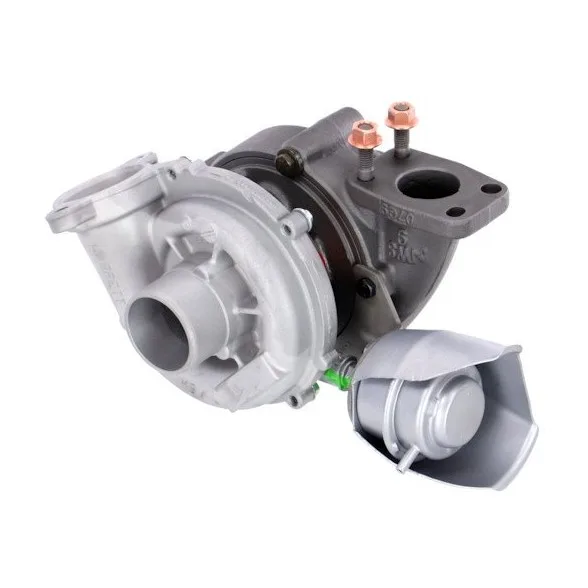
This category is dedicated to the exchange turbocharger fitted to vehicles powered by the 1.6 HDi 110 diesel engine. It brings together drivers who notice a loss of power, exhaust smoke or a whistling noise, and professionals who need a reliable reference to complete a repair. Rather than listing dozens of near-identical parts, the page focuses on the turbocharger reference that matches this specific engine and power output, alongside general information on how exchange turbochargers are built, tested and returned once removed.
The range is built around remanufactured units rather than new parts sourced at random from multiple suppliers. Each core that comes back through the exchange scheme is inspected, rebuilt and checked against the original specification before being offered again under the same reference. As a wholesale supplier, our role is to keep this cycle moving so that a workshop or an individual can obtain a matching part without waiting on a full manufacturing run.
Professional uses by trade
A 1.6 HDi 110 turbo replacement is bought for different reasons depending on who is asking. The following overview separates the four main groups who search for this part, from the independent garage placing a stock order to the German-speaking buyer researching the same engine reference in their own market.
- Le garagiste independant : orders the turbo replacement ahead of a scheduled repair so the vehicle does not sit on the lift waiting for a part to arrive from another supplier.
- L'automobiliste depanne : searches for the exact turbo reference after noticing a loss of power, exhaust smoke or a whistling noise, and wants the correct part ready before taking the vehicle to a garage.
- Le passionne qui fait lui-meme : compares the turbo reference against the engine code before ordering, planning to remove and refit the part personally over a weekend using standard tools.
- Der deutsche Kaeufer (DACH) : looks for the same engine reference in a market where remanufactured turbochargers are described as generalueberholt, and compares core deposit terms before ordering.
- Le garagiste independant : keeps a small stock of the most requested turbo references for the 1.6 HDi 110 so that repeat customers with the same engine are not turned away.
- L'automobiliste depanne : checks the core deposit conditions attached to the exchange turbo before ordering, since the old part has to be returned once the new one is fitted.
Range comparison
The table below lists the turbo replacement reference stocked in this category for the 1.6 HDi 110 engine, along with the typical use case and the wholesale packaging format under which it is supplied to professional buyers.
| Range | Use | Format |
|---|---|---|
| Turbo Garrett 753420-5006S | 1.6 HDi 110 replacement |
How to choose
Choosing the right turbo replacement for a 1.6 HDi 110 engine is less about brand preference and more about matching the exact reference and understanding the terms attached to the exchange programme before placing an order.
- Reference matching: confirm the turbo reference against the engine code stamped on the vehicle rather than relying on the model name alone, since one engine can carry several turbo variants.
- Core deposit terms: check how the returned core is inspected and what happens if it is judged not to match the original exchange reference before ordering in volume.
- Packaging condition: verify that the unit arrives boxed and protected from openings that could let dust or moisture reach the internal components during transport.
- Order regularity: for a workshop placing repeat orders, confirm that the same reference will remain available over time rather than being replaced without notice.
- Stock rotation: ask how long a reconditioned unit has been held before shipping, since turnover affects how current the exchange batch is relative to demand.
- Documentation: request the paperwork that accompanies the exchange part, since a workshop invoicing a customer needs a clear reference trail for the turbo fitted.
Storage & logistics
Turbochargers supplied under an exchange programme are handled differently from parts bought outright: the old core has to travel back through the same logistics chain once the replacement is fitted, so packaging is designed to protect the unit in both directions. For a workshop ordering several references at once, storage space should keep exchange units separate from cores awaiting return, since mixing the two makes stock counts unreliable. Wholesale orders are typically shipped boxed on a pallet or in individual cartons depending on volume, and the same packaging is expected to be reused when the worn core is sent back.
Since 2026 we have handled exchange turbochargers as a distinct product line, and what we notice most is that a workshop rarely asks about the brand printed on the housing — it asks whether the reference matches the engine in front of it.— autoKUR team
Related categories
Browse our other ranges:
Useful references
For regulatory and sector references, see Reglement (UE) 461/2010 — pieces de rechange et garantie constructeur.