
Available products
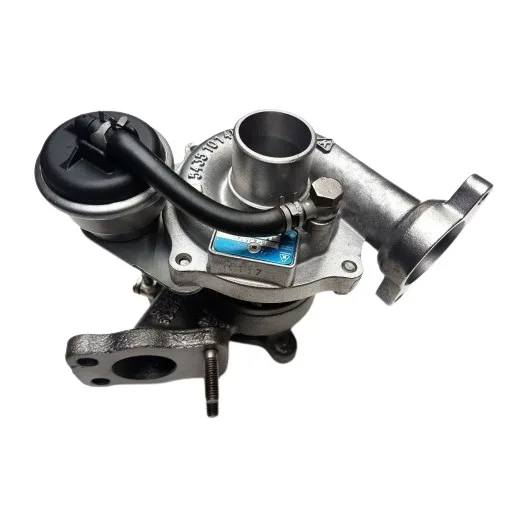
In stock
For the CITROËN C3 1 in 1.4 HDi 68 hp (50 kW diesel), the autoKUR catalogue holds 1 exchange-standard reference(s). At equal displacement, two outputs do not call for the same part.
Engine specification: 1398 cm³, diesel, built since 02/2002. Matching part number: 5435 988 0009 (SL Turbo). Compare with the code stamped on your part.
Other engines of the CITROËN C3 1: 1.6 HDi 110 hp, 1.6 HDi 109 hp, 1.4 HDi 90 hp. If the code stamped on your part is legible, search by reference remains the safest route. 24-month warranty.
Related categories
Frequently asked questions
About this category
This category gathers the exchange turbocharger reference built for vehicles fitted with the 1.4 HDi 68 hp engine, a diesel unit found across a range of light passenger cars. It is written for independent garages diagnosing a customer's vehicle, for a motorist dealing with a sudden loss of power, for a hands-on owner working on their own car, and for buyers across the DACH region who need to confirm engine compatibility before ordering a 1.4 HDi turbo exchange rather than guessing from a photo.
The reference in this category is organized around the engine itself rather than a single vehicle model, since the 1.4 HDi 68 hp engine was fitted across several platforms. As a wholesale supplier of reconditioned parts, our role is to keep the engine code, OEM number, and known equivalences aligned to one exchange turbocharger, so garages and resellers can order with the compatibility question already answered before the part leaves the shelf.
Professional uses by trade
Four groups of buyers reach this category with different starting points: the independent garage confirming a diagnosis, the motorist trying to understand a warning light, the hands-on owner comparing options, and the DACH buyer checking compatibility before ordering. The usages below reflect how each group actually approaches a 1.4 HDi turbo exchange.
- Independent garage: confirming the precise engine code and power rating on the compatibility reference before quoting a customer for a 1.4 HDi turbo exchange.
- Independent garage: cross-checking the OEM part number and known equivalences to avoid ordering a turbocharger that does not match the vehicle on the ramp.
- Motorist dealing with a breakdown: recognizing power loss, exhaust smoke, or a persistent whistling noise as signs the turbocharger may need replacing.
- Motorist dealing with a breakdown: understanding why the engine has entered limp mode and how that relates to the turbocharger and its actuator.
- Hands-on enthusiast: comparing the cartridge and CHRA construction before deciding whether a full exchange unit is the more practical route for the job.
- Hands-on enthusiast: planning the core deposit and return of the worn part as part of the exchange process before starting the work.
- German buyer (DACH): checking engine compatibility and reference numbers carefully before ordering, since the turbocharger will be fitted by a qualified workshop.
Range comparison
The reference below situates the SL Turbo 5435 988 0009 within this engine category, so garages and resellers can confirm at a glance which exchange turbocharger applies to the 1.4 HDi 68 hp engine before placing an order.
| Range | Use | Format |
|---|---|---|
| SL Turbo 5435 988 0009 | exchange turbocharger reference |
How to choose
Selecting the right turbocharger for a 1.4 HDi 68 hp engine depends on more than the part number alone. These criteria help garages, resellers, and hands-on owners confirm the reference before committing to an exchange order.
- Match the engine code and declared power rating exactly, since the 1.4 HDi 68 hp designation covers several closely related engine variants across the range.
- Cross-reference the OEM number and any listed equivalences to confirm the exchange turbocharger corresponds to the original part fitted on the vehicle.
- Check whether the described symptoms, such as power loss, smoke, or a whistling noise, point to a worn cartridge, CHRA, or actuator rather than another fault.
- Confirm the condition of the variable geometry mechanism where applicable, since this component often explains intermittent limp mode on this engine family.
- Understand the core deposit and return process in advance, since the exchange system requires sending back the worn turbocharger after the replacement is fitted.
- Plan for professional installation by a qualified mechanic, since correct fitting and calibration directly affect how the exchange turbocharger performs afterward.
- Keep the original packaging and documentation until the exchange is confirmed, in case the reference needs to be checked again before installation.
Storage & logistics
Exchange turbochargers should stay in their original packaging until the vehicle is ready for the replacement, protecting the actuator, geometry mechanism, and oil connections from dust and impact during transport or storage. Garages and resellers handling several references at once benefit from keeping each unit clearly labelled with its engine code and OEM reference, reducing the risk of a mismatched part reaching the wrong customer. Because the exchange process requires returning the worn turbocharger as a core deposit, the original box should also be kept aside to send the used part back once the new unit is installed.
Since 2026, our team has focused on matching the right exchange turbocharger to the right 1.4 HDi 68 hp engine the first time, so garages spend less time on returns and more time on the job in front of them.— autoKUR team
Related categories
Browse our other ranges:
Useful references
For regulatory and sector references, see Reglement (UE) 461/2010 — pieces de rechange et garantie constructeur.